Category: Guns & Stuff

  • NO EXCUSES!!!! Build a Budget AR

    NO EXCUSES!!!! Build a Budget AR

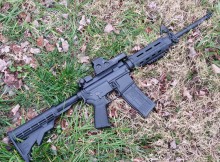
    Beyond the ever increasing threats existing in the world and the possibility that significant gun control could be realized after the Presidential election – having an AR-15 can be flat out fun! Although there are many models out there costing well over $1000 if funds are a challenge there is still hope.

    Just one example of putting together a very useable AR is shopping the sales from Palmetto State Armory. Located in South Carolina they do a massive online business and send out great sales flyers for those on their  email list. I have toured their Columbia, SC location and talked to the owner/manager. He was a nice guy. The staff? Not so much. Regardless, their mail order business is excellent.

    From a recent sales promotion:

    • Blemished PSA Carbine Upper (no BCG) – – ($199.99)
    • Complete M4 Lower – – ($199.99)
    • Complete Bolt Carrier Group w/Charging Handle – – – ($129.99)

    For just over $500 a complete AR can be put together. Shipping and handling as well as any transfer fees are not included.

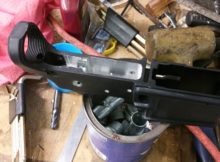
    Putting together an AR in this manner can be done a little at a time and part by part. Stripped lowers/uppers can be purchased and then specific parts added over time. It can be a lot of fun putting together your own gun piece by piece.

    If the money is available all at once most manufacturers offer up a budget model between $500 and $600. ClassicFirearms.com is a good source.

    Point of the post? No excuses! If you are wanting an AR the time is now.

    Rourke


  • Q & A Day…….Hunting, Fishing, Camping and “Heinz versus Hunts”

    Q & A Day…….Hunting, Fishing, Camping and “Heinz versus Hunts”

    Ask a question and I will give you an answer. It can be about pretty much anything – politics, firearms, current events, survival, preparedness, or “Do vegetarians eat animal crackers? “ – whatever.

    Go ahead – “make my day.”

    Looking for an awesome campground in Northern Kentucky? Visit Sunset Haven Riverfront Campground

    JR


      *    *    *    *    *    *    *    *    *    *    *

    From the Supply Depot: RECOMMENDED MOVIES

    Fire in the Sky

    The Magic of Belle Isle – awesome movie!

    Killing Season

    The DaVinci Code

    Ride

    *    *    *    *    *    *    *    *    *    *    *

    Looking for Preparedness Supplies? Check out the Fantastic Monthly Sale at Emergency Essentials.

    Emergency Essentials has been an industry leader for over 25 years. Excellent service and prices have kept them leader of the pack.

    728x90june2016 (1)

    From food storage products to camping supplies Emergency Essentials carries it all.

    *    *    *    *    *    *    *    *    *    *    *

    Need clean water? 

    sp128-sawyer-mini-water-filtration 

  • Video: Completing An 80% Lower

    Video: Completing An 80% Lower

    There’s been some interest in 80% lowers and the process of finishing one. I have not completed one myself although I have seen the final product and talked to the machinist that did the work. If he chooses he can comment below this post on his experience.

    The product I am familiar with came from 80-Lower.com. They sell an assortment of finishes as well as different designs and jigs which to use to complete the lower. Milling machine, drill presses, routers, and even hand drills can be used though hand drills are not recommended by most.

    Below are two video’s from a different vendor – 80PercentArms.com. The top video is an instructional video direct from 80PercentArms.com. The demonstration is actually done using a hand drill I am assuming to convey how easy it is.

    The bottom video is from someone who has completed the process and you get to hear of his experience with the process.

    I will tell you that it is NOT cheaper to complete an 80% versus buying a normal serialized lower. Those willing to spend the extra money are doing so for specific reasons that make it well worth it to them.

    Video 1


    Video 2

     For more information on the lowers that I have experiance with visit – – > https://www.80-lower.com

  • Video: AR 15 Mil-Spec Lower Build

    Video: AR 15 Mil-Spec Lower Build

    A little while back I mentioned that when putting together an AR stripped lower I used YouTube to assist with assembly.  Laying out all the required parts on a table along with a laptop and then following a build video step by step makes everything extremely simple.

    Here is an example of one such video. There are many to choose from on YouTube.

    Rourke


    ◊ ◊ ◊ ◊ ◊ ◊ ◊ ◊ ◊ ◊

     baofeng-banner

  • Panhandle Rancher: Reloading Basics and Equipment Recommendations

    Panhandle Rancher: Reloading Basics and Equipment Recommendations


    Why reload your own ammunition? Two reasons: reloaded ammunition may be much cheaper than factory and reloaded ammunition has the potential to greatly increase the accuracy of your rifle or pistol.


    I have reloaded rifle, pistol, and shotgun ammunition, and cast pistol bullets and big heavy bullets for the old black powder rifle cartridges such as the .45-70 for more than half a century. I also cast 0, 00, and 000 buckshot and 12 gauge slugs and sabot rounds. Much of my reloading equipment was purchased back in the 1960s and still in use.


    Otis developed the first safe elevator with automatic braking. A favorite quote from this inventor is ‘safety first, gentlemen, safety first.’ I can think of no more fitting appellation for reloading ammunition. Please don’t smoke when using either black or smokeless powder and remember black powder is more static sensitive than smokeless. There’s a reason many black powder mills were on barges anchored in a river. I don’t like distractions and once set upon the task of reloading, that process proceeds without interruption.


    Some basic nomenclature: a cartridge consists of primer, case, powder, and bullet, sometimes called a round; a fired cartridge consists of a spent primer and the powder container often called ‘brass, fired round, or case’ that may be steel, brass, plastic, aluminum, or a combination of brass and paper.


    Over the decades, I’ve developed certain procedures in the repetitive process of reloading ammunition with the intent of reducing errors. If using a powder measure (more about these later), the name of the powder and charge is written with a magic marker on a low adhesive tape and affixed to the dispenser. This tape is typically green or blue and removes much easier than the cream colored masking tape of old. Upon completion of the loading process, I match the powder label on the dispenser with the factory powder container, peel this tape off of the dispenser, and dump any excess back into the bulk container. http://www.uline.com/BL_6141/3M-2090-Masking-Tape


    MISIDENTIFICATION of powder charge, brand, year of manufacture, or type can have LETHAL RESULTS. Older Hodgen 4831 and DuPont IMR 4831 are not the same. Read and understand current reloading manuals. I try to choose loads based upon specific commercial bullet manufacturer’s reloading handbooks (when reloading Hornady XTP bullets, I use the Hornady manual). http://www.hornady.com/store/9th-Edition-Reloading-Manual3. Speer, Sierra https://www.sierrabullets.com/store/product.cfm/sn/0507/Sierra-5th-Edition-Reloading-Manual-Printed-version-and-Infinity-7-Exterior-Ballistic-Software-Program-CD-Rom, Lyman, Barnes, RCBS, Nosler and others produce reloading manuals. I often consult several from different sources as insurance against misprint https://www.amazon.com/s/ref=nb_sb_noss_1?url=search-alias%3Daps&field-keywords=reloading+manuals

    [slideshow_deploy id=’2663′]

    I carefully note the powder brand and type for the cartridge for bullet weight and type being reloaded. I remove that particular bulk powder container from my powder locker (green metal lockable cabinet adjacent to loading bench in photos). I verify this again when writing the powder and charge weight on the removable masking tape affixed to the powder measure dispenser hopper, and then again upon completion when removing the annotated tape from the measure before discharging back into the bulk container. This repetition is intentional.


    Bullet weight and type is matched against that bullet manufacture’s published loading data. Before actually loading the bullet into a primed and charged case, I weigh a sample bullet to preclude any misidentification by the manufacturer. Depending upon the bullet, I may even measure its diameter and length with vernier calipers for comparison against published specifications https://en.wikipedia.org/wiki/Calipers.


    Every reloader should have a stainless steel vernier caliper capable of measuring to the 0.001” along with a selection of inside and outside calipers mentioned in the beginning of the wiki article. Some calipers may have an easier to read circular analog dial (dial caliper) or the older linear vernier scale. Digital calipers are easiest to read but of course rely on batteries which mechanical calipers and micrometers never need. Vernier calipers are useful for measuring resized case length (cases ‘grow’ longer with each shooting and must be shortened to factory dimensions periodically) as well as case overall length inclusive of the loaded bullet. Exceeding case length and cartridge length specifications can drastically increase pressure resulting in LETHAL INJURY.


    If you intend to build your own weapons or engage in gunsmithing, a good set of inside and outside micrometers capable of measuring 0.0001” are also useful.


    From my primer locker (another of those lockable green cabinets adjacent to the reloading bench), I select the proper primer for the cartridge being reloaded. Primers come in three basic diameters and are further distinguished as being intended for rifle or pistol, as well as for magnum calibers. So a primer may be either small or large (diameter) or even bigger for the .50BMG cartridge http://www.midwayusa.com/product/1301713135/cci-50-bmg-primers-35; magnum or not; and for rifle or pistol. Pistol primers typically have thinner cups intended for less robust striker mechanisms and lower pressures found in pistols and if inadvertently used in a high pressure rifle cartridge, may explosively breach allowing both gases and debris to strike the shooter and/or bystanders. Magnum cartridges, both pistol and rifle, typically have a greater case volume than traditional cartridges and may require higher energy primers to optimally ignite the larger powder charge. Use of a magnum primer in a cartridge not so designated may cause excessive pressures resulting an explosive breach of the primer or cartridge along with possible destruction of the weapon and injury of the shooter and/or bystander.


    I review the appropriate loading data for proper primer selection and remove a box (or boxes – primers are typically packed 100/discrete box) of the proper primers from the primer locker. Not necessary but expedient and time saving, I then charge a RCBS universal priming tool http://www.rcbs.com/Products/Priming/Tools/Universal-Hand-Priming-Tool.aspx with 100 primers. Next I label another strip of that masking tape with the primer manufacturer and type designators and affix to the hand-priming device. This tool is a convenience and time saving device and not essential to the reloading process as the press I use and recommend has its own priming device that unfortunately is much slower. Before actually priming decapped (a cartridge with spent primer removed) cartridges, I once again compare the specified primer with the primer box and primer label on the hand priming tool. Upon completion of the priming operation with all brass now primed, I repeat this process and return any unused primers left in the tool to the factory box and replace this box in the primer locker.


    Grease from fingers (natural or lubricant related) can deactivate primers. Clean your mitts before handling primers and then strive to minimize contact. This is but one reason why I like the hand priming tool, I never touch the primers when using it and dump a box of 100 directly into the primer hopper that feeds the tool. I also tend to reload in groups of 100 so seldom am left with primers to return to the factory box.


    Regardless of whether you use a hand priming tool or that with the press (which by the way requires handling individual primers), the primer should be seated completely against the bottom of the cartridge primer pocket. I feel the back of each cartridge with a thumb or finger to ensure the primer cup is slightly below flush with the back of the cartridge. A slam fire in a semi-automatic weapon or unexpected discharge may result when chambering any cartridge with primer cup extending even a smidgen beyond the cartridge base. Such is a dangerous condition and to be avoided. I seal primer pockets (not a required process) with a waterproofing agent (clear fingernail polish works well) and re-check each primer for proper seating during this process. By all means, avoid crushing the primer during the seating process or it might fire. A prudent person will also avoid putting eyes or other body parts over the open end of the cartridge when priming (which is easy to do with the hand priming tool).


    Military cartridges are typically identified by the arsenal and year of production. The base of a 7.62×51 NATO (7.62 is the caliber and 51 the length in millimeters) might be annotated “LC 02’ designating a cartridge manufactured in 2002 by the Lake City Arsenal. Such brass often has a green or red rim around the primer cup. This colored agent is a waterproofing compound. Readers are likely interested in reloading 5.56x45NATO or 7.62x51NATO ammunition, or alternatively but not the same, .223 Rem or .308 Win. These pairs of cartridges are not completely interchangeable and both as a shooter and as a reloader. it is incumbent upon you to know and understand the difference.


    Military cartridges are often fired in belt fed automatic weapons whose self loading and extracting process tends to be more robust than encountered with sporting rifles and handguns. To ensure primers do not back out, the primer pocket in the casing is often crimped around the primer. Decapping force required is slightly greater and the crimp ridge must be removed before re-priming. Lyman makes both primer pocket reamers (to remove that crimp ridge) and primer pocket cleaners (to remove firing residue). The reamers come in three sizes, small, large, and arsenal (for the .50BMG). The first two are essential for reloading most military cartridges. http://www.lymanproducts.com/lyman/case-prep/primer-pocket-reamer.php


    The proper designator for the US caliber.30 main combat rifle cartridge is 7.62x51NATO. Specifics are important and even more for the reloader. There are a host 7.62 cartridges (7.62 Argentine, 7.62x54r (Russian), 7.62×39, etc.), and of course the popular 7.62x51NATO. I’ll repeat once more, 7.62x51NATO is not the same as .308 Win. The performance is different, the cases are different, and the bullets are different. Likewise there is a .38 S&W and a .38 Special, two different cartridges. 5.56x41NATO is different than .223 Remington.


    Reloading begins with case inspection. Please do not try to reload Berdan primed brass or steel cases. When in contact with leather and a host of other materials, brass will corrode. Leather turns brass an ugly green (residual acids from the tanning process leaches copper from brass) and weakens the case. Some brass cases are nickel plated and usually shiny. Nickel is more corrosion resistant than brass and plated cases are highly reloadable. Steel cases are usually dull in color and may have a lacquer or shellac coating that reduces extraction friction. Non-US manufactured military ammunition is likely Berdan primed, steel, and will not have a central flash hole so conducive to decapping. Berdan primers differ from Boxer primers (the US standard) in that there is no integral primer anvil. I am convinced repressive governments limit civilian access to potential ammunition supplies by using Berdan primers. Picking up fired brass is illegal in some countries.


    Examine the base of the fired cartridge and primer carefully. The primer cup often reveals over pressure issues. Primers are slightly rounded at the edges. Excessive pressure eliminates this slight radius so that the primer completely fills the primer pocket. Even more pressure causes a ridge around the circumference of the firing pin caused depression in the primer. That circumferential ridge is the primer flowing into the hole in the bolt that the firing pin passes through. This is a certain sign of incipient primer failure due to excessive pressure.


    If a primer fails obturation (https://en.wikipedia.org/wiki/Obturation) and breaches, gasses and debris both powder and metal under very high pressure (60,000 pounds per square inch or more in the case of some rifle cartridges), blow back into the bolt and may strike the shooter. The barrel may even burst with disastrous effect to the shooter and bystanders. Always wear eye protection when shooting and insist on the same for all onlookers.


    I next examine the case ending with the neck area, looking for swelling and splitting. Shooting expands the brass cartridge casing causing momentary obturation at the chamber. Brass is ductile and upon release of pressure (the bang), relaxes toward (but not reaching) its original diameter. This very relaxation makes case extraction possible. Resizing fired brass to factory diameter is a component step in the reloading process. Repetitive expansion and contraction (following firing and in resizing) both weakens and lengthens the case actually causing work hardening. Splitting around the case neck is the first sign a case may have been reloaded too many times. Annealing (softening the work hardened brass – https://en.wikipedia.org/wiki/Annealing_%28metallurgy%29) the case mouth may rehabilitate a group of brass cases when one exhibits characteristic splitting. Never reload a case with splitting around the opening. I crush such in a vice and discard.


    A die is used in the reloading press to resize the cartridge to factory dimensions http://www.rcbs.com/Products/Dies-by-Category/Group-A-E-Dies/Group-A-Popular-Rifle-Cartridges/Full-Length-Die-Set-Group-A-Popular-Rifle-Cartridg.aspx. This die often decaps the case, removing the spent primer and then expands the neck to proper internal dimension. Should I mention that the dies being used in the reloading processes must match the cartridge being reloaded? There are exceptions, for instance .357 Magnum dies can be used to reload .38 Special, .44 Magnum dies can be used to reload .44 Special but such tends to be the exception rather than the rule and generally apply to certain straight walled cases. On the other hand, a neck sizing die for 7.62x51NATO and .308 Win are interchangeable and may be used with the .30-‘06; shell holders for .30-‘06 can be used for 7.62x51NATO, .308 Win, and .45acp and other cartridges based upon the .30-‘06 rim base dimensions. Loading manuals publish factory dimensions for both bullets and cases as well as trim to length dimensions. Be sure you understand all limitations and restrictions before making any substitution of die/cartridge/shell holder. Errors in application can cause the case to not achieve obturation and/or produce excess pressures resulting in catastrophic weapon failure. An error in the shell holder application may result in a case stuck in the resizing die. This is not a die ending event (a pun) and the stuck case can be extracted but at the expense of lost time and measure of frustration.


    Bench loaders striving for ultimate accuracy and reloading ammunition for a specific weapon only, may just neck size fired brass. Most however desire their ammunition to function in any weapon so full length resizing is most often used. Reloading dies most commonly come in three diameters with 7/8×14 thread the most common. Rifle calibers often require only two dies, full-length resizing/decapping/neck expanding and bullet seating. Pistol calibers are typically straight wall cases and may require three or four dies. Dies are made of hardened tool steel, some with a carbide steel insert. The latter are more expensive but preferable as no resizing lubricant is required. http://www.rcbs.com/Products/Dies-by-Category/Group-A-E-Dies/Group-E-Straight-Walled-Cartridges/3-Die-Carbide-Taper-Crimp-Set-Group-E-Straight-Wal.aspx.


    Reloading presses secure the brass case and provide a method for forcing it into and removal from the various reloading dies. The simplest of presses is the single stage RCBS Rock Chucker Supreme http://www.rcbs.com/Products/Presses-and-Kits/Single-Stage/Rock-Chucker-Supreme-Press.aspx. I’ve used the predecessor Rock Chucker press for more than a half century and are available for about $100 used. http://www.ebay.com/itm/RCBS-RC-Rock-Chucker-Reloading-Press-w-Primer-Punch-Lee-Lyman-Hornady-/191925134037.

    Volume reloaders may desire a progressive or turret press to speed the loading process http://www.rcbs.com/Products/Presses-and-Kits/Turret/Turret-Press.aspx or a real high speed progressive press made by Dilllon http://www.dillonprecision.com/super-1050_8_1_23877.html.


    The Lyman 310 tool is a time proven cheap entry to the reloading world http://www.lymanproducts.com/lyman/dies/lyman-310-tool.php. Its portability and simplicity make it a good item for deep stores. Lee also makes a hand reloading tool http://leeprecision.com/lee-loader-9mm-luger.html. I have a now obsolete Lyman Tru Line Jr. turret press that I use for small pistol cartridges. This press uses the same dies as the Lyman 310 tool (5/8×30 dies).


    THE MECHANICS

    After inspection, fired brass is lubricated if necessary, decapped and resized.  http://www.cabelas.com/product/RCBS-reg-Case-Lube/741087.uts?productVariantId=1324051&WT.tsrc=PPC&WT.mc_id=GoogleProductAds&WT.z_mc_id1=25794311&rid=20&gclid=CK_U_a65_c0CFZaMaQodrjQE1Q&gclsrc=aw.ds.


    Primer pockets are cleaned and reamed if necessary. The length of the resized cartridge is measured using the vernier caliper and compared with published specification. If too long, I trim to published length using the RCBS Trim Pro #2 cutter http://www.rcbs.com/Products/Case-Preparation/Case-Trimming/Trim-Pro-2-Manual-Case-Trimmer-Kit.aspx equipped with three way cutting head http://www.rcbs.com/Products/Case-Preparation/Case-Trimming/Trim-Pro-3-Way-Cutter.aspx.


    The brass is then cleaned and/or polished (not necessary except for maximum pressure loads but makes for a nice end product) using an ultrasonic cleaner http://www.rcbs.com/Products/Case-Preparation/Case-Cleaning/Ultrasonic-Case-Cleaner-120-VAC.aspx and /or vibratory polisher http://www.rcbs.com/Products/Case-Preparation/Case-Cleaning/Vibratory-Case-Cleaner-120-VAC.aspx.


    At this point the brass casings have been inspected, decapped, trimmed to length, and cleaned. If the brass is straight wall design (.357 Magnum, .44 Magnum, 9mm, .45acp, .45-70, etc.), the case mouth must be very slightly belled to facilitate bullet seating. This is done with an expander die. Some pistol rounds headspace on the case rim (9mm, .45acp, etc.). Caution must be used not to excessively bell nor crimp the case mouth of those type brass cases. Any residual belling after seating the bullet should be removed by adjusting the die to set a slight crimp resulting in straight case shoulder.


    After resizing and before priming (or re-capping), I always measure case length and trim as necessary. The chamfering tool http://www.lymanproducts.com/lyman/case-prep/carbide-case-prep.php eases bullet starting, especially for non-boat tail bullets and can be used to bring overall case length into specification. If you intend to reload more than casually, I recommend the RCBS high capacity case trimmer or better, the Trim Pro 2 http://www.rcbs.com/Products/Case-Preparation/Case-Trimming/Trim-Pro-2-Manual-Case-Trimmer-Kit.aspx that both trims and chamfers in one operation.


    The case is now ready to be primed using either the hand tool or reloading press.


    An essential safety (and convenience item) is a reloading block http://www.rcbs.com/Products/Case-Preparation/Accessories/Universal-Case-Loading-Block.aspx. Some are made from plastic, some from wood, and others aluminum. All are different. A company long out of business produced mine. The loading block holds cases upright after charging with powder. Once all cases are so charged, one can visually cross inspect the powder level for all brass. Take your time with this. Ensure all cases have powder and all powder levels are the same. 1/10 of a grain makes a huge difference in pressure with maximum loadings and may be the difference between a ruptured barrel and an otherwise satisfying bang. Always weigh individual powder charges when loading near or at maximum pressures and work up to them gradually.


    So you may ask, how is powder weighed? Very carefully, I quip. US powder measure is by the grain (an average weight of a grain of cereal such as wheat or barley). By established convention, there are 7000 grains to the pound.


    Almost 60 years ago, I purchased a Redding #2 powder scale. http://www.midwayusa.com/product/658771/redding-2-master-magnetic-powder-scale-505-grain-capacity. It works as well today as when purchased. This is a magnetically dampened all metal balance beam type scale. More modern scales use plastics and at least one manufacturer had problems with static charges on plastic scales. Static charge is of concern in two ways, a spark igniting the powder, and worse affecting dampening causing erratic readings. Buy the Redding #2 and you won’t go wrong. When using a manual scale, a powder trickler is helpful for adding small amounts of powder to the scale pan http://www.rcbs.com/Products/Powder-Measures-and-Scales/Powder-Measures/Tricklers/Powder-Trickler-2.aspx and the Redding trickler is even better https://www.amazon.com/Redding-Reloading-Powder-Trickler-05000/dp/B000PW7KE2/ref=sr_1_3/000-9968453-7225914?ie=UTF8&qid=1468875980&sr=8-3&keywords=redding+scale.


    Along with the trickler, a useful item is the powder measure. A powder measure dispenses an adjustable volume of powder. I like the Lyman #55 powder measure for discharging smaller charges such as for pistol or small rifle cases such as the 5.56x41NATO http://www.lymanproducts.com/lyman/scales-measures/55-std-baffle-stand.php.


    For anything bigger than .30-’06, consistency requires a powder tube of more capacity such as the RCBS charger for .50BMG. If I only had one powder measure it would be the Lyman because of its better design (a 7000 grain charge tube is available as an option). Be sure and measure every 5th or 10th powder charge if using a powder measure. As the powder level in the tube decreases, the level of compaction in the measuring chamber does likewise. From time to time measure volume may need adjusting to compensate for changing density.


    Volume reloaders striving for peak accuracy should consider the combination electronic scales and dispenser made by RCBS, the Chargemaster Pro http://www.rcbs.com/Products/Powder-Measures-and-Scales/Powder-Measures/Electronic/ChargeMaster-Combo-120-VAC.aspx. Users of this fine scale and powder measure desiring grid independence should still purchase a manual scale such as the Redding #2.


    Weigh individual charges when loading near design pressure limit!


    So now we have a block of 50 to 100 carefully inspected, trimmed, polished, primed, and charged cases. All have powder and all powder is at the same level in each case (use a flashlight for inspecting bottle neck cartridges) and any straight walled cases are very slightly belled at the mouth.


    The bullet-seating die is installed in the press. I take a sample factory round and carefully adjust this die until it just contacts the nose of the bullet. That round is then removed and a charged case is installed in the press. A bullet is then started into the bell and this assembly is gently run up into the seating die. Overall cartridge (case + bullet) length is measured and compared to specification and the seating die readjusted as necessary until the bullet is properly seated, any bell at the case mouth is removed, and proper cartridge overall length is achieved.


    The end product is a high quality round of ammunition as good as or better than produced by the factory and at a cheaper cost. By judiciously comparing different powders and charges and different bullets and bullet designs, one can usually develop a custom cartridge for each rifle or pistol whose accuracy far exceeds that possible with factory ammunition.


    Serious shooters often add a chronograph to their reloading apparatus, as the ability to measure muzzle velocity for a particular load is worthwhile in developing trajectory curves for discrete loads. When I was young, pressure was measured by use of a universal bond receiver equipped with a copper crusher gauge. Strain gauges are now commonplace and are much more accurate. While once in the purview of commercial ammunition manufacturers, these tools are increasingly within the cost range of the serious shooter.


    A summary of favorite equipment/manufacturers are as follows:

    Presses: RCBS Rock Chucker

    Volume reloading progressive presses: Dillon

    Powder measure: Lyman #55

    Powder scale (manual): Redding #2

    Powder trickler: Redding

    Case prep tools: Lyman

    Case trimming tools: RCBS

    Shotgun presses (not covered here): MEC Jr. These are available cheap. http://www.ebay.com/itm/MEC-12ga-600-JR-Shot-Shell-Reloading-Press-Vintage-1972-with-Lyman-Handbook-/131875958650

    Bullet casting moulds, pots: Lyman http://www.lymanproducts.com/lyman/bullet-casting/mould-details.php?entryID=28

    Bullet sizing: Lyman 4500 Lube sizer (will seat gas checks) http://www.lymanproducts.com/lyman/bullet-casting/4500-lube-sizer.php

    Shotgun buckshot and slug moulds: Lee https://www.amazon.com/Lee-Precision-Buck-Shot-18-Mold/dp/B005Y50H5O; http://leeprecision.com/1-oz-slug-mold.html


    Pistol shooters in particular can greatly reduce the cost of reloaded ammunition by casting their own bullets from automotive wheel weights. Another more complicated process for producing higher quality rifle and pistol bullets is called swaging. Casting and swaging are rightfully topics of an additional post and if interested let me know.


    Reloading has many discrete steps and appropriate caution must be applied at each stage of the process. If you are uncertain, don’t do it. I began reloading as a pre-teen and shot competitively for some years afterward. Reloading is a very useful and cost saving process for the active shooter.


    The Lyman Reloading introduction guide is available at: http://www.lymanproducts.com/lyman/presses-and-kits/pdf/IntroToReloading.pdf


    In all things, follow the motto of Davy Crockett, ‘be sure you’re right and then go ahead.’ Marksmanship is a perishable skill set and reloading offers more bang for the buck.


    Hope this helps someone.


    Panhandle Rancher


  • Guns VS Armor

    Guns VS Armor

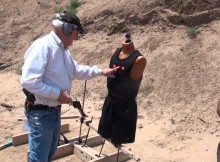
    What Armor do you need to Protect Yourself from the World’s most popular guns and ammunitions?

    There are over a hundred different types of gun available on the weapons market today. But what type of armor do you need to protect from the most popular weapons? SafeGuard Clothing have put together a guide on seven of the most popular guns and types of ammunition available and the types of armor that will protect from their bullets.

    There is a surprising amount that people don’t know about body armor. Of course, there are many types and they are each engineered with a new level of intricacy. There’s always more to be understood, particularly when it comes to body armor. Nevertheless, many do not understand the protection available in bullet resistant (or bullet proof, as they’re frequently known)  vest, and see it as either complete protection against any weapon or an archaic throwback that today’s modern weapons simply decimate. So which one is correct? . . .
    To put it simply, both are correct. Or neither, depending on your viewpoint. Bullet proof vests are available at a variety of levels according to the protection they offer. And while most vests are incredibly strong, they will only protect you against certain kinds of ammunition. The highest levels of bullet proof vests are capable of protecting against some incredibly powerful rounds, but won’t stand up to everything. Conversely, lower levels cannot guarantee protection against the more powerful weapons, but will still provide you with a great deal of protection.

    Also, a stab and eged blade proof vest will not protect you from a hail of bullets. The same goes vice versa… A bullet proof vest is not engineered to tarb a blade and therefore probably will not protect you from a knife attack.

    The levels available in a bullet proof vest are governed by the US National Institute of Justice, which is widely recognized as being the world leader in ballistics testing. The testing standards outlined by the NIJ allows for these levels – NIJ Levels– to be assigned to bullet proof vests according to the size, strength, and speed of the ammunition it can protect you against. Below are some of the most common rounds, the most popular rounds, and the most famous rounds available, and what level of body armor you will need to protect against each.

    9mm Parabellum

    The 9×19 mm Parabellum, commonly known as simply the ‘9mm’, was developed at the beginning of the 20th century for German manufacturer DWM. The 9mm is credited as being the most widely used handgun ammunition in the world, and is commonly used by Law Enforcement Officers across the globe. The 9mm is often cited as the reason semiautomatic pistols became more popular than revolvers. At higher velocities a Level II vest is needed, but at lower velocities a 9mm will be stopped by a Level IIa vest.


    .45 ACP

    The .45 ACP, or .45 Auto, was created for the prototype Colt semi-automatic .45 pistol developed by John Browning. It was first released in 1904, but only gained popularity in 1911 when it was adopted by the US Army for use in its M1911 pistol. Following this it became far more popular, thanks in part to its moderate recoil and high velocity. The .45 ACP also benefits from a low muzzle flash, but is heavy and costly to produce. Protecting against this round requires a vest at Level IIa.


    10mm Auto

    The 10mm Auto, usually shortened to simply ‘10mm’, was a joint design between the United States and Sweden and first introduced in 1983. Despite boasting superior stopping power, the 10mm never gained the popularity of its shorter counterpart (the.40 S&W). It did, however, gain popularity among certain branches of Law Enforcement, most notably the rescue and SWAT teams of the FBI. The 10mm was designed to be used in semi-automatic pistols, but suffers from high recoil. To stop the 10mm Auto you will need a Level IIa vest.


    .40 S&W

    The .40 S&W is named for its manufacturer, Smith & Wesson, and was originally designed to be used by Law Enforcement Agencies. This rimless cartridge did gain popularity among Officers after its introduction in 1990, partly due to its performance against similar rounds, offering both superior power and improved recoil. The .40 S&W was created as a shorter alternative to the 10mm Auto. Protecting against the .40 S&W will require a Level IIa bullet resistant vest.


    .357 SIG

    Introduced in 1994, the .357 SIG was designed by its namesake, Swiss manufacturer Sig Sauer. Apart from its reduced recoil, the .357 SIG is practically identical to the .357 Magnum in terms of performance, yet is known for being more reliable. For example, one of the benefits of the .357 SIG is its compatibility with autoloader platforms. However, the .357 SIG never gained the popularity of other similar rounds, perhaps because of its lack of adoption by Law Enforcement organisations. A Level IIa bullet proof vest is needed against this calibre of ammunition.


    .357 Magnum

    The .357 Magnum, or simply .357, is credited with beginning the ‘Magnum era’ of handgun ammunition after its introduction in 1934, and has found popularity worldwide. This round was developed in the 1930s by Smith & Wesson in an effort to re-establish themselves as the leading law-enforcement armament provider. The .357 is well-known for its stopping power, and is largely fired from revolvers, although it can be fired from certain semi-automatics, notably the Desert Eagle. A vest at Level II will protect against this ammunition.


    .44 Magnum

    The .44 Magnum is one of the most famous rounds in the world, featured most famously in the film Dirty Harry. The film is often attributed with the rise in popularity of the bullet, as it had remained relatively unknown for the 16 years previous. The .44 Magnum is famous for its stopping power, which naturally causes muzzle flash and high recoil. The .44 Magnum will need a Level IIIa bullet proof vest.


    By Chris Taylor, Safeguard Clothing

  • Marking Your Magazines

    Marking Your Magazines

    I’ve recently started marking all my gun magazines. I’m doing this for a couple different reasons.

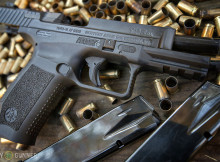
    First – if I have any type of firearm performance issue I will be able to differentiate the suspect magazine from other mags for the same gun. This will help narrow down if the performance issue is related to a specific magazine or possibly ammunition or a gun problem.

    Second – ownership is a consideration. Numerous times I have been shooting with friends and having common armament has led to confusion on who owns which magazine. Marking them solves that dilemma.

    20160723_082729

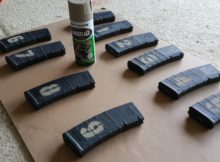
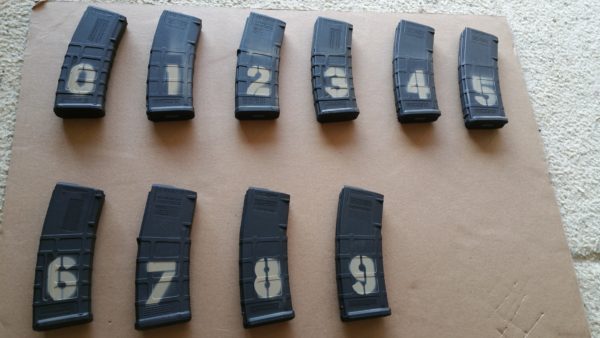
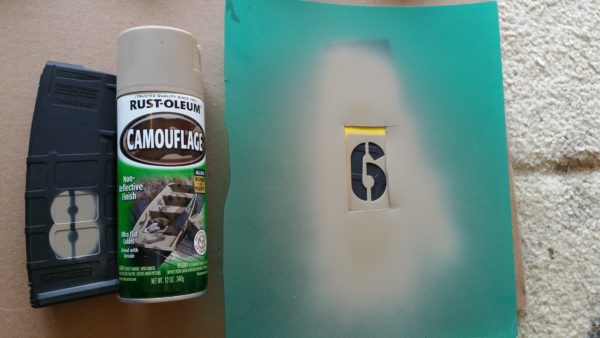
    For rifle magazines I use a stencil with numbers/letters. As can be seen above the first few I had some overspray. I took the plastic front cover off a 3-ring binder and cut a square to place the stencil. This stopped the overspray issue. 

    20160723_082825

    I am using large characters on the AR magazines for easy recognition. A small number on the floor plate would work but I want maximum visibility.

    For pistol magazines a simple Sharpie does the trick.

    Some shooters I know only mark magazines they have problems with and then chuck ’em if the problem repeats. That’s fine just not my preference. I’ve seen in forums that some people put their initials and even their address on them. Gotta pass on those two choices.

    One last use of magazine markings is to identify the type of ammunition used in the magazine. It may be advantageous to know that Magazine #4 is loaded with 28 rounds of XM855 while the others have standard XM183’s.

    Rourke


    If you have enjoyed this article and would like to receive email notifications when new posts are published – feel free to subscribe for email updates. No SPAM will be sent to you.

      *    *    *    *    *    *    *    *    *    *    *

    From the Supply Depot: RECOMMENDED SUPPLIES

    PRI-G Fuel Stabilizer/Storage Additive

    Maxpedition Mini Organizer

    OD Musette Bag

    Tremors 5: Bloodlines DVD

    Stanley Adventure Camp Set

    *    *    *    *    *    *    *    *    *    *    *

    Looking for Preparedness Supplies? Check out the Fantastic Monthly Sale at Emergency Essentials.

    Emergency Essentials has been an industry leader for over 25 years. Excellent service and prices have kept them leader of the pack.

    728x90june2016 (1)

    From food storage products to camping supplies Emergency Essentials carries it all.

    *    *    *    *    *    *    *    *    *    *    *

    Recommended reading for every Patriot? 

    Untitled design (8)


  • Thoughts on guns, ammo, spare parts

    Thoughts on guns, ammo, spare parts

    Loyal reader Lightning recently commented that it is better to have a few guns with lots of ammo than lots of guns with little ammo. I agree. For many of us and I include myself in this group we are gun nuts at heart. We “collect” guns and often use the excuse that we need them for our preparedness system and ignore funding ammunition stores as we should.

    How about spare parts? How many of us have extra firing pins, buffer springs, and bolt carrier groups? We will spend $1000 on an AR and hundreds if not thousands on ammunition and zero on spare parts. This should not be the case.

    Granted most of us will never see a worn buffer spring or bolt but the investment is minimal. As prepper’s we do not think of what most likely WON’T happen we consider the possibilities of what MIGHT happen. A broken firing pin will render a firearm useless.

    Rourke

     *     *     *     *     *     *     *     *     *     *     *     *

    Cheap Bulk Ammo at Lucky Gunner


    *     *     *     *     *     *     *     *     *     *     *     *

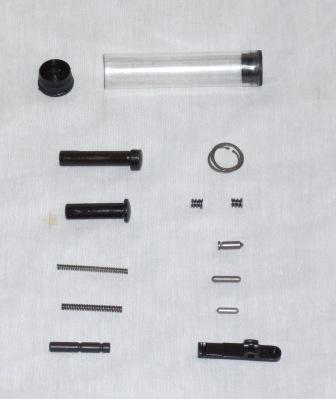
    Choate, Machine, and Tool offers their AR-15 Essential Spare Parts Kit for $29.99. The kit comes with an Extractor, Extractor Pin, Two Extractor Spring Assembly, Ejector/Selector Detent Spring, Selector/Safety Detent, Takedown/Pivot Pin Detent, Takedown/Pivot Pin Detent Spring, Takedown Pin, Pivot Pin, Hammer/Trigger Pin and Three Bolt Gas Rings. These are the part most often lost or most often to fail on the AR platform.

    AR_essential

  • Scenario: The Future of Gun Control

    Scenario: The Future of Gun Control

    by John Gault

    This may break some hearts but as preppers we are obligated to look honestly at future challenges and attempt as best we can to prepare for them. Per the rules of this site I will keep politics to a minimum. I hate rules but like everyone else I try to follow them. This may end up long but your a curious bunch so hopefully you’ll stick it out till the end. Let’s get started….

    Fast forward to the year 2019. The balance of power has shifted in Washington as well as the Supreme Court in a dramatic and for many, disastrous direction. Gun control has become the number one issue in Washington. Likely because the previous administration’s 8 year run had been so successful at solving all this countries other problems…chuckle… Per the Presidents directive congress drafts, votes on and passes a new and sweeping gun control bill. Here we could dicker over the specifics and legalities, but toward what end? We know with certainty that the next atrocity “which never happens anywhere but here” would usher in even stricter controls, so for this exercise let’s just go full monty.

    “I stand in support of this common-sense legislation to license everyone who wishes to purchase a gun,” she says. “I also believe that every new handgun sale or transfer should be registered in a national registry, such as Chuck is proposing.”

    Hillary Clinton

    They pass a complete ban on semi-auto rifles, shotguns and pistols. Anything that self loads another round all by its own-self becomes illegal within 8 months. In a calculated ploy to take advantage of the now perpetually under performing economy a generous buyback program is initiated with an incentive paying 2 to 3 times market value, its only money and they have the keys to the vault. To sweeten the incentive they include an up to 10 year prison sentence for anyone in possession of a self loader once the buyback period ends. Possession of a non-permitted machine gun or silencer currently carries an up to 10 year prison sentence. See how well it works….

    Home break-ins and gun thefts immediately spike.

    A third of the country revolts, but break no laws. There are huge rallies, protests and marches, the government ignores them. Talk of revolution fills social media. “The time has finally arrived, tyranny is at our doorstep”. “Don’t Tread On Me”, “Cold Dead Hands” and all that. “Molon Labe” becomes the clarion call. A thousand + one lawsuits are filed. But they will take forever or near enough to adjudicate and everyone knows what the outcomes will be once SCOTUS has its say. The government is under no obligation to wait for any ‘predetermined’ rulings and besides they tell us…”it’s for the children.”

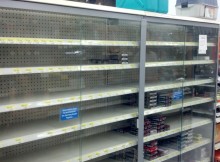
    During the months preceding the vote every brick & mortar and online gun store is stripped of its inventory, every avenue of purchase is exhausted. After the vote gun and accessory suppliers act as if semi-autos never existed. Soon rumors spread of backroom deals between the government and the main players in gun manufacturing. Whispers of lucrative guaranteed contracts, subsidies and zero interest bailouts that need never be paid back are all but admitted to. The smaller manufacturers will either convert to manufacturing legal items such as car parts, or will shutter their doors. Their skilled craftsman forced to trade in their calipers, micrometers and bore scopes for part time service jobs at 7/11, a local Jiffy Lube or if lucky, a full time position at Walmart. New job training is promised, it always is. But like the displaced coal miners in West Virginia and displaced manufacturing workers across the country who were trained for jobs that didn’t exist, the skilled craftsmen are forced to join the hundreds of thousands of others who’s talents grow stale in a country that doesn’t make anything.

    “Well, you know, my shotgun will do better for you than your AR-15, because you want to keep someone away from your house, just fire the shotgun through the door.”

    Vice President Joe Biden

    As each month folds into the next government commercials run endlessly touting the benefits of the buyback program and its “stimulus” effects, and the promise of a new, safer America that’s sure to follow. They compete with looped NRA fundraising commercials warning of lost liberty and of encroaching tyranny, but everyone knows the fight has already been lost. Meanwhile the buyback deadline looms. Few guns have been turned in but the effects of the ban are obvious. Webmasters across the interweb proactively begin to scrub any and all content related to the now offensive semi-auto. Once reliable links return only ERROR messages. Trading and enthusiast sites are disappeared. Videos and pictures, now  seemingly more objectionable than child porn are deleted. Repeat offenders are banished. Printed publications suffer the same. No more reviews, no more tests, no more comparisons.  No more drooling over glossy centerfolds of the latest and greatest in semi-auto weaponry. In their stead are the industries latest in revolvers, bolt actions and new lines of ‘tactical’ lever actions along with ‘refreshed’ tactical pump guns sans the pistol grips and flash hiders which are now illegal. Everything anyone might need to fight off the next round of tyranny….sigh….

    As the buyback period nears its end so to do the rallies, protests and tough talk on the internet. There’s been no bloody confrontations and the protesters are bored and tired of being ignored. Few guns have been turned in and this has created an imaging problem so a week before the deadline the buyback period is extended 2 months. Another $200 per weapon enticement is added. A small price to pay for crime free streets. No matter, the new deadline passes, hardly any guns have been turned in. The totalitarians in Washington declare victory. Two days later a Syrian refugee walks into a Catholic church during mass in New Jersey with an AK smuggled across the Mexican/Arizona border. He kills 33 before killing himself…….

    “We have federal regulations and state laws that prohibit hunting ducks with more than three rounds. And yet it’s legal to hunt humans with 15-round, 30-round, even 150-round magazines.”

    Senator Dianne Feinstein  

    And what of all the guns not turned in? Some are hidden or buried, most are simply stashed away and out of view. There are no mass confiscations, no door to door searches. The government doesn’t want a bloodbath anymore than the gun owners do. Besides it wouldn’t play well on the nightly news. Occasionally there’ll be a news story about some poor sap who’s house was searched because of some unrelated issue and will be found to have a couple of the banned semi-autos and a stockpile of 300 rounds. The media will make vague references to militia groups, separatists and the Tea Party, and the countless lives that may have been saved…..

    I believe we are much closer to this or something like it than many realize…..

  • Video: All The Equipment Needed To Start Reloading Ammunition

    Video: All The Equipment Needed To Start Reloading Ammunition

    I’m not a reloader and my overall knowledge of reloading is extremely basic. I have a buddy that will be taking me through the basics soon and in the Fall I will starting getting equipment.

    With California’s recent gun control measures which include ammunition restrictions as part of their measures reloading is beginning to look even more attractive than normal. Reloading may be a way to circumvent gun control measures involving ammunition restrictions.

    The following video provides a basic explanation of equipment involved for reloading. Any readers wishing to share their experience please do.

    Rourke


    If you have enjoyed this article and would like to receive email notifications when new posts are published – feel free to subscribe for email updates. No SPAM will be sent to you.

      *    *    *    *    *    *    *    *    *    *    *

    From the Supply Depot: RECOMMENDED MOVIES

    In the Valley of Elah – just watched. Excellent. Some profanity.

    Double Jeopardy

    San Andreas  – Action packed!!!

    MAX – dog lover? Must see.

    Tomorrow When the War Began – a bit cheesy but worth it.

    *    *    *    *    *    *    *    *    *    *    *

    Looking for Preparedness Supplies? Check out the Fantastic Monthly Sale at Emergency Essentials.

    Emergency Essentials has been an industry leader for over 25 years. Excellent service and prices have kept them leader of the pack.

    728x90june2016 (1)

    From food storage products to camping supplies Emergency Essentials carries it all.

    *    *    *    *    *    *    *    *    *    *    *

    Need clean water? 

    SAWYER MINI WATER FILTER (1)
     

  • Cheaper Than Dirt boycott continues

    Cheaper Than Dirt boycott continues


    Remember when Cheaper Than Dirt jacked up prices on ammunition and magazines right after Sandy Hook? I do – and have avoided them like the plague ever since. Of course they had every right to charge whatever they wished and I  – and countless thousands  – have every right to tell them “Keep it!!”

    I’ve had numerous people tell me they were practicing capitalism in a free market. Sure. They were also price gouging their customer base and taking advantage. My local gun shop went up in prices approx 20%. I gave them my business. This means I paid $1200 for a $1000 AR.

    Why was it OK for them to increase their price and not Cheaper Than Dirt? I am not saying CTD shouldn’t have raised their prices. My local shop HAD to raise their price as supplies were drying up. They looked at a situation where they may have significantly lower inventory in the coming months thus severe decrease in business. The cost on future products – AR’s, magazines, ammunition was also going up. They very well couldn’t sell me a box of 5.56 for $8.00 that was going to cost them $8.00 or more to resupply. In order to stay in business they had to raise their prices.

    No – Cheaper Than Dirt was different. They gouged the hell out of 2nd Amendment lovers and many others did the same thing. Hyatt Guns in Charlotte, NC started selling 5.56 and .223 rounds for $1.00 a round shortly after Sandy Hook. I haven’t set foot in that place and won’t.

    Many predict another similar environment is just a matter of time when supply will pale in comparison to demand and prices will skyrocket. Those in a position to watch from the sidelines knowing their inventories are set will enjoy the show while those still in need of supplies will stress over their ability to stock up.

    Stack it high – right now.

    Rourke


  • What Did You Do To Prep This Week?

    What Did You Do To Prep This Week?

    This last week has been interesting. With gun control being a hot topic and many in Congress agreeing that some measure of gun control legislation is needed gun shops of busy. Call it unneeded panic buying or being prudent I put back more ammunition. My emphasis was on .223/5.56 and 9mm.

    I also bought 3 additional Magpul PMAG’s.

    I ordered a few items but will talk about them once they come in.

    Oh – I am pretty disappointed with the Academy chain of sporting good stores. They have moved all the “tactical” long guns to the back. They are still selling AR’s and such but you have to ask for them. Ridiculous. I’m not sure they will ever get another penny from me again.

    So – what have you done this past week?

    JR


    cheap ammo
     

  • Gun sales on the way up

    Gun sales on the way up

    With the anti-gun rhetoric from the Left being spewed since Orlando guns and ammo sales are climbing. Obama just called for the establishment of a new assault weapons ban. I spent some time checking a few online dealers and found a few of their more popular selections sold out. There was still plenty of ammunition available and prices seemed decent – for now.

    Call it panic buying or call it common sense. When the threat exists to take away or limit the ability to defend oneself  – well – you go out and stock up.

    My childhood best friend contacted me a few weeks ago. We see each other a couple times a year. He mentioned that he and his wife wanted to buy a couple guns. I asked why and he said – “The world is getting crazy.” He knows I’m a gun nut. Last week he bought a Glock 17 and just today he ordered a S&W AR. We are scheduled to get together beginning of July so we can do some training.

    I have no idea his political beliefs. I have always avoided the topic as I was afraid it could affect our relationship.  I will avoid the subject of politics but will certainly discuss gun control, governmental monetary policy, and the direction the country is going.

    Are you doing anything as a result of the Orlando attack and gun control talk?

    Rourke


    If you have enjoyed this article and would like to receive email notifications when new posts are published – feel free to subscribe for email updates. No SPAM will be sent to you.

      *    *    *    *    *    *    *    *    *    *    *

    From the Supply Depot:

    Anker 21W Portable Solar Panel – highly rated portable charging solution. Includes 2.1A USB outlets for charging cell phones. ALso great for charging batteries of all kinds.

    Chili Mac MH Freeze Dried Food – my favorite

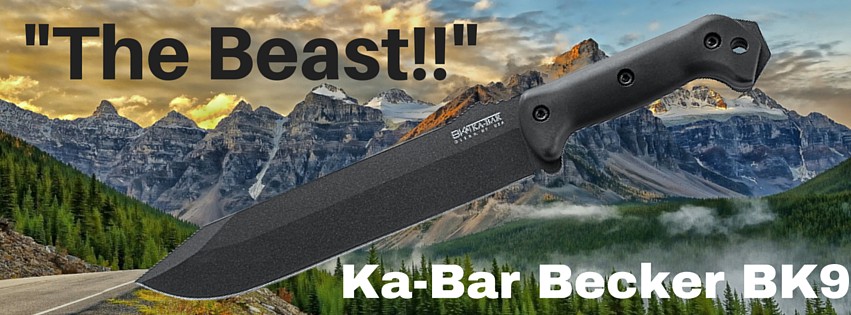
    Becker BK9 – THE BEAST of the knife world.

    The Pocket Fisherman – a classic that is fun and actually works!

    YAESU FT-1900R Ham Radio – powerful option from a quality company.

    *    *    *    *    *    *    *    *    *    *    *

    Looking for Preparedness Supplies? Check out the Fantastic Monthly Sale at Emergency Essentials.

    Emergency Essentials has been an industry leader for over 25 years. Excellent service and prices have kept them leader of the pack.

    Print

    From food storage products to camping supplies Emergency Essentials carries it all.

    *    *    *    *    *    *    *    *    *    *    *

    Cheap Bulk Ammo at Lucky Gunner

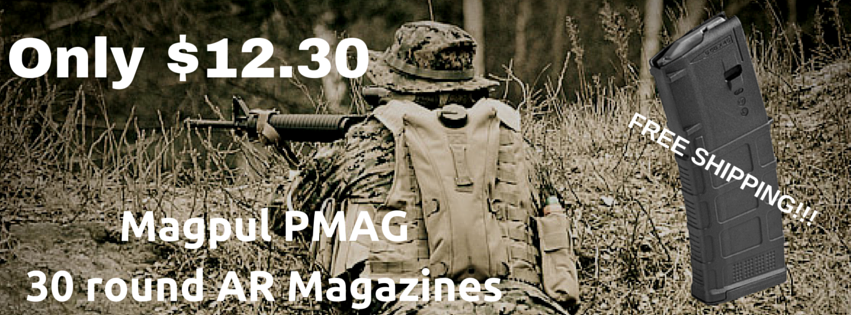
    Looking for AR magazines? 

    Magpul PMAG 30 round AR Magazines (1)

  • Orlando mass shooting

    Orlando mass shooting

    Terrible event that happened in Orlando. If you need the details see this news story here.

    Several of us have been talking and like other similar events the Liberal Left is coming out aiming directly at guns rather than placing blame where it belongs – radical Islam and the Muslim shooter. There is little doubt gun control advocates will take full advantage of this to promote further restrictions on the 2nd Amendment. This event combined with the 9th Circuit Court’s recent decision on concealed carry is setting the stage.

    Hillary Clinton will also politicize Orlando to her advantage. She will motivate her electorate to drive her numbers up to secure the election.

    It is difficult for many to look past the death and the needless waste and separate out the value of the free to bear arms over the often too-quick reaction to just ban that which causes the pain. Well – in my mind that which caused the pain in this instance is Islam – not the guns.

    JR

  • VIDEO:  Training day with Dave from Wolf-Fire

    VIDEO: Training day with Dave from Wolf-Fire

    Here is a video from last weekend when Prepper Ralph and I took a firearms class from Wolf-Fire Firearms. I cannot emphasize how much I get out of these classes. Many mistakes are made – which allows for learning and correction. Each class I have taken I surprise myself with how much better I do with the next one.

    You’ll have to excuse me at 2:12.

    Rourke


  • On firearms training

    On firearms training

    While thinking about firearms training Goingray58 sent in some info on the Appleseed Project. This is real firearms training and pretty inexpensive.

    Some links:

    Website:

    http://www.appleseedinfo.org/

    Classes by State:

    http://www.appleseedinfo.org/search-states-map.php

    Pricing:

    http://www.appleseedinfo.org/pricing.html

    FAQ: (answers most of my questions)

    http://www.appleseedinfo.org/as_prepare.html

    Facebook:

    https://www.facebook.com/projectappleseed/

    Lucky Gunner: (participant article)

    http://www.luckygunner.com/lounge/what-is-project-appleseed/

    Wikipedia: (origins and stats)

    https://en.wikipedia.org/wiki/Project_Appleseed

    banner

    Has links at the bottom to all sorts of other training .. most you have heard of.

    I don’t care if people are crack shot SOG troops.. but the ability to effectively use a rifle is a solid idea..  and the concepts taught are constitutional.

    All of that sounds good to me…..

    GG58

     – – – – – – – – – – – – – – – – – – – – – – – – – – – – – – – –

    Rourke: Thanks Goingray58!


    If you have enjoyed this article and would like to receive email notifications when new posts are published – feel free to subscribe for email updates. No SPAM will be sent to you.

      *    *    *    *    *    *    *    *    *    *    *

    From the Supply Depot: RECOMMENDED MOVIES

    Red Dawn(1984) – a classic.

    The Revenant

    THEM – a classic monster flick from the 50’s. Love this movie.

    The 5th Wave

    The Last Ship – TV series

    *    *    *    *    *    *    *    *    *    *    *

    Looking for Preparedness Supplies? Check out the Fantastic Monthly Sale at Emergency Essentials.

    Emergency Essentials has been an industry leader for over 25 years. Excellent service and prices have kept them leader of the pack.

    728x90june2016 (1)

    From food storage products to camping supplies Emergency Essentials carries it all.

    *    *    *    *    *    *    *    *    *    *    *

    Need clean water? 

    sp128-sawyer-mini-water-filtration 

  • Don’t have an AR?

    Don’t have an AR?

    Seems that AR prices continue to drop. Sub-$500 AR’s that actually work are becoming more and more common from different sources. The days of an AR being a dream purchase are pretty much over. Layaway, financing, and of course saving are options to purchase one of these budget-friendly beasts.

    ClassicFirearms.com often have Bear Creek AR’s for under $500.  I used to have one of Bear Creek’s uppers and it was great. A friend has two of these AR’s and he speaks highly of them.

    bear_creek_flattop_ar15_nobg_1000w_1_v4


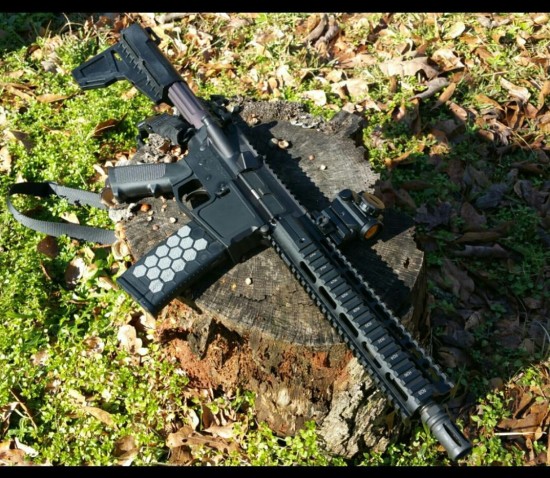
    Del-Ton makes the Del-Ton DT Sport Lite available for as low as $469.99. DPMS’s Sportical is available for around the same price. Anderson makes a very nice looking AR running $499.99.

    Even these budget AR’s can be further customized to fit the owner as needed.

    There are other great firearms out there and you should get what you can afford. More and more it is looking like that which can be afforded is an AR.

    Oh – and with the coming election who knows what will happen to the availability to purchase AR’s in the future.

    JR


  • Trajectory of the .223/5.56 round in a Carbine

    Trajectory of the .223/5.56 round in a Carbine

    With the popularity of the AR platform and the .223/5.56 round I thought it would be a good idea to review the trajectory of the round and common sighting ranges. Being a high velocity round the trajectory is relatively flat within a few hundred yards – past 400 the drop-off is significant.

    eotech

    There are several philosophies on sighting in the AR and what range in best. Here are a few examples:

    50 Yard Zero – Sighting in the AR to be on the money at 50 yards is extremely popular and typically what I do. Why? Because at 100 yards I will be hitting about 1.5″ inches high and at 200-225 I will be back on the money. This provides excellent accuracy from 0 out to past 250 yards with little if any compensation especially if we are talking about shooting man sized targets.

    This is by far the most popular method used for sighting in an AR.


    100 Yard Zero – Not a bad option at all. With a zero of 100 yards the .223/5.56 round will impact approx 3/4″ low at 50 yards and around 2.25″ low at 200 yards.


    25 Yard Zero – I don’t care at all for sighting in at 25 yards. When zeroed at 25 yards the round will also be zeroed at 300 yards. This strategy does not provide much of an advantage unless longer range shooting is planned. The problem is between 25 and 300 yards where either the rear sight has to be adjusted for elevation while shooting or english used.

    All these numbers are relative and depend on specific barrel lengths, loads, and barrel rifling.

    I recommend the 50 yard zero.

    JR


      *     *     *     *     *     *     *     *     *     *     *     *     *

    Supplies for the Zombie Apocalypse..... (4)

    Here are a few recommended preparedness supplies and items:

       *     *     *     *     *     *     *     *     *     *     *     *     *

    Check out the Emergency Essentials Monthly Sale!

    Emergency Essentials has been a leader in the preparedness industry for well over 20 years. Monthly featured sales offer huge discounts on many preparedness products including freeze dried foods.

    728x90feb20161

    Emergency Essentials carries Mountain House as well as their own house-brand of freeze dried foods. Great prices and inexpensive shipping provides a great way to increase food stores and save money in the process.

    Visit the Emergency Essentials website for more information.

     *     *     *     *     *     *     *     *     *     *     *     *     *

    Want to help support what we do here at 1776PatriotUSA.com? Follow any link from this website to Amazon, make a purchase, and we receive a small commision at no additional cost to you. Zero. Nada.

    Amazon-Logo-schwarz

    Amazon has a little known feature called “Best Selling” lists. Basically they rank the most popular products purchased within certain categories.  Here are a few Best Selling lists you might be interested in…..

    Best Selling Camping & Hiking Products

    Best Selling Hunting & Fishing

    Best Selling Flashlights & Lanterns

    Best Selling Tents & Shelters

    Best Selling Tactical & Personal Defense

    Thank you!!

  • What did you do to prep this past week?

    What did you do to prep this past week?

    All last week I looked forward to camping on Friday – and attending a firearm class on Saturday. Friday night I set up my new Eno doublenest hammock for the first time using the Helios suspension system. The Enos is a great hammock but what really shined was the Helios. It makes the hammock setup and adjustment incredibly easy.

    While setting up had a fellow group member go over a few things including finding fatwood, identifying some of those horrible 3 leaf plants such as poison ivy, and we found some edible local plants.

    After the sleep system was put in place Prepper Ralph(partner over at The Patriot Podcast) and I did some night shooting using my M&P15-22 with attached light. It was a great experience. We did a lot of shooting with the M&P and I think Ralph was pretty impressed. It continues to impress me with its accuracy and reliability.

    The temperature dropped overnight down to 43 degrees.  The black bag from my MSS(Military Sleep System) kept me very comfortable.

    Saturday morning I woke up just prior to 7:00 am  and fired up my Coleman propane stove and cooked breakfast. I discovered Prepper Ralph doesn’t like bacon. I am now contemplating that he may be a communist. Who doesn’t like bacon? I mean…..it’s BACON!

    bacon

    Once the whole group arrived we began training. Of course safety was covered first and then we got down to business. It was a good refresher and a lot of fun. I felt good with my performance and also that of my guns. I used my AR pistol and my Canik TP9SA. I ran a Condor Plate Carrier.

    temp_regrann_1460857217966

    It was a great time and look forward to doing it again soon.

    So – what have you done this past week?

    JR

  • The argument FOR uncommon calibers

    The argument FOR uncommon calibers

    It is often professed that a weapons stockpile should consist of firearms in common calibers for one very important reason: Resupply. Due to the sheer volume of rounds with calibers such as 9mm, 45ACP, .223, .308, and .22LR if things get bad these calibers will always be readily available.

    Well, maybe not.

    Remember the months and months that followed Sandy Hook? It was extremely difficult to find ANY common calibers unless one was willing to pay some extremely inflated prices. I would visit my local gun shop, Academy, Wal-Mart, and DICK’s and there was no 9mm, no .223/5.56, no .22LR. Those were the calibers at the time I was searching for. There was also no 45ACP, no .308, and no .380.  I also could not find any .30 Carbine. I did see 10mm sitting on the shelves. There sitting lonely covered with dust were other calibers such as .270, .300 Winchester Magnum, and even .30-06 occasionally. Back then even the .22 Magnum was readily available for quite some time.

    Over the last few months since the pandemic ramped up ammo firearm and ammo sales have gone through the roof. A very similar situation has occurred although ammunition is in better supply and prices are more favorable than after Sandy Hook.

    I totally understand the theory that the chances of coming across common ammunition such as 9mm and .223 anywhere in the United States are much greater than finding .41 Magnum. Absolutely I agree. With that in mind there are some advantages to the less-popular calibers.

    I remember after Sandy Hook two things:

    1.  I wish I had stocked up on more ammunition when I had the chance.
    2.  I wish I had owned a couple of guns such a .22 Magnum and 10mm.

    Lessons learned. Next time – and there will be a next time – be stocked up on what you need BEFORE a shortage happens.

    Take care all –

    JR

  • Why You Need Body Armor

    Why You Need Body Armor

    By Chris Taylor, SafeGuardArmor.com


    The importance of security and self-defence is one of the main driving forces behind preparation. By preparing for difficult and unforeseen situations, an individual can stay safe and maintain her or his liberty and security. Building food stores, keeping well-stocked caches and maintaining one’s own skill set and knowledge all goes towards one’s security and self-defence. However, all too many see these factors- self-defence in particular- as a matter solved by guns. Stocking up on weapons appears to be the be-all and end-all of security and self-defence for many, and even the most knowledgeable prepper may forgo any other measures in favour of several assault rifles.

    However, as any reasonable person will tell you, it is very easy to be injured or even killed by a firearm. Moreover, even without considering the danger of facing someone else with a firearm, accidents will always happen no matter how careful one is. Therefore, you cannot simply fight fire with fire, and self-defence has to involve more than weapons. You need to ensure you are protected, particularly against firearms. You need a bullet proof vest.

    There is really no reason not to consider body armor, and anyone even remotely interested in their own safety should be open to all options. AS noted above, however, far too few are. If for no other reason therefore, wearing a bullet proof vest can give you the upper hand over other heavily armed individuals, and can mean the difference between life and death.

     coovert_1_2

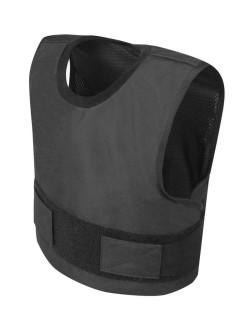
    The first thing to know about bullet proof vests is that they are available in a variety of styles, models, and fits, not to mention different levels of protection. This variety means that it can be difficult to know which bullet proof vest is most appropriate for your situation. However, ensuring you have the right fit is a good start. This has been of particular interest to women, who have for too long not had sizes available for them. It is important that body armor fits your body properly, as an ill-fitting vest may have gaps in protection. Women have traditionally had to make do with vests designed for male figures, meaning their protection cannot be guaranteed. Thankfully, manufacturers are increasingly offering vests designed for women, as part of an effort to provide a better range of sizes for everyone.

    The most important aspect of body armor to be aware of however is the protection it can offer. As already mentioned, there are a variety of protection levels available according to the ammunition it can protect against. Ballistic protection is regulated by the US National Institute of Justice (NIJ), which is widely recognized as the world leader in ballistics testing. This testing is then applied to levels, which it ascribes to body armor. This allows anyone to know what their armor can protect against at a glance.

    While all bullet proof vests will most likely use soft fabrics like Kevlar, higher levels of protection require hard materials. Armor that only uses fabric is known as ‘Soft Armor’, and is available up to and including NIJ Level IIIa, providing protection against high velocity 9mm full metal jacketed round nose bullets, as well as .44 Magnum jacketed hollow points, in addition to all the ammunition provided by lower levels.

    Each level of protection can stop the ammunition listed at lower levels. Level IIa armor is considered the minimum recommend protection for all armor, and is capable of protecting against 9mm full metal jacketed round nose and .40 S&W full metal jacketed ammunition, which are commonly found in most handguns. Even this ‘basic level’ is capable of protecting against a wide variety of rounds, with 10mm Auto, .357 SIG, and even .45 ACP rounds all covered by this level of protection. The Level II armor, conversely, can protect against all this as .357 Magnum jacketed soft points and the 9mm Parabellum fired at higher speeds. As mentioned above, however, the 9mm fired from a semi-automatic will require Level IIIa armor.


    Higher levels of vests will require additional materials, as mentioned above. These vests are therefore known as ‘Hard Armors’, as they will usually use rigid plates of ceramics and/or polyethylene over the top of fabric like Kevlar. This naturally increases the weight and bulk of a vest, but provides much stronger protection and can even protect you against explosives and fragmentation. It may be tempting therefore to simply opt for the highest level of protection available, especially as even hard armor can be worn in a discreet covert vest. However, the extra weight and bulk can do more harm than good, and may fatigue you. Therefore, unless you expect to be facing these types of threats, it is better to opt for a lower level.

    Hard Armor is available at NIJ Level III and IV, which is the highest available level of ballistic protection. Level III hard armor protects against 7.62mmx51mm NATO full metal jacketed rifle rounds, as well as the 5.56x45mm NATO round. Most rifle and automatic rounds are covered by the Level III, including such staples as the .30-06 and the .308 Winchester. However, the highest level of protection, the Level IV, offers protection against all these bullets, as well as armor-piercing variants.

    As briefly mentioned above, even higher levels of protection are available in discreet vests. Body armor can be split roughly into two categories; covert and overt. This determines whether a vest is worn underneath or over clothing respectively, and each style has its own advantages and disadvantages. For example, covert vests offer you discreet protection, meaning you can wear a vest in almost any environment without displaying your protection. However, there are times when you will want to display your protection and therefore your preparedness. An overt vest is worn over clothing and can be augmented with pouches and pockets, making it a useful addition to a uniform for example. Of course, there is no way to hide this.


    There are many different options available in body armor, each with its own advantages and disadvantages. The decision as to which is most appropriate has to reflect your own preparation and awareness, and most be relevant to the situation you will find yourself in. There are additional options available, such as Tactical Armor and Ballistic Helmets. Whatever you decide on, it has to reflect your own preparation. Whatever the choice, it can spell the difference between life and death.


  • The most overused term in firearms….”tactical”

    The most overused term in firearms….”tactical”

    Every time I turn around I see the word “tactical”.

    Tactical pens. Tactical pants. Tactical socks. Tactical shoes. Tactical belts. Tactical knives. Tactical flashlights. Tactical backpacks. Tactical gloves. Tactical watches. Tactical scissors. Tactical hats. Tactical patches. Tactical handcuffs. Tactical wallets. Tactical lunch boxes. Tactical money clips. Tactical ear plugs.

    ……and yes….even Tactical Bacon.

    Since Obummer got into office everything related to firearms has become popular. Although he wishes he could disarm every American the reality is he has been the biggest salesman of firearms in history. Along with this “tactical” has become a marketing term stuck in front of almost everything that is even remotely related to guns – or not.

    I present to you…..the tactical bottle opener.


    tactical-bottle-opener


    My biggest issue with the overuse of “tactical” is far too many people buying products that have tactical in the name and thinking that somehow it is endorsed or related to law enforcement and military. A lot of folks out there are getting ripped off.

    Well – I need to go. Have to go try out some tactical toilet paper I just got in.

    JR


    -The Beast!!-