It’s only been a few months since this was published but I think it’s worth another look. With the OMICRON variant reaching our borders as well Delta still circulating through the population taking precautions is certainly prudent.
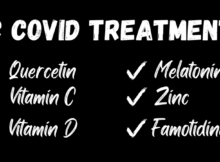
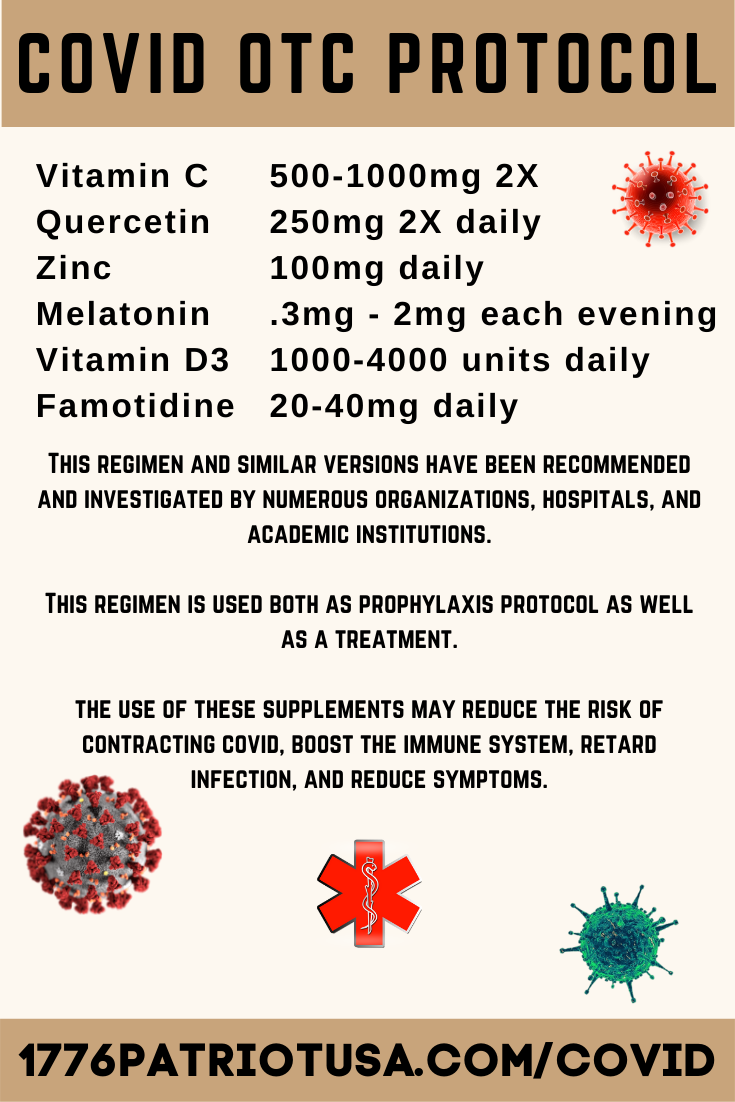
With many not interested in getting vaccinated, over-the-counter treatments are gaining more and more attention. One treatment protocol of particular interest revolves around the combination of quercetin, vitamin C, vitamin D, zinc, melatonin, and famotidine.
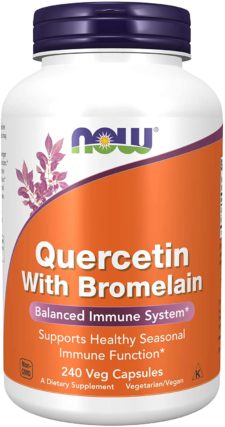
Quercetin – In at least one published study the oral ingestion of quercetin was shown to decrease symptoms and improve conditions in COVID patients. Quercetin, a plant flavonoid, gained notoriety when researchers in China found that quercetin and other small molecules bind to the spike protein of the SARS-CoV-1 coronavirus, interfering with its ability to infect host cells.
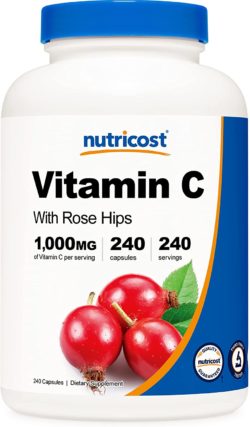
Vitamin C – Vitamin C is one of the safest and most effective nutrients. It may not be the cure for the common cold, the benefits of vitamin C may include protection against immune system deficiencies, cardiovascular disease, and assists with wound healing and inflammation reduction.
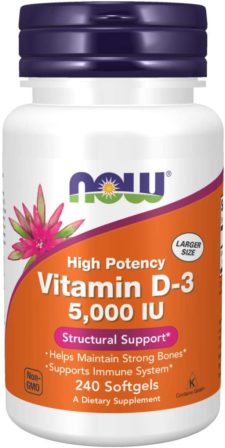
Vitamin D – Vitamin D is involved in calcium absorption, immune function, and protecting bone, muscle, and heart health. It occurs naturally in food and can also be produced by your body when your skin is exposed to sunlight. Vitamin D deficiencies are becoming more common.
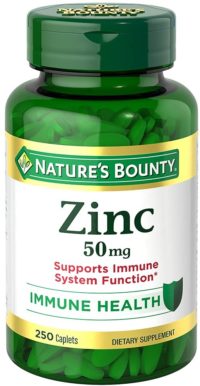
Zinc – Zinc helps your immune system and metabolism function. Zinc is also important to wound healing and your sense of taste and smell.
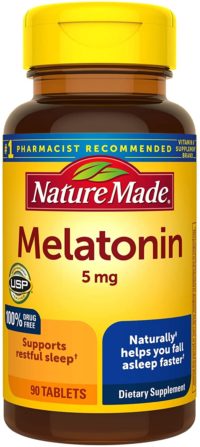
Melatonin – Melatonin is most often used to improve sleep, which may be beneficial for immunity.
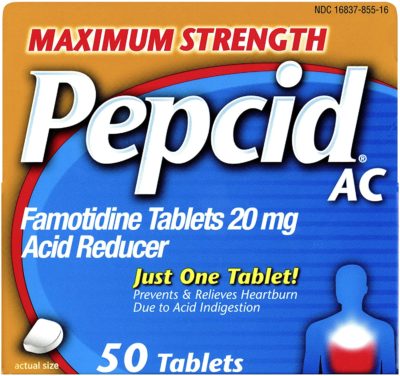
Famotidine – Famotidine? It’s the active ingredient in Pepcid – the heartburn medicine. How could a heartburn medicine possibly have a positive effect on those with COVID? Studies in New York have shown positive results. Early in the COVID pandemic in China reports showed famotidine to improve patient outcomes and reduce symptom severity.
From a preparedness perspective, alternative medicine has always been an important consideration. After all, you never know when access to needed medical care may be absent. In these crazy times it may not require a grid down, EMP-induced apocalypse to need alternative medical care.
Disclaimer: I am offering this information as entertainment only as I am no doctor, though, I have stayed at a Holiday Inn Express.
Imagine that medical care was inaccessible, or at least extremely difficult to access. Not very farfetched with the insanity that continues to go on in the world. I’ve been into survival and preparedness for over 30 years and there’s never been a better time to have a resource like The Survival Medicine Handbook. I’ve had two prior revisions and they were awesome. This new revision? Simply fantastic.
Don’t be one of those that spend hundreds or thousands on guns and ammo and then skimps on medical resources.
I previously published this a few years ago and with new people visiting the site thought it would be a good idea to bring it back around. – Rourke
Will you have what you need in a medical situation or emergency if one arises and there is nobody to call for help? No 911, no ambulance, no hospital; just you and the supplies you have. That thought should guide you as you plan for what you will need at a home/retreat in the event of an SHTF situation. Keep in mind that you may have more than just your immediate family to care for. Getting medications in children’s strengths and in chewable or liquid forms should also be considered.
Here’s a list that can get you started:
Medications:
Antacids- Omeprazole (Prilosec OTC) is something that you can take daily to help prevent acid reflux, this medication is not for treatment of current heartburn and may take 1-4 days to start working. For occasional heartburn or indigestion get some chewable antacids such as TUMS.
Antibiotics- Fish antibiotics are stocked by some preppers as a replacement for antibiotics that are prescribed by physicians. Not every antibiotic will kill every bacteria. Without knowing the type of bacteria you are fighting you should use a broad-spectrum antibiotic such as Ampicillin or Amoxicillin. These can sometimes be found at farm supply stores such as Tractor Supply and various online sites.
Antibiotic cream- Neosporin ointment can be used on a clean wound to help prevent infection from a burn, scratch, cut that could become infected.
Antidiarrheals– Pepto-Bismol and Imodium are common upset stomach medications. If your food storage diet does not parallel your normal diet gastronomical issues could become an issue.
Anti-fungal cream– This will treat skin infections caused by a fungus. For example, ringworm, diaper rash, athletes foot, and jock itch.
Antihistamines- Diphenhydramine aka Benadryl helps with nausea, sleep and most importantly an allergic reaction. Keep Benadryl liquid as well as tablets on hand. If someone is having an allergic reaction liquid will work faster. There are also chewable tabs available for kids (and some adults) who can’t swallow pills. These can also assist those struggling to sleep get the rest they need.
Antivirals- Abreva is an over the counter ointment used for herpes simplex virus that causes cold sores on the face and or lips to keep on hand. Antiviral medications that are taken for the flu, shingles, and chickenpox are only available via prescription.
Eye Rinse//irrigations
Nasal Sprays
Pain/fever relievers – Examples of these are Acetaminophen aka Tylenol or Ibuprofen aka Motrin or Advil. Aspirin is also used as pain/fever relievers and is also used as a blood thinner. Aspirin in the form of a chewable 81mg tab is also used at the onset of chest pain because of its anti-clotting properties.
Wound cleaner- Anytime you get an abrasion it is imperative that the first thing you do is clean the area. If soap and water are unavailable Bactine spray works great. Hydrogen peroxide and rubbing alcohol are not recommended as they delay healing by damaging healthy tissue, however, they can be effective in killing bacteria from surfaces such as tweezers or hands.
Supplies:
Bandages- Different sizes and shapes
Crutches
Face masks
Gauze- Variety of sizes
Ice packs- (Instant cold packs that that will activate with a squeeze will be very useful)
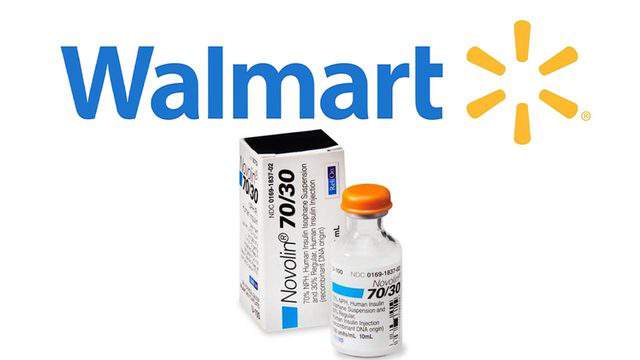
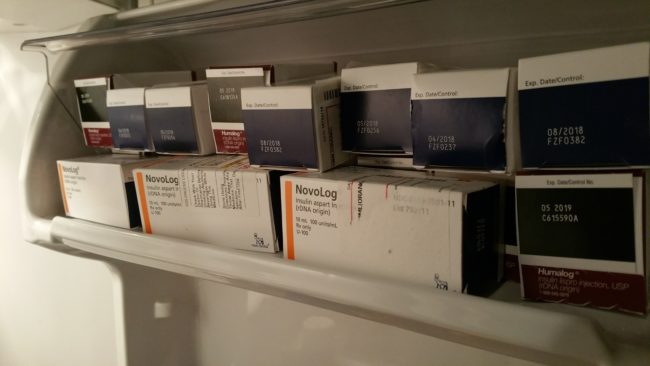
Insulin- For those who want to stock insulin there is a brand called ReliOn that is sold over the counter at Walmart’s pharmacy. Like all insulin, it needs to be refrigerated. Any diabetic who considers using this needs to speak with their provider to get guidance on what dose is needed.
All items listed are good to keep at the retreat, at home, as well as in a bag. Keep your stock updated in regards to expiration dates. The sterility of sterile items could be compromised if you keep them past the expiration date or they are exposed to extreme hot or cold. Giving someone an infection when you were only trying to help could definitely cause unneeded use of resources and time. If the SHTF you would want the freshest things possible to start.
As with any medication, you should seek the advice of a medical expert. Know the side effects of medications, contraindications of use and look for adverse reactions after medication or treatment has been given.
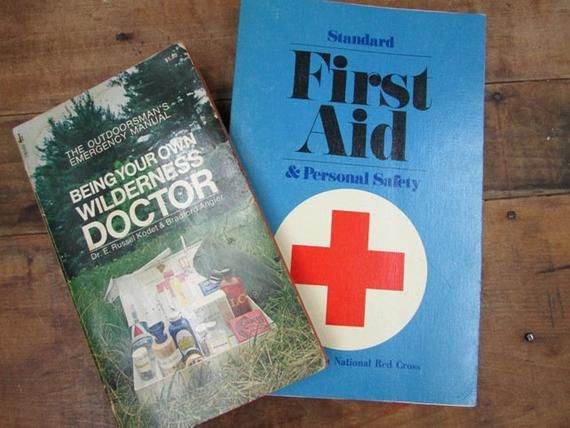
Being prepared for a medical emergency doesn’t just mean collect as many items as possible, it means becoming knowledgeable as well. Find out what your local hospital offers for CPR/First Aid classes and get books to keep as reference guides in the event there is no internet. First aid and basic medical knowledge is a prep that is valuable at any time, no matter the situation or state of our country.
I look forward to seeing comments and additions to this list from the readers!
I previously published this a few years ago and with new people visiting the site thought it would be a good idea to bring it back around. – Rourke
Being without much-needed medical supplies when you need them is scary. While working as a nurse outside the hospital setting people often looked to me for medical advice. Not having the convenience of a physician or other trained medical personnel when health issues arose made me plan two or three steps ahead for things that could potentially happen. Making sure that I had the necessary first aid supplies and continually updating those supplies was the one thing that I could control.
For the purpose of this article, let us assume that your first aid kit will be at a climate-controlled retreat location, although keep in mind moving at a moment’s notice could be possible. If your supplies ever have to be moved or are exposed to extremely high or low temperatures remember that this could affect the efficacy of medications or sterility of some items. Rotating your supply and keeping a spreadsheet with expiration dates is a great way to see what items you may want to replace. Supplies that have expired may also have compromised sterility or efficacy, although I would agree that if the SHTF an expired something is better than nothing.
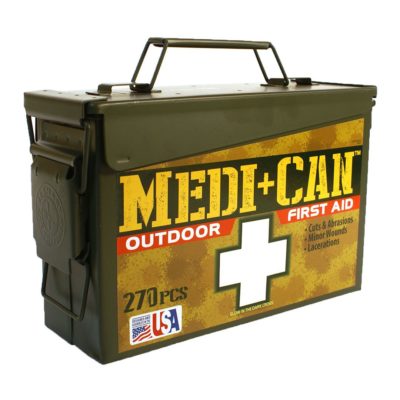
There are many things to consider when deciding what kind of first aid kit is best for you. I would recommend getting a standard first aid kit and building on that is one of the best ways to get started. Prepackaged first-aid kits on Amazon with 4 plus star reviews that will get you started and you can personalize to meet your needs are as follows. – – – > https://amzn.to/2OSu0y7 – Hey, first aid supplies in an ammo can….COOL!!!!
This one is small, less than $20, and has over a hundred reviews. – – – – > https://amzn.to/37tyMZb
Get one big enough for the number of people you think you will be with and then add a few, you can never be too prepared in the area of first aid as you never know when you will be able to get more or who or what situation you may be faced with. Again, keep in mind that supplies expire and the sterility of supplies or the efficacy of some medications could be affected if past the expiration date.
I know that we said this first aid kit was assuming you would be at a retreat location, however, keeping a waterproof bag for transportation of medical supplies handy if such an occasion arises could be a potentially life-saving idea. If you have to leave, leaving first aid supplies behind would not be wise. Also, consider keeping a lunch box or something you can put items that may need to stay cool in just in case. If an ice pack is not available you could use an instant ice pack for transport. They are nice to have for injuries too! This is an instant ice pack that has a 4-star rating and you can choose from a couple of different sizes. – – – – > https://amzn.to/37tzt4J
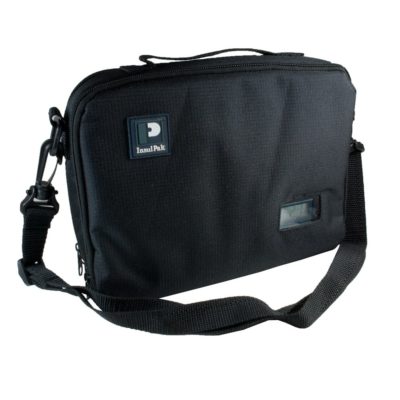
This bag is small and can keep things cool if not exposed to extreme outside heat or you can add an ice pack. Again, you need to consider what you will need to carry and how much. – – – > https://amzn.to/2wfzqgd
These are only suggestions and a way of getting you to think about what you may need and a quick way to get started on your retreat medical station. Watch for an upcoming article about medications to consider and advanced medical supplies. Until then, start making a list, read reviews on products, check expiration dates when you can and ask a lot of questions if you are unsure.
Coronavirus: With the influx of concern regarding coronavirus and related viruses, the addition of medical face masks and other PPE(personal protective equipment) would be prudent. Disinfectant materials such as Clorox wipes and antiseptics such as rubbing alcohol should be stocked up. There is no shortage of information available on the Internet for preparing for pandemics.
With many not interested in getting vaccinated, over-the-counter treatments are gaining more and more attention. One treatment protocol of particular interest revolves around the combination of quercetin, vitamin C, vitamin D, zinc, melatonin, and famotidine.
Quercetin – In at least one published study the oral ingestion of quercetin was shown to decrease symptoms and improve conditions in COVID patients. Quercetin, a plant flavonoid, gained notoriety when researchers in China found that quercetin and other small molecules bind to the spike protein of the SARS-CoV-1 coronavirus, interfering with its ability to infect host cells.
Vitamin C – Vitamin C is one of the safest and most effective nutrients. It may not be the cure for the common cold, the benefits of vitamin C may include protection against immune system deficiencies, cardiovascular disease, and assists with wound healing and inflammation reduction.
Vitamin D – Vitamin D is involved in calcium absorption, immune function, and protecting bone, muscle, and heart health. It occurs naturally in food and can also be produced by your body when your skin is exposed to sunlight. Vitamin D deficiencies are becoming more common.
Zinc – Zinc helps your immune system and metabolism function. Zinc is also important to wound healing and your sense of taste and smell.
Melatonin – Melatonin is most often used to improve sleep, which may be beneficial for immunity.
Famotidine – Famotidine? It’s the active ingredient in Pepcid – the heartburn medicine. How could a heartburn medicine possibly have a positive effect on those with COVID? Studies in New York have shown positive results. Early in the COVID pandemic in China reports showed famotidine to improve patient outcomes and reduce symptom severity.
From a preparedness perspective, alternative medicine has always been an important consideration. After all, you never know when access to needed medical care may be absent. In these crazy times it may not require a grid down, EMP-induced apocalypse to need alternative medical care.
Disclaimer: I am offering this information as entertainment only as I am no doctor, though, I have stayed at a Holiday Inn Express.
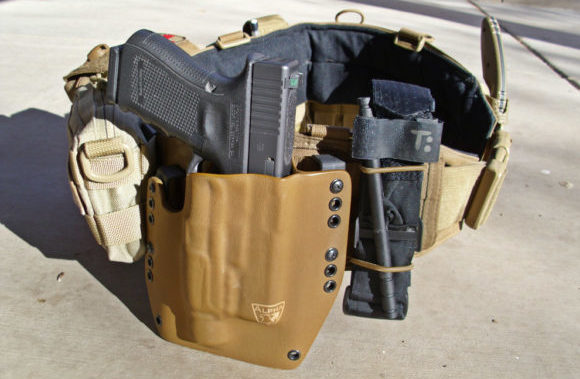
A tourniquet is one of the most important items to have in any IFAK(individual first aid kit) or on a Kit(tactical loadout). For that matter inclusion in a vehicle is a great idea as you never know when an auto accident may occur and someone needs help.
This video shows how to use a CAT Tourniquet (Combat Application Tourniquet).
Please Note: If you are under fire, use the “high and tight” method (over clothes and very high on the extremity). When safe, apply TQ above and closer to the wound (usually 2-3″). Apply a back-up tourniquet above the first one if rebleeding is noted or retighten 1st TQ if no backup available.
A tourniquet is one of the most important items to have in any IFAK(individual first aid kit) or on a Kit(tactical loadout). For that matter inclusion in a vehicle is a great idea as you never know when an auto accident may occur and someone needs help.
This video shows how to use a CAT Tourniquet (Combat Application Tourniquet).
Please Note: If you are under fire, use the “high and tight” method (over clothes and very high on the extremity). When safe, apply TQ above and closer to the wound (usually 2-3″). Apply a back-up tourniquet above the first one if rebleeding is noted or retighten 1st TQ if no backup available.
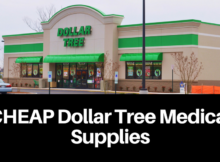
The Dollar Tree offers up quite a few deals on medical supplies. From antibiotic ointment to cough drops there is an aisle packed with stuff to be put away – just in case. Best of all is everything in the store is only $1.00 each.
Want to increase your medical supply level? $50.00 at the Dollar Tree will get you 50 supply items to stash away.
Great deal. In this weeks video, The Patriot Nurse walks us through a Dollar Tree and provides her insight.
Will you have what you need in a medical situation or emergency if one arises and there is nobody to call for help? No 911, no ambulance, no hospital; just you and the supplies you have. That thought should guide you as you plan for what you will need at a home/retreat in the event of an SHTF situation. Keep in mind that you may have more than just your immediate family to care for. Getting medications in children’s strengths and in chewable or liquid forms should also be considered.
Here’s a list that can get you started:
Medications:
Antacids- Omeprazole (Prilosec OTC) is something that you can take daily to help prevent acid reflux, this medication is not for treatment of current heartburn and may take 1-4 days to start working. For occasional heartburn or indigestion get some chewable antacids such as TUMS.
Antibiotics- Fish antibiotics are stocked by some preppers as a replacement for antibiotics that are prescribed by physicians. Not every antibiotic will kill every bacteria. Without knowing the type of bacteria you are fighting you should use a broad-spectrum antibiotic such as Ampicillin or Amoxicillin. These can sometimes be found at farm supply stores such as Tractor Supply and various online sites.
Antibiotic cream- Neosporin ointment can be used on a clean wound to help prevent infection from a burn, scratch, cut that could become infected.
Antidiarrheals– Pepto-Bismol and Imodium are common upset stomach medications. If your food storage diet does not parallel your normal diet gastronomical issues could become an issue.
Anti-fungal cream– This will treat skin infections caused by a fungus. For example, ringworm, diaper rash, athletes foot, and jock itch.
Antihistamines- Diphenhydramine aka Benadryl helps with nausea, sleep and most importantly an allergic reaction. Keep Benadryl liquid as well as tablets on hand. If someone is having an allergic reaction liquid will work faster. There are also chewable tabs available for kids (and some adults) who can’t swallow pills. These can also assist those struggling to sleep get the rest they need.
Antivirals- Abreva is an over the counter ointment used for herpes simplex virus that causes cold sores on the face and or lips to keep on hand. Antiviral medications that are taken for the flu, shingles, and chickenpox are only available via prescription.
Eye Rinse//irrigations
Nasal Sprays
Pain/fever relievers – Examples of these are Acetaminophen aka Tylenol or Ibuprofen aka Motrin or Advil. Aspirin is also used as pain/fever relievers and is also used as a blood thinner. Aspirin in the form of a chewable 81mg tab is also used at the onset of chest pain because of its anti-clotting properties.
Wound cleaner- Anytime you get an abrasion it is imperative that the first thing you do is clean the area. If soap and water are unavailable Bactine spray works great. Hydrogen peroxide and rubbing alcohol are not recommended as they delay healing by damaging healthy tissue, however, they can be effective in killing bacteria from surfaces such as tweezers or hands.
Supplies:
Bandages- Different sizes and shapes
Crutches
Face masks
Gauze- Variety of sizes
Ice packs- (Instant cold packs that that will activate with a squeeze will be very useful)
Insulin- For those who want to stock insulin there is a brand called ReliOn that is sold over the counter at Walmart’s pharmacy. Like all insulin, it needs to be refrigerated. Any diabetic who considers using this needs to speak with their provider to get guidance on what dose is needed.
All items listed are good to keep at the retreat, at home, as well as in a bag. Keep your stock updated in regards to expiration dates. The sterility of sterile items could be compromised if you keep them past the expiration date or they are exposed to extreme hot or cold. Giving someone an infection when you were only trying to help could definitely cause unneeded use of resources and time. If the SHTF you would want the freshest things possible to start.
As with any medication, you should seek the advice of a medical expert. Know the side effects of medications, contraindications of use and look for adverse reactions after medication or treatment has been given.
Being prepared for a medical emergency doesn’t just mean collect as many items as possible, it means becoming knowledgeable as well. Find out what your local hospital offers for CPR/First Aid classes and get books to keep as reference guides in the event there is no internet. First aid and basic medical knowledge is a prep that is valuable at any time, no matter the situation or state of our country.
I look forward to seeing comments and additions to this list from the readers!
Being without much needed medical supplies when you need them is scary. While working as a nurse outside the hospital setting people often looked to me for medical advice. Not having the convenience of a physician or other trained medical personnel when health issues arose made me plan two or three steps ahead for things that could potentially happen. Making sure that I had the necessary first aid supplies and continually updating those supplies was the one thing that I could control.
For the purpose of this article, let us assume that your first aid kit will be at a climate-controlled retreat location, although keep in mind moving at a moment’s notice could be possible. If your supplies ever have to be moved or are exposed to extremely high or low temperatures remember that this could affect the efficacy of medications or sterility of some items. Rotating your supply and keeping a spreadsheet with expiration dates is a great way to see what items you may want to replace. Supplies that have expired may also have compromised sterility or efficacy, although I would agree that if the SHTF an expired something is better than nothing.
There are many things to consider when deciding what kind of first aid kit is best for you. I would recommend getting a standard first aid kit and building on that is one of the best ways to get started. Prepackaged first aid kits on Amazon with 4 plus star reviews that will get you started and you can personalize to meet your needs are as follows. – – – > https://amzn.to/2OSu0y7 – Hey, first aid supplies in an ammo can….COOL!!!!
This one is small, less than $20 and has over a hundred reviews. – – – – > https://amzn.to/37tyMZb
Get one big enough for the number of people you think you will be with and then add a few, you can never be too prepared in the area of first aid as you never know when you will be able to get more or who or what situation you may be faced with. Again, keep in mind that supplies expire and the sterility of supplies or the efficacy of some medications could be affected if past the expiration date.
I know that we said this first aid kit was assuming you would be at a retreat location, however, keeping a waterproof bag for transportation of medical supplies handy if such an occasion arises could be a potentially life-saving idea. If you have to leave, leaving first aid supplies behind would not be wise. Also, consider keeping a lunch box or something you can put items that may need to stay cool in just in case. If an ice pack is not available you could use an instant ice pack for transport. They are nice to have for injuries too! This is an instant ice pack that has a 4-star rating and you can choose from a couple of different sizes. – – – – > https://amzn.to/37tzt4J
This bag is small and can keep things cool if not exposed to extreme outside heat or you can add an ice pack. Again, you need to consider what you will need to carry and how much. – – – > https://amzn.to/2wfzqgd
These are only suggestions and a way of getting you to think about what you may need and a quick way to get started on your retreat medical station. Watch for an upcoming article about medications to consider and advanced medical supplies. Until then, start making a list, read reviews on products, check expiration dates when you can and ask a lot of questions if you are unsure.
Coronavirus: With the influx of concern regarding coronavirus and related virus’s, the addition of medical face masks and other PPE(personal protective equipment) would be prudent. Disinfectant materials such as Clorox wipes and antiseptics such as rubbing alcohol should be stocked up. There is no shortage of information available on the Internet for preparing for pandemics.
NOTE: The following was previously published over at DoomandBloom.net.
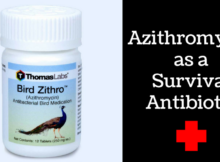
One of the most commonly prescribed antibiotics is Azithromycin, known in the U.S. as Z-Pak, is now in a new veterinary version known as Bird-Zithro. In survival situations where you’re off grid and there no modern medical care for the foreseeable future, the medic for the family must stockpile medical supplies, and this includes antibiotics.
See how Azithromycin in the form of “Bird-Zithro” might fit into your survival plans to treat your, well, sick birds. Uses, dosages, precautions, and more are more are discussed in this video by medical preparedness writer Joe Alton, MD.
To watch, click below:
Wishing you the best of health in good times or bad,
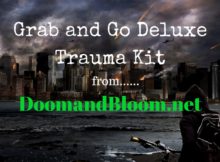
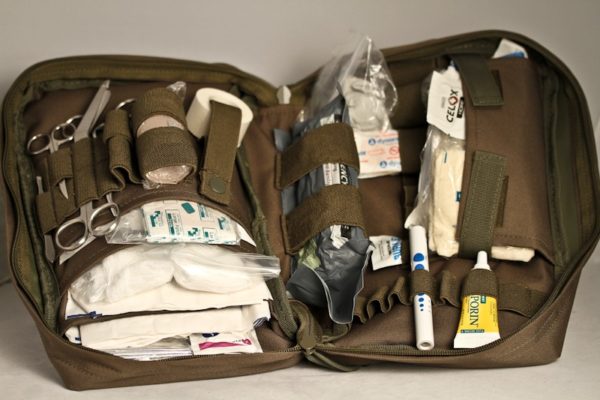
Everyone should keep a good first aid kit in their vehicle. You just never know when something will occur and a compression bandage, tourniquet, or even just a band-aid is needed. My kit of choice is the Grab and Go Deluxe Trauma Bag from DoomandBloom.net. I have two of these kits. One sits at home and the other rides with me in my Jeep Wrangler.
Will You Need a Trauma Kit?
A couple of years ago I went off roading in the Uwharrie National Forest. While navigating some of the more rocky and difficult terrain a group of us had to move some large rocks to allow a lower-clearance vehicle to pass. The owner of the vehicle moved a rock and failed to move his hand in time when setting the rock down. This equated to a smashed and bloody finger. Holding his hand and somewhat hiding it out of embarrassment he dripped blood walking by me. I went to the Jeep and fetched the DoomandBloom.net trauma kit and provided aid. A few people came over and they said all they had was some electrical or duct tape.
A year or so ago I was on my way to work driving down a major local highway. 30 seconds in front of me a van flipped and laid on its roof as I approached. I pulled off the side of the road – retrieved the Grab and Go Trauma Kit from the back of the Jeep and headed to help the guy as he crawled out the back of the van.
These are just a couple out of several examples where a good first aid kit has come in handy.
The Grab and Go Deluxe Trauma Kit sold by DoomandBloom.net
Available in a variety of colors.
Grab and Go Deluxe Trauma Kit
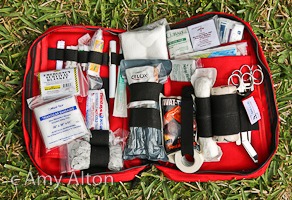
The Grab and Go is an excellent mid-sized kit for camping, hiking, and hunting. Measuring 13″ x 9″ x 4″ this is not going to fit in the typical vehicle glove box. There is a small compartment in the back of my Jeep where it fits perfectly as well as some paracord, knife, tire plug kit, and a couple more things. I very much prefer the included soft case over a hard plastic case that can crack or break.
As far as specifics with the kit – here is an excerpt from the Doom and Bloom website:
The Grab and Go First Aid Trauma Kit will cover most injuries that occur during daily activities. Such as: Burns, scratches, lacerations and bleeding, sprains and strains, blisters, wound closure and wound cleaning, bug bites etc.
It even includes duct tape, that all important do-it-all item for almost every need.
The Grab and Go First Aid Trauma Kit, also comes with a SWAT tourniquet, an Israeli Emergency bandage, Celox (blood clotting powder, easily washed out), a large Ace bandage, large roller gauze, Dr. Scholl’s Moleskin, CPR mask, stainless steel instruments, Steri strips, superglue, sterile sutures, instant ice pack, and more.
Professionally designed by Dr. Joe Alton, a Medical Doctor with over 35 years experience and Amy Alton, an Advanced Registered Nurse Practitioner, with over 30 years experience in the medical field.
There is also room within the kit to add additional items if so desired.
HIGH RECOMMENDATION
For more information visit the Grab and Go Deluxe Trauma Kit’s web page.
Rourke: This post was originally published over at DoomandBloom.net and republished here with permission.
In these days of Pokemon Go and other smartphone distractions, you’re seeing more and more people oblivious of their surroundings. In the past, this might get you a bump on the head by walking into a lamp post. In today’s world, however, it could cost you your life.
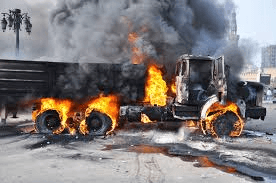
As an Anglophile, I have often visited London and walked from my hotel to parliament and other sites via the Westminster bridge. Today, on the anniversary of the terrorist attack in Belgium, someone used a vehicle to mow down pedestrians on the bridge and then, apparently, left the car to continue a rampage that has left a number of casualties in its wake. The British, after some hesitation, have labeled the event a terrorist attack.
Vehicular terrorism is not new, with Israel the scene of multiple attacks in past years. It’s becoming more and more common in the West, however, with attacks in Nice, France on Bastille Day and in Berlin at a Christmas market. In the United States, a Somali student used his car to run over several people at Ohio State University and then perpetrated a knife attack on those who, ironically, ran over to see if he was injured. Many similar events rarely make the news.
Terror attacks are often associated with bombs, but making a bomb requires some expertise to assemble safely. Guns, the other preferred weapon, are difficult to come by in most countries other than the U.S. Owning or renting a vehicle, however, is easy. Trucks and cars can cause mass casualties if wielded as a weapon; obtaining one isn’t an act that evokes suspicion.
Recently, an article titled “Just Terror Tactics” was published by the English-language ISIS magazine “Rumiyah”. It described which vehicles will cause the most damage and called for attacks on Western crowds. “It is a simple idea and there is not much involved in its preparation,” the article said. “All what is needed is the willingness to give one’s life for Allah.”
The article goes on: “Pick your location and timing carefully. Go for the most crowded locations. Narrower spots are also better because it gives less chance for the people to run away. Avoid locations where other vehicles may intercept you…To achieve maximum carnage, you need to pick up as much speed as you can while still retaining good control of your vehicle in order to maximize your inertia and be able to strike as many people as possible in your first run.”
The writer also suggested attackers weld steel blades onto the front of an SUV: “They do not need to be extra sharp because with the speed of the truck at the time of impact, even a blunter edge would slice through bone very easily. You may raise the level of the blades as high as the headlights. That would make the blades strike your targets at the torso level or higher.”
These tactics represent the new blueprint among terrorists for causing mayhem. Few people pay much attention to traffic unless they’re driving a vehicle themselves or crossing the street. The speed at which a vehicle can accelerate and turn into a crowd leaves little reaction time. Therefore, the “success” rate of this type of terror event may surpass even a gunman’s ability to cause deaths and injuries.
I advocate for a constant state of “Yellow Alert” when in public spaces. By that, I mean a calm but vigilant observation of what’s happening around you. Look for anomalies in behavior that might warn you of nefarious intentions. For example, hopping up and down and screaming may be normal at a rock concert, but it’s an anomaly at Starbucks.
This attitude is useful, but it’s difficult to respond quickly enough to avoid an oncoming car or truck. When a vehicle moves erratically or leaves the normal pattern of traffic, it’s an anomaly that requires quick action. Mentally noting routes of escape whenever you’re in public will give you the best chance of escaping. Just as knowing the location of exits in a mall or theater is good policy, a heightened awareness is now important at any public area near roadways.
For vehicular terrorists, the target will be crowds of people near the street. Their objective is mass casualties, and those pedestrians nearest the curb will bear the brunt of the attack. Consider walking on the fringe of a crowd away from the road to give yourself the most options. In the center, the masses, not your own good judgment, will dictate your movement.
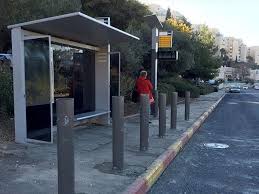
Bollards
Municipalities can protect their citizens from vehicular terrorism by constructing barriers known as “bollards” which stop vehicles from entering pedestrian areas. These can be seen outside many government buildings and airport terminals. Expanding their use to areas that attract crowds would be an important consideration for the future.
I’m not the only one thinking of how to deal with vehicular terror. The FBI and the Department of Homeland Security recently issued a release warning of vehicular terrorism and how to identify an imminent attack. The release acknowledges the time issues in reacting to such events, but includes the following things to look for:
Unusual modifications to vehicles, such as frontal reinforcement.
The purchase or rental of large or heavy-duty vehicles, especially if there is nervousness during the transaction, payment in cash, or lack of familiarity with the vehicle’s operations.
Commercial motor vehicles or heavy equipment being operated in unusual locations, such as particularly heavy pedestrian areas.
Attempts to approach areas closed to traffic, such as street festivals or farmers’ markets.
A vehicle operator’s apparent unfamiliarity with operating a commercial vehicle, such as trouble with gear shifting.
I’ll admit that the likelihood you’ll be in the path of a terrorist using a vehicle, or any other weapon, is very small. Panic isn’t the answer, but these are troubled times; the more situationally aware you are, the safer you’ll be.
Joe Alton, MD
Joe Alton, MD has contributed to Survivalist Magazine, Backwoods Home, Self Reliance Illustrated, American Survival Guide, Survivor’s Edge,Prepare, Disaster Survival Magazine,Molly Green, and Survival Quarterly, among others. He is a member of Mensa and collects 19th-century medical books to gain insight on off-grid medical strategies.
You can visit his website at DoomandBloom.net and shop his medical preparedness store HERE.
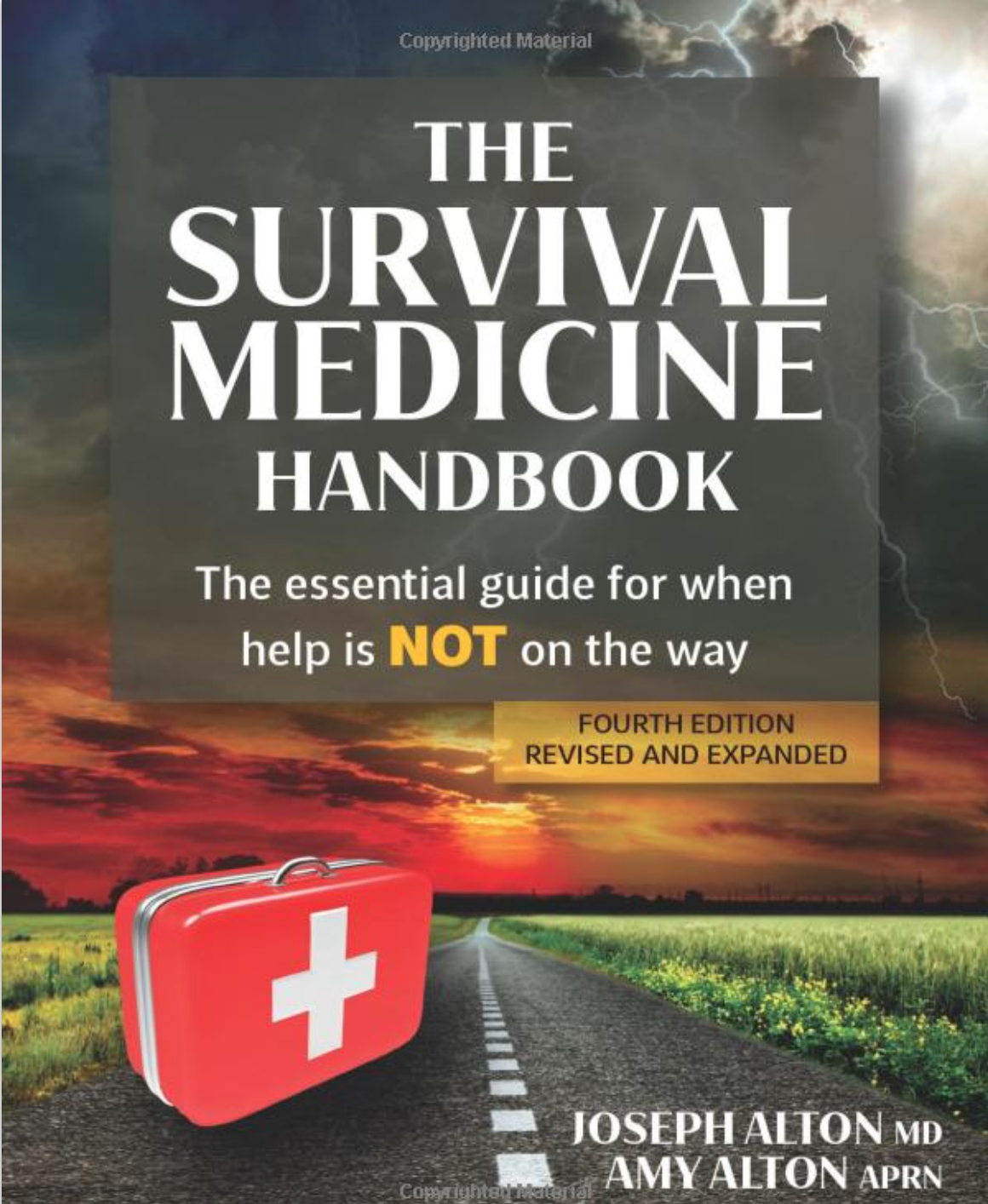
It is my pleasure to provide the following interview with Dr. Joe Alton. Dr. Joe – also known as Dr. Bones – runs their website DoomandBloom.net with his wife Nurse Amy Alton. Beyond the excellent preparedness information, they provide with their blog they also host the Doom and Bloom Survival Medicine Hour podcast. As accomplished authors, their book The Survival Medicine Handbook is popular among preppers.
Can you tell my readers a bit about yourself and your background?
I’m a retired physician (M.D.), Fellow of the American College of Surgeons and Life Fellow of the American College of OB/GYN. I delivered a lot of babies early in my career and morphed into more of a surgical practice as my patients got older with me. I still carry an active medical license in my home state. Now I write and speak about topics related to disaster medical preparedness.
What motivated your interest in preparedness?
I’ve always been a “Hurricane prepper”, with extra supplies for the storms that sometimes pound the East coast. I helped out after Hurricane Andrew in 1992, but didn’t really get started writing about medical preparedness until after Hurricane Katrina in 2005. In that storm, many of the medical personnel converging on the scene were unable to reach people due to extensive flooding. It became clear that, if every family had a medically-prepared member, there might have been some deaths prevented. My mission is to populate the country with medics held in reserve for when their people need them.
Is there something – some events or situation – that you are specifically preparing for?
Not really, other than weather events that might occur in our area. I’ve been through hurricanes, floods, heat waves, and even had a tornado sideswipe my house some years ago, knocking down trees and sending roof tiles flying.
What significance does politics play when it comes to preparedness?
As a medical person, politics don’t enter my mindset for preparedness, as I would help the ill or injured regardless of their political stripes. Disasters spare no ideology. Of course, during the Obama years, it was mostly conservatives concerned about the uncertain future. Now, folks on the Left are beginning to wake up to the need for self-reliance because of their issues with President Trump.
What level of importance do you place on firearms when it comes to preparedness?
Guns make wounds, but my focus is healing wounds. Certainly, anyone who doesn’t look to the common defense of their home and personal safety is ignoring an important aspect of being prepared. For most, firearms have a place in that defense. Just be sure you practice gun safety and pass on your knowledge to the next generation.
Are there any particular items you consider “must haves” for a survival/bug out/get home kit?
Firestarter, a good knife, non-perishable food, water, and a decent medical kit”. You’ll find list of what medical supplies I want you to have in our book “The Survival Medicine Handbook: The Essential Guide for When Medical Help is Not on the Way”, our medical supplies DVD, or in various free articles on our website at DoomandBloom.net. Look at our freely published list of supplies in our kits and, if you can devote some time and effort, make a kit that makes sense for you and your family.
Any advice to those on a budget who are trying to prepare?
It doesn’t take a lot of money to put together some supplies. You can still get a big bag of rice for $20 or so at a big box store. You can improvise bandages out of old sheets. A packet of seeds isn’t expensive. You don’t have to do it all at once: Just be sure to regularly make additions to your survival storage, learn how to garden, deal with common medical issues, and plan for disasters likely to affect your area.
What do you consider to be the Top 5 survival & preparedness categories in order of importance?
Clean water, food, shelter, medical, and tactical.
Care you give a prediction on what the next 5 years will look like?
A slow downward spiral economically for the average person, increasing civil unrest due to worsening political division and more frequent attacks by emboldened terrorists on U.S. soil.
What is your #1 tip when it comes to medical preparedness?
The average citizen may find themselves one day to be the highest medical resource left to their family, whether it’s a natural disaster, a man-made event, or just being a witness to an accident. With some knowledge and a few supplies, that citizen can make a difference. If you take some time and devote some effort to being a medical asset to your people, have no doubt: You will save lives.
Any upcoming projects you would like to mention?
We always have something going on, whether it’s traveling from coast to coast speaking on medical preparedness or designing new kits for store.doomandbloom.net such as our public access bleeding control kit. We’ll continue writing and talking about medical preparedness in articles, videos, and podcasts that discuss strategies for long-term survival.
Let me start by saying that if the practices I will describe offend for some reason please just move along. For most anyone with Type-1 diabetes COST and MONEY are factors involved in the treatment – and daily life – of those with the disease. The bottom line is those with Type-1 diabetes MUST have insulin in order to survive. Without it their glucose levels will skyrocket and they will die. My oldest son has Type-1 diabetes and I am very aware.
Here are a few ways to stock up on supplies:
Insulin:
Insulin is extremely expensive and can only be obtained with a prescription. I am not familiar with government provided insurance and prescription plans however getting the doctor to overwrite the prescription amount is key. If two vials of Novolog are required for a month convince the doctor that three or four are really required.
How to convince the doctor? One way is to tell the doctor a larger amount of insulin is administered per day than what really is. Yes – it is a lie. Unless you ask for A LOT more than needed he will likely write it for an extra bottle or two. This is also lifesaving required substance that if something were to happen the patient will die. Period. If the doctor writes the prescription for only the amount absolutely needed call the doctors office towards the end of the month and tell them you’ve run out and need more. They are NOT going to decline giving what is needed to sustain life.
Test Strips/Glucose Meters/Batteries:
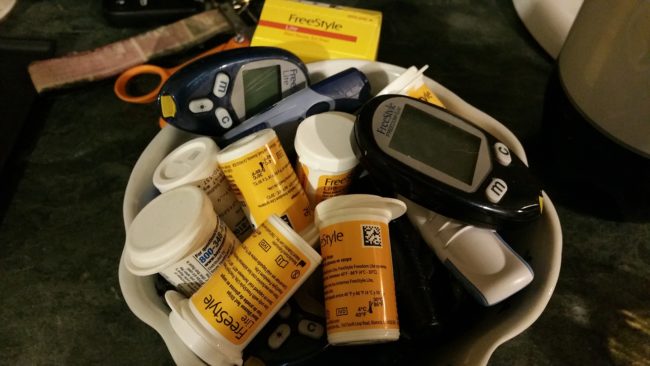
The same system used with insulin can be used with test strips. If blood sugar is checked 5 times per day tell the doctor it is checked 10 times per day. Another method is to purchase what you can with insurance and then look to ebay for more. If no insurance is available ebay can be a huge help. Depending on brand a months worth of testing can be purchased for under $30. This is cheaper than many insurances.
Another option is to talk to the doctor or pharmacist. They often will have a discount card and/or samples. This is especially true of glucose meters. Search online by the brand meter used and contact the company. They will often send out free ones as they make their money on test strips.
Batteries:
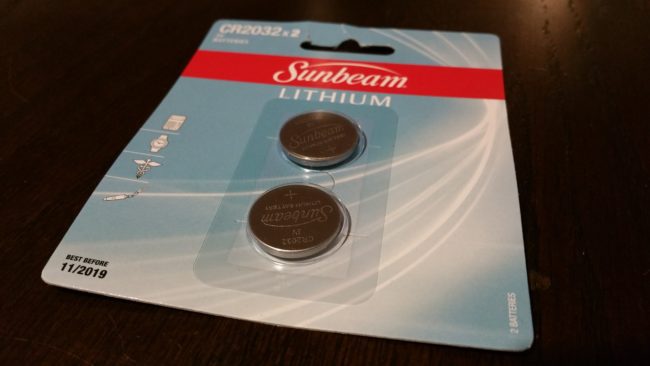
Most glucose meters use CR2032 lithium-ion batteries. Buying these at the pharmacy is not cheap. I purchase mine at the Dollar Tree – you guessed it – for $1.00.
Cartridges:
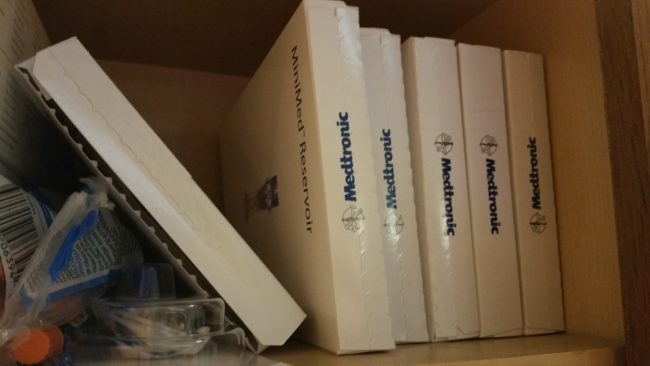
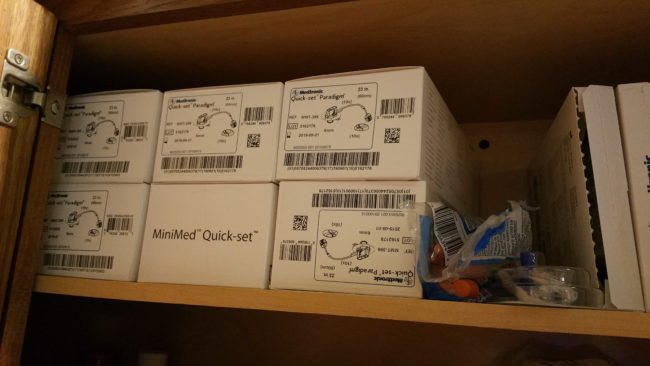
Those with a pump require cartridges to dose insulin. Typically these cartridges are disposed of after one use. I use them up to three times with no issues. This allows a building of inventory as prescriptions and shipments are controlled fairly tight.
Syringes:
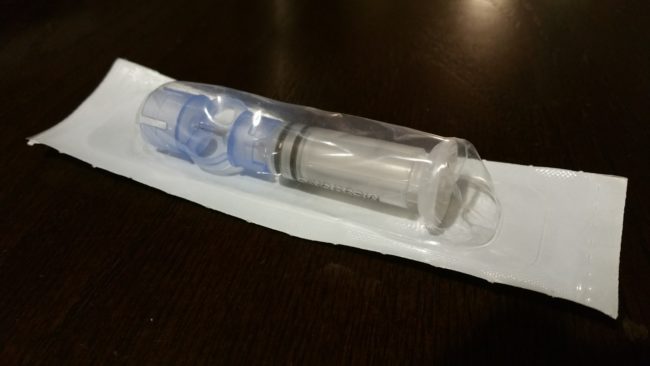
Those who take insulin via syringes know that they must use it only once – and throw away. Well – maybe not. Looking at the tip of a syringe it dulls with each use thus severe bruising and scarring can occur. In the past, I have used syringes up to twice – and no more. These shots were done fairly close to each other time-wise and of course were sterilized.
Insulin Delivery Sites:
Pump users require “sites” to deliver insulin just under the skin. These are supposed to be changed every few days. I typically get a week out of one. Thus rather than a box of 10 lasting 30 days, it lasts 60-70 days. Being these cannot be bought over the counter stocking up is not easy unless extending its usage time. The backup plan for a running out of these is syringes.
Diabetes is one of those diseases that the reality of any long-term SHTF situation is grave. Believe me, it is not something I enjoy thinking about. The first step is to stock up on needed supplies to prevent any short-term supply interruption from turning into a long-term disaster.
The following video is from the popular YouTube channel “The Patriot Nurse“. It has been shared quite a bit and answers the common question as to what antibiotics need to be stored. Reader “Jon” recently asked the question this video answers.
Beyond just having the stored antibiotics knowing how to use them is next. Go to Drugs.com and print out the information for each antibiotic stored and put away for future reference.
Don’t forget to vote for this website over at the Top Prepper Sites. Click HERE to vote.
So to begin, IFAK is a military acronym that stands for “Individual First Aid Kit”. It’s history goes all the way back hundreds of years when soldiers would carry bandaging cloth just in case they became wounded on the battlefield. It evolved to what is now found today with the modern soldier’s IFAK. They are impressive, and can handle a great deal of injuries and issues. I decided to go on a personal mission and develop my own style for myself, and my preparedness group.
The mission of this IFAK is to assist with life saving measures starting with traumatic limb loss, heavy laceration with arterial bleeding, gun shot wounds, to allergic reactions. It’s based on my years in the field as an EMT assisting in motor vehicle accidents, shootings, stabbings, suicides, allergic reactions, and cardiac arrest. From boo-boo’s to dismemberment!
This kit is designed to be on my body and that of my group’s members at all times when on perimeter patrol, bugging out, searching for supplies, foraging, etc during a SHTF style event. Every member has their own IFAK so that if they become injured, the contents of THEIR kit will be used on THEM. Likewise, the contents of my kit will be used on ME. Each kit is customized to the individual person to meet special demands that person may have medically. Every person in my group is also cross trained on everything in these kits.
In addition to all of this, I also keep in my car a full trauma kit. This is a completely separate kit from the IFAK and is about the size of a small suitcase. Inside it are most of the same contents of the IFAK. Differences are…
1 Burn Sheet
2 Large Trauma Pads Stethoscope BP cuff First Responder’s guide to Medications
Roll of plastic wrap
Large Roll of Duct Tape
2 Surgical gowns
More Nitrile gloves
Infant, Child, and Adult airway kits
1 CPR mask
1 BGL kit
2 Cervical Spine Collars
2 Sam splints
1 King Blind Insertion Device for airway management
I also have about 3 times the bandaging supplies as my IFAK in this kit at all times.
This bag from Rothco would be perfect for your large Trauma Kit…
Hope this helps. Be sure to comment if you have suggestions on the kit.