Tag: gardening

  • List of Commonly Available Heirloom Seeds – SAVE MONEY!!

    List of Commonly Available Heirloom Seeds – SAVE MONEY!!


    survival garden, SHTF, garden, heirloom seeds, list, common, prepper, preparedness

    I’ve shared this list of commonly available heirloom seeds in the past as so frequently companies repackage common seeds as “heirloom” and double the price. Heirloom seeds are attractive to many gardeners due to their non-GMO and non-hybrid status and the ability to harvest seeds for future planting.

    The reality is that many seeds commonly sold at Wal-Mart, Home Depot, Lowe’s, and similar businesses are in fact heirloom and very inexpensive. The very same seed variety packaged as “heirloom” in a colorful mylar bag will sell for 2-4X what the “budget” seed pack will sell for.


    From Burpee.com

    Heirloom varieties are open-pollinated–meaning that unlike hybrids, seeds you collect from one year will produce plants with most of the characteristics of the parent plant. And that’s key to their survival. 

    Many heirloom varieties were preserved by home gardeners who saved seed from their family gardens from year to year. Other seeds traveled around the world in the pockets or letters of immigrants, which is why, though the tomato evolved in Central America, we have varieties from Russia, Italy, Japan, France, Germany and Kentucky.”


    Here is a list of commonly available heirloom seeds.  If you see an error or know of one to add feel free to comment below:

    Artichoke, Green Globe


    Asparagus, Mary Washington


    Basil, Greek


    Bean Shell, Bush Dragon’s Tongue Wax

    Bean, Bush, Early Bush Italian

    Bean, Cannelino

    Bean, Gold of Bacau

    Bean, Italian Rose

    Bean, Lima, Big Mama

    Bean, Pole, Green Anellino

    Bean, Purple Podded Pole

    Bean, Runner, White Half

    Bean, Snap, Red Swan

    Bean, Triumphe De Farcy Bush

    Bean (Pole) Romano

    Bean – Harvester Bush Snap

    Bean – Kentucky Wonder Pole

    Bean – Henderson Bush Lima

    Bean – Top Crop Bush Snap

    Bean – Cherokee Yellow Wax

    Bean – Contender Bush Snap Beans


    Beet, Albino

    Beet, Bull’s Blood

    Beet, Chioggia

    Beets – Detroit Dark Red

    Beets – Ruby Queen

    Beets Early Wonder


    Broccoli, De Cicco

    Broccoli, Green Sprouting Calabrese

    Broccoli, Purple Sprouting

    Broccoli, Romanesco

    Broccoli – Calabrese

    Broccoli – Waltham 29


    Brussels Sprouts, Catskill

    Brussels Sprouts, Long Island


    Cabbage, Brunswick

    Cabbage, CharlestonWakefield

    Cabbage – Copenhagen Market

    Cabbage – Early Jersey Wakefield

    Cabbage – Golden Acre

    Cabbage – Michihili

    Cabbage – Pak Choy White Stem

    Cabbage – Red Acre

    Cabbage – Savoy


    Cantaloupe, Hales Best Jumbo


    Carrot, Danvers 126 Half Long

    Carrot, Touchon

    Carrot – Chantenay Red

    Carrot – Little Finger

    Carrot – Scarlet Nantes

    Carrot – Tendersweet


    Cauliflower, Snowball Self-Blanching


    Corn, Country Gentleman

    Corn, Golden Bantam

    Corn – (Sweet) Golden Beauty


    Cucumber, Lemon

    Cucumber, Straight Eight

    Cucumber – Boston Pickling

    Cucumber: Lemon

    Cucumber, National Pickling

    Cucumber, Spacemaster Cucumber

    Cucumber – Poinsett 76

    Cucumber – Marketer

    Cucumber – Marketmore 76


    Eggplant, Black Beauty

    Eggplant, Long Purple


    Lettuce Head – Iceberg

    Lettuce – Black Seeded Simpson

    Lettuce – Buttercrunch

    Lettuce – Salad Bowl Green

    Lettuce – Romaine


    Onion – Red Creole

    Onion – Tokyo Long White

    Onion – White Lisbon Bunching


    Pea – Green Arrow

    Pea – Mammoth Melting Sugar

    Pea – Wando

    Pea – Lincoln

    Pea – Alaska

    Pea – Oregon Giant


    Pepper – Hot, Cayenne

    Pepper – California Wonder

    Pepper – Jalapeno

    Pepper – Sweet Banana

    Pepper – Grand Bell


    Pumpkin – Jack O Lantern

    Pumpkin – Small Sugar


    Squash – Crookneck

    Squash – Straightneck


    Tomato – Delicious
    Tomato – Beefsteak
    Tomato – Rutgers


    Turnip – Purple Top White Globe


    Watermelon – Congo

    Watermelon – Charleston Grey

    Watermelon – Sugar Baby

    Watermelon – Crimson Sweet


    Zucchini – Grey

    Zucchini – Dark Green

    Zucchini – Black Beauty


    This list is available in PDF format – Click HERE


    Kindle, Amazon, Fire, ebook, download, preparedness, library, digital

    [ecwid_product id=”448227252″ display=”picture title price options addtobag” version=”2″ show_border=”1″ show_price_on_button=”1″ center_align=”0″][ecwid_product id=”258960673″ display=”picture title price options addtobag” version=”2″ show_border=”1″ show_price_on_button=”1″ center_align=”0″][ecwid_product id=”450867883″ display=”picture title price options addtobag” version=”2″ show_border=”1″ show_price_on_button=”1″ center_align=”0″]


  • The One Acre(or less) Homestead

    The One Acre(or less) Homestead

    I previously published this a few years ago and with new people visiting the site thought it would be a good idea to bring it back around. – Rourke

    There’s a movement within the US population to head towards increased self-sufficiency and insulation from the effects of governmental action. What does this really mean? Simply it is taking action to be as independent as possible and reduce the effect of economic and social trends on your life. 

    Being more self-reliant can be very beneficial during times of shortages or rising prices. As preppers, we prepare for interruptions to such things as power, transportation, medical care, and food supply.  Many people are overwhelmed at the thought of running an entire farm to provide the necessary things for their families. There are many examples of people who have created homesteads one acre or less and are incredibly productive. While they may not provide 100% of their year-round food supply, they are very much insulated from the effects of economic downturns.

    The following video is one such example of a one-acre homestead.

  • List of Commonly Available Heirloom Seeds – SAVE MONEY!!

    List of Commonly Available Heirloom Seeds – SAVE MONEY!!

    survival garden, SHTF, garden, heirloom seeds, list, common, prepper, preparedness

    I’ve shared this list of commonly available heirloom seeds in the past as so frequently companies repackage common seeds as “heirloom” and double the price. Heirloom seeds are attractive to many gardeners due to their non-GMO and non-hybrid status and the ability to harvest seeds for future planting.

    The reality is that many seeds commonly sold at Wal-Mart, Home Depot, Lowe’s, and similar businesses are in fact heirloom and very inexpensive. The very same seed variety packaged as “heirloom” in a colorful mylar bag will sell for 2-4X what the “budget” seed pack will sell for.


    From Burpee.com

    Heirloom varieties are open-pollinated–meaning that unlike hybrids, seeds you collect from one year will produce plants with most of the characteristics of the parent plant. And that’s key to their survival. 

    Many heirloom varieties were preserved by home gardeners who saved seed from their family gardens from year to year. Other seeds traveled around the world in the pockets or letters of immigrants, which is why, though the tomato evolved in Central America, we have varieties from Russia, Italy, Japan, France, Germany and Kentucky.”


    Here is a list of commonly available heirloom seeds.  If you see an error or know of one to add feel free to comment below:

    Artichoke, Green Globe


    Asparagus, Mary Washington


    Basil, Greek


    Bean Shell, Bush Dragon’s Tongue Wax

    Bean, Bush, Early Bush Italian

    Bean, Cannelino

    Bean, Gold of Bacau

    Bean, Italian Rose

    Bean, Lima, Big Mama

    Bean, Pole, Green Anellino

    Bean, Purple Podded Pole

    Bean, Runner, White Half

    Bean, Snap, Red Swan

    Bean, Triumphe De Farcy Bush

    Bean (Pole) Romano

    Bean – Harvester Bush Snap

    Bean – Kentucky Wonder Pole

    Bean – Henderson Bush Lima

    Bean – Top Crop Bush Snap

    Bean – Cherokee Yellow Wax

    Bean – Contender Bush Snap Beans


    Beet, Albino

    Beet, Bull’s Blood

    Beet, Chioggia

    Beets – Detroit Dark Red

    Beets – Ruby Queen

    Beets Early Wonder


    Broccoli, De Cicco

    Broccoli, Green Sprouting Calabrese

    Broccoli, Purple Sprouting

    Broccoli, Romanesco

    Broccoli – Calabrese

    Broccoli – Waltham 29


    Brussels Sprouts, Catskill

    Brussels Sprouts, Long Island


    Cabbage, Brunswick

    Cabbage, CharlestonWakefield

    Cabbage – Copenhagen Market

    Cabbage – Early Jersey Wakefield

    Cabbage – Golden Acre

    Cabbage – Michihili

    Cabbage – Pak Choy White Stem

    Cabbage – Red Acre

    Cabbage – Savoy


    Cantaloupe, Hales Best Jumbo


    Carrot, Danvers 126 Half Long

    Carrot, Touchon

    Carrot – Chantenay Red

    Carrot – Little Finger

    Carrot – Scarlet Nantes

    Carrot – Tendersweet


    Cauliflower, Snowball Self-Blanching


    Corn, Country Gentleman

    Corn, Golden Bantam

    Corn – (Sweet) Golden Beauty


    Cucumber, Lemon

    Cucumber, Straight Eight

    Cucumber – Boston Pickling

    Cucumber: Lemon

    Cucumber, National Pickling

    Cucumber, Spacemaster Cucumber

    Cucumber – Poinsett 76

    Cucumber – Marketer

    Cucumber – Marketmore 76


    Eggplant, Black Beauty

    Eggplant, Long Purple


    Lettuce Head – Iceberg

    Lettuce – Black Seeded Simpson

    Lettuce – Buttercrunch

    Lettuce – Salad Bowl Green

    Lettuce – Romaine


    Onion – Red Creole

    Onion – Tokyo Long White

    Onion – White Lisbon Bunching


    Pea – Green Arrow

    Pea – Mammoth Melting Sugar

    Pea – Wando

    Pea – Lincoln

    Pea – Alaska

    Pea – Oregon Giant


    Pepper – Hot, Cayenne

    Pepper – California Wonder

    Pepper – Jalapeno

    Pepper – Sweet Banana

    Pepper – Grand Bell


    Pumpkin – Jack O Lantern

    Pumpkin – Small Sugar


    Squash – Crookneck

    Squash – Straightneck


    Tomato – Delicious
    Tomato – Beefsteak
    Tomato – Rutgers


    Turnip – Purple Top White Globe


    Watermelon – Congo

    Watermelon – Charleston Grey

    Watermelon – Sugar Baby

    Watermelon – Crimson Sweet


    Zucchini – Grey

    Zucchini – Dark Green

    Zucchini – Black Beauty


    This list is available in PDF format – Click HERE


    Kindle, Amazon, Fire, ebook, download, preparedness, library, digital

  • The One Acre(or less) Homestead

    The One Acre(or less) Homestead

    There’s a movement within the US population to head towards increased self-sufficiency and insulation from the effects of governmental action. What does this really mean? Simply it is taking action to be as independent as possible and reduce the effect of economic and social trends on your life. 

    Being more self reliant can be very beneficial during times of shortages or rising prices. As preppers, we prepare for interruptions to such things as power, transportation, medical care, and food supply.  Many people are overwhelmed at the thought of running an entire farm to provide the necessary things for their family. There are many examples of people who have created homesteads one acre or less and are incredibly productive. While they may not provide 100% of their year-round food supply, they are very much insulated from the effects of economic downturns.

    The following video is one such example of a one acre homestead.

  • Building a Simple & Inexpensive Raised Bed Garden

    Building a Simple & Inexpensive Raised Bed Garden

    Gardening is one of the Top 5 Prepper Skills I recommend people learn. It can be both extremely rewarding – and fairly frustrating. I’ve been gardening for close to 15 years in my backyard using a 25′ x 30′ foot in-ground spot as well as buckets, raised beds, and various containers.

    For many, space is lacking and soil is questionable. It is important to get started NOW to learn gardening and get your spots ready. Soil can be improved over time – and it can be made worse. The point is the sooner you start the better off you’ll be.

    For many, raised beds offer a quick and simple way to get started. There are a lot of positives with raised beds such as being able to place them pretty much anywhere that will get sufficient sun.

    Here is a simple, easy method for building a raised bed garden:


    Needed Supplies:

    1     12-foot board – or an 8-foot and 4-foot(width of board determines height of raised bed. I recommend no less than a 6″ inch board)

    8     nails or screws 2″+ in length


    Needed Tools:

    1     saw (jig saw or table saw will work)

    1     ruler

    1     pen or pencil

    1     drill or hammer

    1     drill bit slighter smaller than whatever size nail/screw selected


    Steps to Building a Simple & Inexpensive Raised Bed Garden

    The first thing to do is get everything together in one place. Make sure batteries are charged and power tools are plugged in.


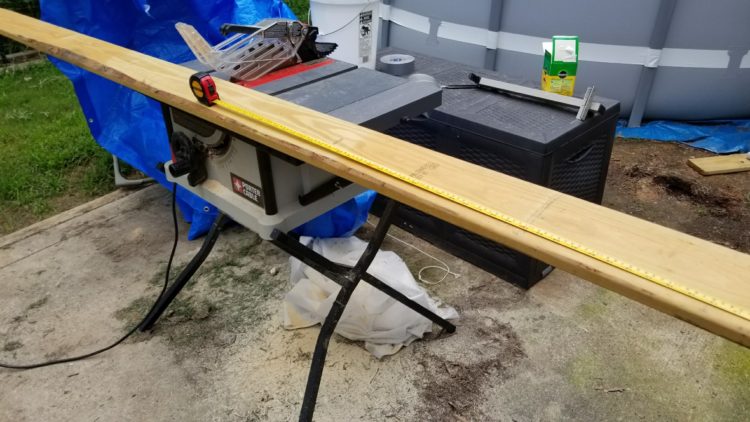
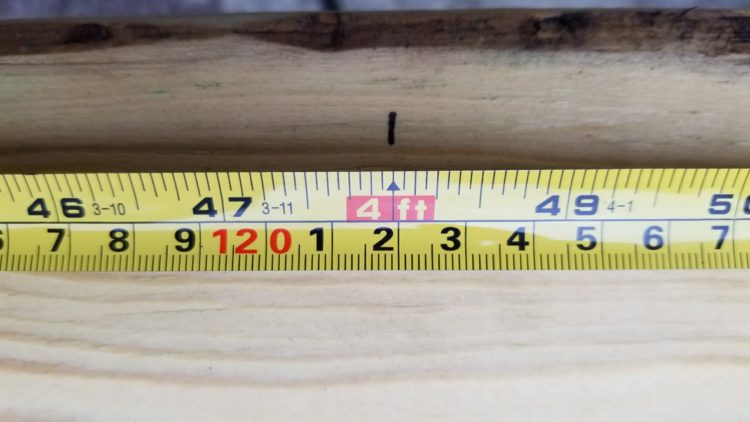
    Next – we need to create two 4-foot pieces. If you have an 8-foot board simply mark it off and cut it in half. If you have a longer 12-foot piece mark off 4 foot – cut it, then mark another 4 foot and cut again.

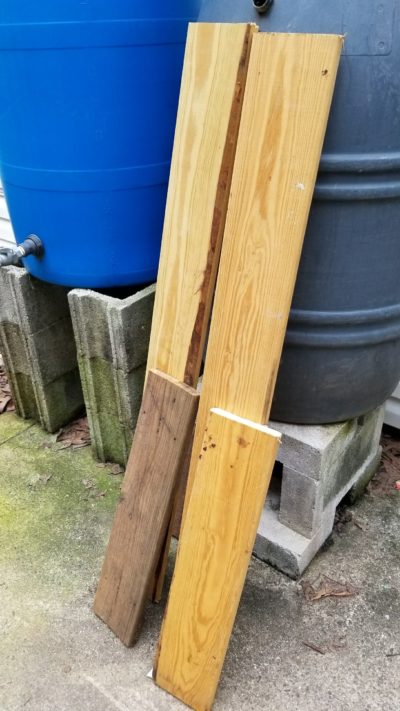
    Either way, there should be a single 4-foot piece left at this point. Measure its length and cut it in half.

    Above – a total of 4 pieces should be available. Two should measure 4 feet and the other two 2 feet.


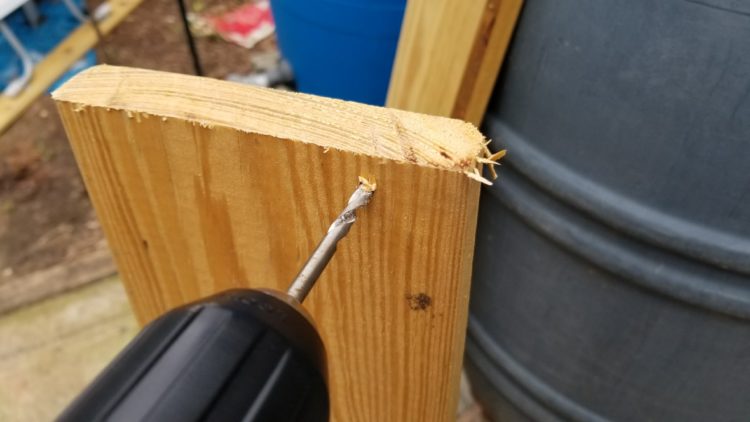
    Pre-drill the holes for the screws/nails. This step is not necessary but helpful to reduce the chance the wood will split.


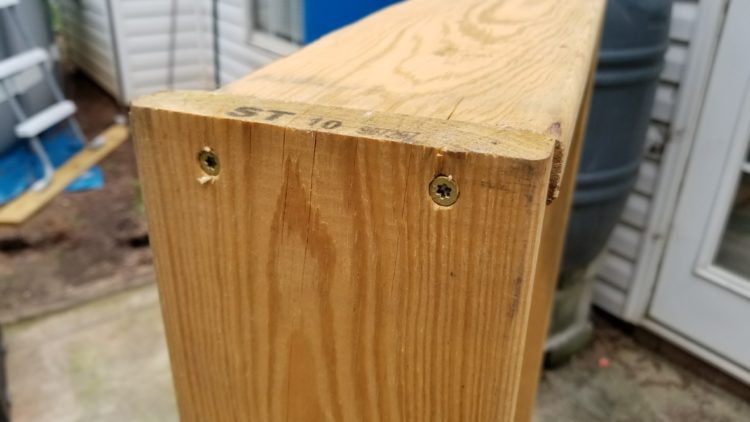
    Now – go ahead and screw all the boards together in a rectangle shape. Make sure the longer boards are set on the outside of the short boards for each side or the rectangle will be off.


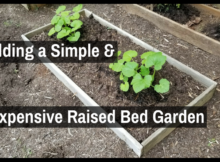
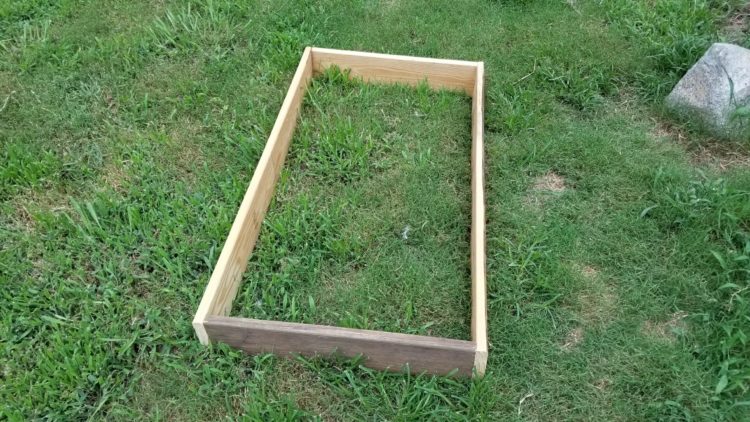
    Your finished product should look like the photo above. Now simply place the raised bed wherever you wish, fill with soil – and plant some seeds or plants.

    *     *     *     *     *     *     *

    This project is not complicated and it’s not rocket science. I considered generalizing the instructions without all the pictures and lists but decided to make it a bit more detailed. The size of the bed can be easily adjusted to whatever you wish. 4′ x 8′ beds work well. Going longer has its advantages but going wider makes it difficult to reach in and pick.

    Soil? That’s always a question and searching on the internet you’ll come up with all kinds of concoctions. I can only tell you what has worked for me and your mileage may vary:

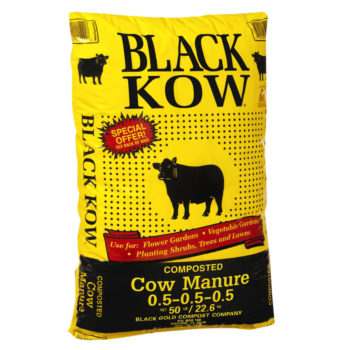
    1/3 composted cow manure(Black Kow brand if you can get it)

    1/3 peat moss

    1/3 natural soil from area

    The above formula is pretty much what I have been using for the past few years and it has worked well. A high-quality potting soil can be substituted for the peat moss or use it with everything else if you wish.

    There is a lot of talk about “Mel’s Mix” on the net if you do a search for raised beds. It might work – but it is EXPENSIVE! I’ll pass.

    When growing vegetables in raised beds here are two tips to keep in mind:

    1. WATER: You need to WATER MORE OFTEN than in-ground gardens. In a raised bed gravity naturally pulls the water from the soil thus daily – and even twice daily watering – may be needed. I’ve seen many gardens start off looking good and then hear complaints stuff didn’t grow. Reason? Lack of water. The larger the raised bed the less of an issue this is.
    2. MULCHING: Mulching is a huge benefit to decreasing moisture loss through evaporation and reducing weed growth. I’ve used grass clippings, dead leaves, pine bark, and local city mulch available to the public. Be careful with grass clippings as if any of the cut grass grew enough to have seed you just planted them in your raised bed.

    prepardness, survival, garden, gardening, prepper, SHTF

    This post may not seem very timely as much of the country is nearing the end of growing season…but WAIT, there’s MORE!!

    Fall gardens are being prepared and readied for planting now.

    No better time than now to jump on the gardening bandwagon.

    line

    Recommended Gardening Books:


  • From the Desk of John Rourke – June 23rd, 2017

    From the Desk of John Rourke – June 23rd, 2017


    Sometimes life gets busier than a one-eyed cat watching two mouse holes. That was yesterday so I am late getting this out.

    ◊ ◊ ◊ ◊ ◊

    Johnny Depp proves to be another out of touch overpaid celebrity with his suggestion that it is time to assassinate Trump. Read about it HERE.

    ◊ ◊ ◊ ◊ ◊

    Few of my plants have died off in the past week. I have mixed up the soil, added a bit of compost, peat moss – and replanted. The mulching I have done this year and combining raised beds with inground gardening has proven to be worth the effort. This “no till” gardening approach has reduced weeds dramatically. I’ll post some additional pictures later.

    As far as actually “no till” that may be a bit of a stretch.I have areas where I place plants and seeds in the form of a row which tilling would prove beneficial. The mulching all around it not only keeps the weeds down but as the mulch breaks down it feeds the soil.

    ◊ ◊ ◊ ◊ ◊

    If you are not familiar with Andrew Wilkow you should be. He hosts a radio show and I listen to him on satellite radio. He does the absolute best job I have ever heard explaining, dissecting, and debating politics and political stories I have ever heard. A true understanding of the Constitution he has.

    http://wilkowmajority.com/

    ◊ ◊ ◊ ◊ ◊

    I’ve started to get back into couponing. The wifey is helping so it is not too time-consuming. Helps stretch the dollars.

    ◊ ◊ ◊ ◊ ◊

    Hate to cut this short…..I hope everyone has a great weekend. Be careful – Be safe!

    There are many reasons why so many love their Kindle and Amazon Fire tablets. One huge advantage is you could literally go years without every buying a book to read as there are tons of free eBooks available. Don’t have a Kindle or Fire? No problem. There are apps that can be installed on most any cell phone or computer for free. No excuses!

    Today’s Freebies

    The Casual Preppers Beginners Guide to the Apocalypse

    Survival Medicine Handbook

    Parker: An Apocalypse Survivor(Complete)

    Zombie Attack Survival Guide

    Preppers Gardening

    NOTE: If you see a free preparedness eBook that you’re interested in get it now. Prices change often and there is no way to tell how long the book will remain free. Before purchasing a free Kindle book on Amazon make certain the book is still free by making sure the price is $0.00. If it lists a price or says “read for free” or has a price for Prime members the book is not free anymore.