Tag: prepper

  • Review: 10,000mAh Solar Power Bank Charger

    Review: 10,000mAh Solar Power Bank Charger


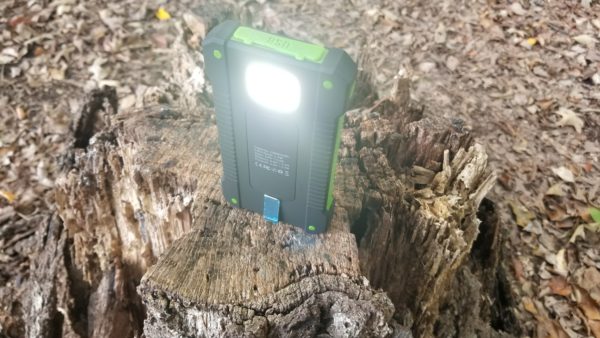
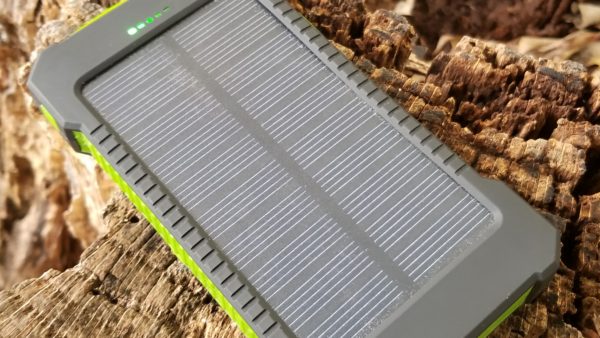
    This will be a fairly short and simple review. I’ve been using this 10,000mAh solar power bank since November of 2016. It works and works well. Numerous trips including my jaunt down the Virginia Creeper Trail I’ve used this external battery pack to keep my cell phone topped off. Communications with family, being able to take pictures and videos, as well as keeping in touch with others is important.

    This solar power bank can also charge other batteries for things like flashlights and walkie-talkies.

    With 10,000mAh of capacity, it can charge most modern smartphones at least twice or keep it topped off for hours and hours.

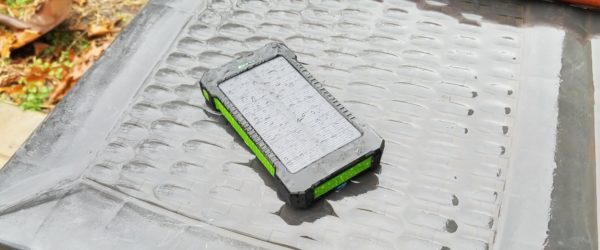
    The solar function is primarily for topping off the unit or charging it fully if it is left in the sun and not used. It takes days to charge it via the sun so understand that is not a primary means for charging. The 10,000mAh solar power bank is meant to be charged at home – then taken on the go.

    Recently I ran the power bank almost dead and left it outside for several days. It did eventually charge completely and survived at least two days of downpours and also one night of freezing temperatures. So – after a year of use I can fully endorse and recommend it.

    For more information click HERE.


    PICTURES

    [slideshow_deploy id=’9628′]


  • Marlin 336W .30-30 Lever Action Rifle Review

    Marlin 336W .30-30 Lever Action Rifle Review


    With the large selection of modern semi-auto “black” rifles such as the AR-15 and AK-47, the lever action is rarely discussed. Although many would argue there is little reason to consider a lever action in .30-30 Winchester with the availability of low-price semi-auto’s – options are a wonderful thing. As stated in the video there are numerous areas around the country where semi-auto, magazine fed weapons are illegal. The lever action in those areas would be a good option. Besides – there are a lot of uses for firearms than just self-defense.

    Growing up it was common to see pickup trucks with rifles mounted in the rear window. More frequently than not at least one of those rifles was a lever action and the other a shotgun. Sometimes called a “truck gun”, the lever action certainly attracts less attention from people than an AK-47.

    While there are pro’s and con’s to the design, function, and ergonomics of the lever-action – it is found in thousands of gun safes all across the United States.

    I wonder how many deer have been harvested with lever actions?

  • Project: AR Pistol Build

    Project: AR Pistol Build


    I’m addicted to building AR’s. I admit it. I’ve been actively searching for a support group to get help. Unfortunately, they all meet at my local gun shop and we end up walking out with lower parts kits, bolt carrier groups, and triggers. It’s not helping.

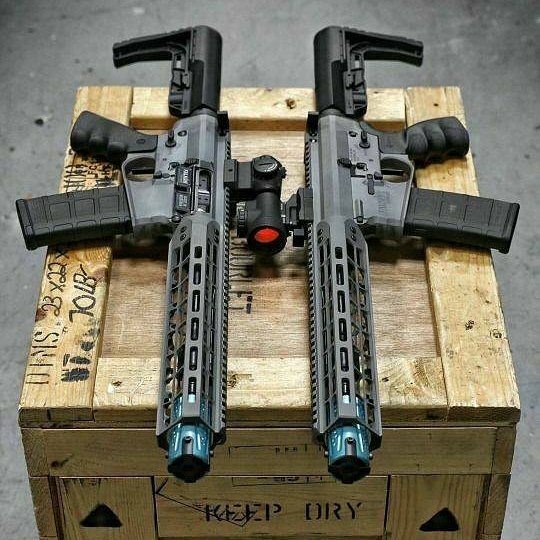
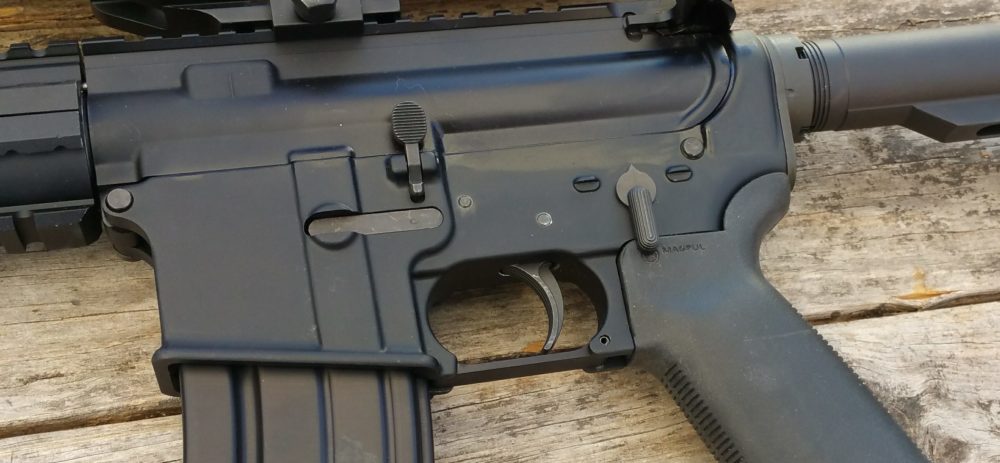
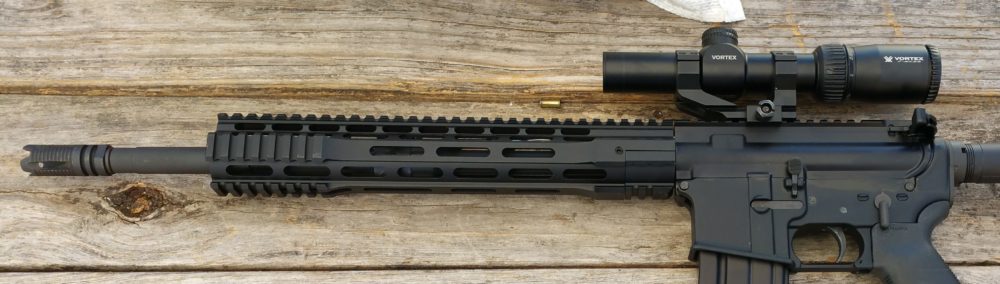
    For my latest build, I went after another AR pistol(aka legal SBR). I’m not going to go through every pin, spring, and part as it was put together. That’s boring and will take too long. Here are the basics with a summary at the end:

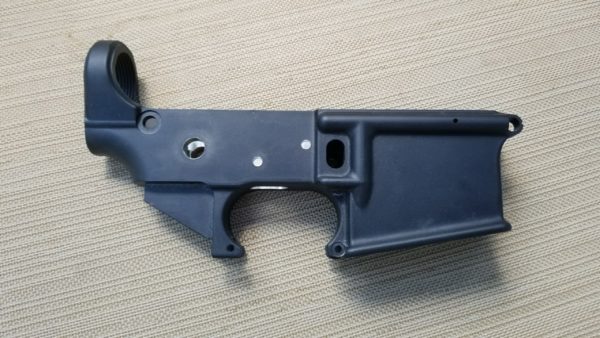
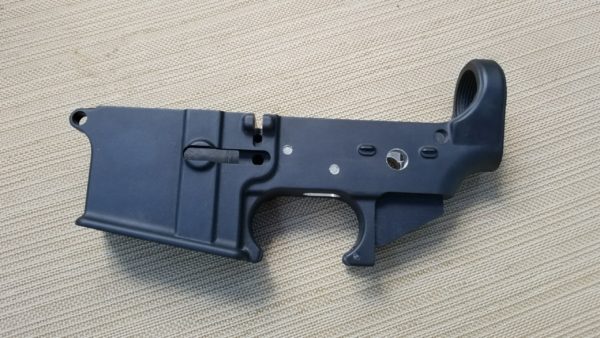
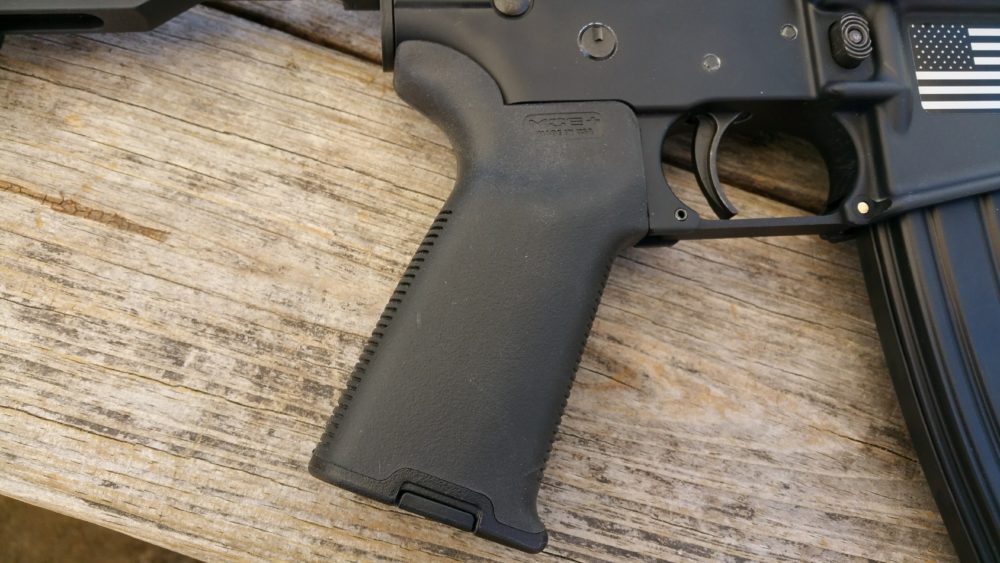
    Lower:  80% non-serialized, completed to 100%


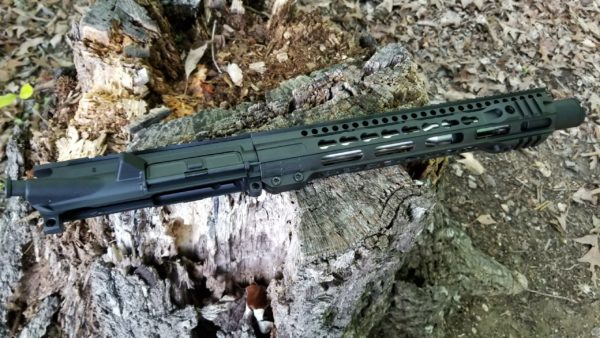
    Upper: Mid State Firearms 10.5″ SS 5.56/.223 Slanted Hybrid Keymod & Flash Can with Phosphate M16/AR15 Bolt Carrier Group


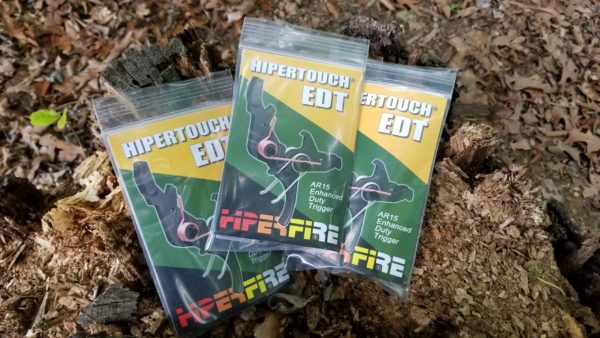
    Trigger Group: HIPERTOUCH EDT


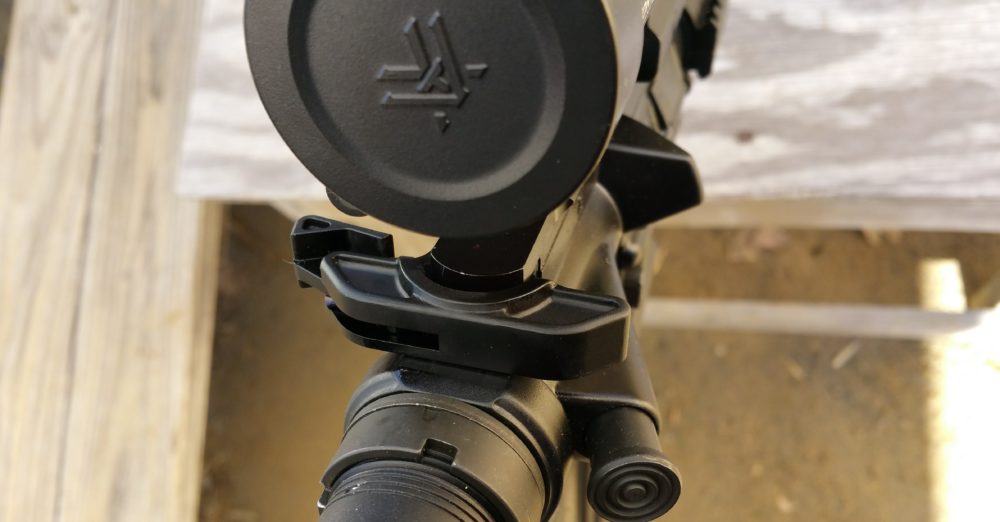
    Charging Handle: Strike Industries AR Charging Handle with Extended Latch

    Lower Parts Kit: Basic Anderson kit


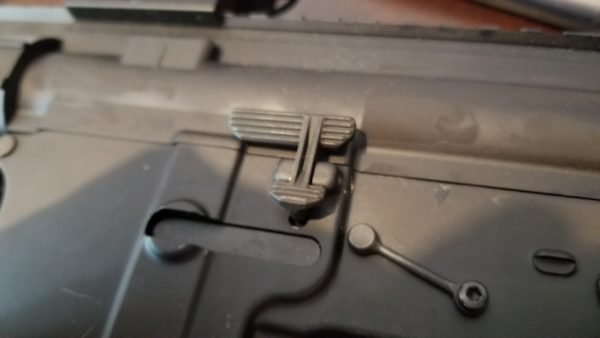
    Bolt Release: Strike Industries Extended Bolt Catch XBC

    Fire Control Pins: KNS MOD-2 Anti-Rotation/Anti-Walk Pin Kit


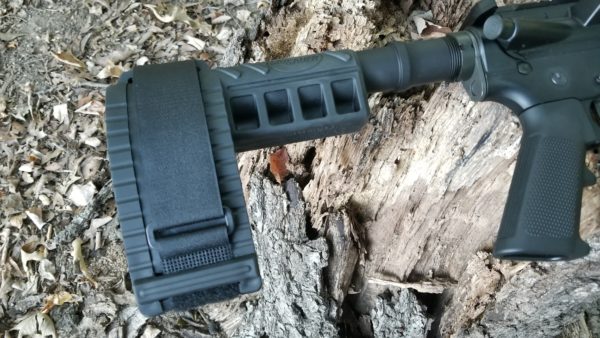
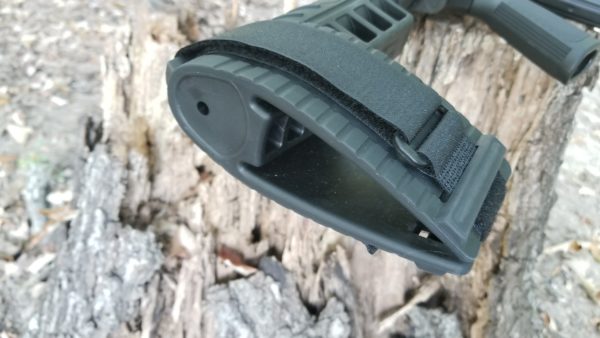
    Stock/Brace: Sig SBX15 Brace with KAK Buffer Tube Kit


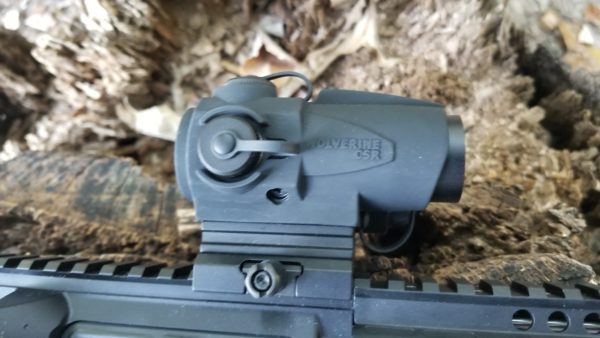
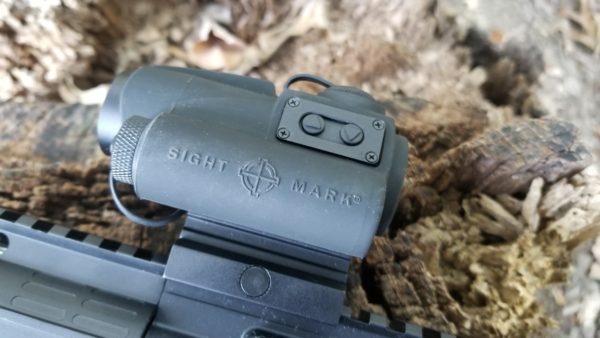
    Optic: Sightmark Wolverine CSR

    SLIDESHOW

    [slideshow_deploy id=’9532′]

    So – why did I build this gun? Did I have some objective? Is it in my arsenal to fill a specific role?

    Come on. I built it because I wanted to!!

    AR pistols are some of the most fun firearms you can own. They can serve numerous functions when it comes to self-defense as well. In fact, my “SHTF Go To” gun is an AR pistol.

    The barrel is 10.5″ in length. For a “pistol” build I prefer 10.5″ as it is MUCH quieter and has MUCH less concussion than a 7.5″ and retains better ballistics as well. The Sig brace was chosen as I wanted to do something different. Previous projects used the Shockwave Blade. I didn’t think I would care for the Sig brace however after putting it to use I love it. So comfortable and makes for a great cheek weld.

    The Phosphate M16 Bolt Carrier Group is a budget bolt however it works. I have one in another gun with many rounds through it and so far so good.

    The Hipertouch EDT trigger is phenomenal. Crisp, short reset, almost no take up at all, and breaks at around 5.5 pounds. For around $90 it is a bargain. I use it in my of my AR’s.

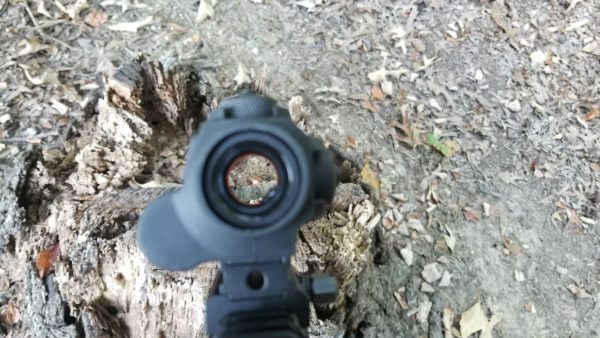
    The Mid State Firearms upper has performed perfectly. The front handguard is extremely comfortable and lends itself to a c-clamp grip. The Sightmark CSR optic so far has done well. Seems very well built and has stayed zeroed through a few hundred rounds. The red dot has a slight touch of flaring but nothing that will be an issue for ranges this gun is likely to see. Controls are perfect. 50,000-hour battery life is nice.

    The flash can helps drive the concussion and noise forward. I struggle to tell a difference but it certainly protects the muzzle.


    Summary:

    As with all AR pistols, this project is small, light, portable, and incredibly handy.


  • 30 Christmas Gifts for Prepper’s

    30 Christmas Gifts for Prepper’s


    Have a prepper on your Christmas list? Here are a few ideas within different price ranges on what to get them. Forget the socks and the ties…..get them something they will really like.

    Merry Christmas!!


    $50+

    Cold Steel Recon Tanto Knife – exquisite

    Bushnell TRS-25 AR Red Dot Optic – a favorite of mine

    Armasight Spark NV Monocular

    Bushnell Equinox Night Vision

    Maxpedition Condor-II Backpack


    $25 – $50

    Baofeng UV-5R Duel Band Two-Way Radio – probably the most common radio used among preppers. Not the best – but good to start with.

    Tecsun PL-360 AM/FM/Shortwave – listen for information locally and around the world.

    Nebo iProTec 190 lumen Weapons Light – budget friendly light providing 190 lumens via LED diode.

    Helotex G2 Flashlight – my favorite light. Uses AA or CR123 batteries.

    North American CAT Tourniquet – this is THE recommended tourniquet.

    326 Piece Hard Case First Aid Kit – nice and very good to have around.


    $10 – $25

    Mora Companion Outdoor Knife  – super sharp and handy knife, the Mora is legendary for being an incredible value.

    CIMA Survival Knife – excellent survival knife with a full tang blade. A clone of an ESEE costing around $100. Bargain.

    SOG Responder Bag – have it in the trunk….just in case.

    Tac-Mag Gun Magnet – holds up to 25 pounds and allows gun mounting almost anywhere.

    Midland 22 Channel FRS/GMRA Walkie-Talkies Set – great 1-2 mile communications tool.

    Tenergy CR123 Lithium-ion Battery Pack/12 – Great price on these high capacity and powerful batteries.

    Survival Garden 15,000 Heirloom Seed Bank – great pack of seeds for growing food.

    MTM AR/M16 Magazine Case – holds 15 AR magazines – ready to go.

    Sawyer Mini Water Filter – the prepper’s water filter.

    4 Pack Mechanical Yo Yo’s Fishing Reels – automatic fishing. Great tool for gathering food while doing other tasks.

    Spartan AR Wall Mount – pretty cool.


    $1 – $10

    VISM Dump Pouch – economical “catch-all” bag

    OD Green Vinyl US Flag Stickers – perfect for mounting on AR just above the magazine.

    Lucas Gun Oil – formulated for high performance in all firearms.

    Sawyer Mini Water Filter Bucket Kit – adapts the Sawyer for bucket use. On Sale – $9.78

    Red Dawn – the classic survival movie

    Classic Pocket Survival Tool – perfect stocking stuffer!

    Folding Camp Grill – super portable and useful.

    Israeli Battle Dressing – should be in every back and vehicle.


    …….and for those wishing to buy me a Christmas present – here are 10 ideas!!

    Schrade SCHF38 Frontier Knife

    MTM AC4C Ammo Crate

    Streamlight TLR-1 Weapons Light

    Paratus 3 Day Operators Backpack

    ATN Thor Thermal Optic

    Raptor Whisper Air Rifle .177 caliber

    Barnett Recruit Recurve Crossbow

    Condor Modular Chest Rig

    Trijicon ACOG 4×32 Scope

    Vortex Strikefire II Red Dot Optic

    ….gee….I’m not hard to buy for.


    Take care all!!

    Rourke

  • Alert: Proof of The Communist Elite Agenda In The USA

    Alert: Proof of The Communist Elite Agenda In The USA


    Communism has been feared in the United States since World War I. An acceleration of this fear occurred through the 40’s and into the 1950’s as many believed that communism would spread and infiltrate the United States. Although history shows that communism declined as a domestic concern and was eradicated internally by the end of the Cold War, many believe that a communist agenda remained behind the scenes all these years.

    Look – I’m not a conspiracy theorist nor do I have a very large inventory of tin foil hats. I will say that my mind has opened to many things that just 5-10 years ago I would have called ridiculous. If you are so inclined to believe what is in this video – how does it change your perspective on prepping and politics?

    On with the video……

  • Simple & Inexpensive Prepper Lighting Solution

    Simple & Inexpensive Prepper Lighting Solution


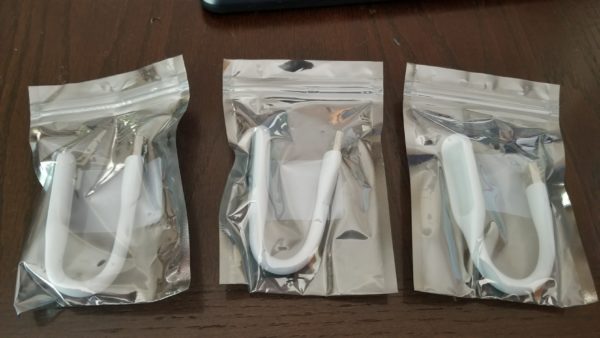
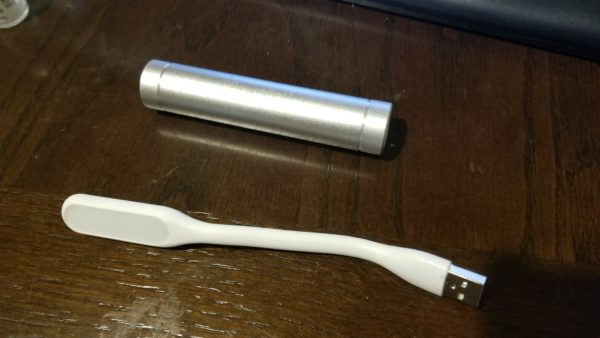
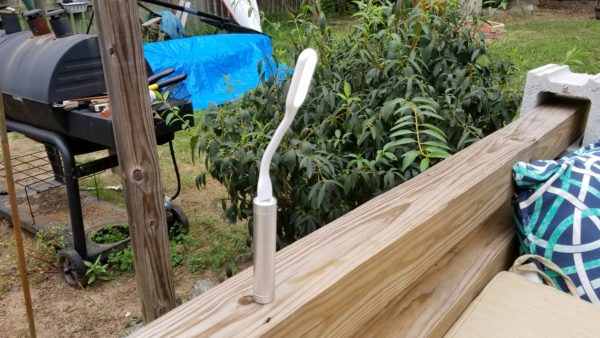
    Powers out. The suns going down. Temperatures are dropping. The zombies are…..OK, I’m getting carried away. Lighting when the powers out is not a very popular topic. Beyond flashlights, candles and oil lamps are mentioned frequently. A more modern alternative to candles and oil lamps are LED USB lights. These are small LED lights that plug into any USB port. As soon as I saw them I thought of seeing how they will work on a portable power bank.

    I have numerous portable power banks. They really come in handy when regular charging methods are not available.

    After receiving three of the LED USB lights from GearBest.com I did a little testing. At about $3.00 each these are easy on the wallet.

    Above: LED USB Light with 3000mAh portable power bank


    Above: Here’s a pic during the day to better see the setup.


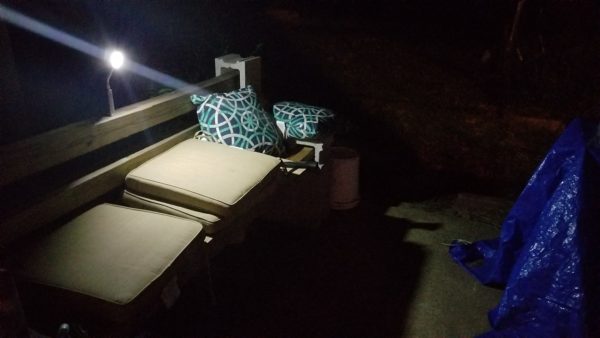
    Above: Back patio with a small amount of light coming from the kitchen.

    Below: LED USB light turned on. Picture doesn’t do it justice as to how much it lights up the area.


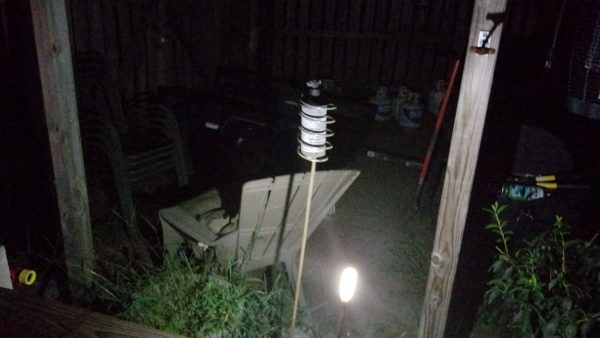
    Above: View from the backside after I turned it around. That fence line and those propane tanks are about 30 feet away.


    Based on my calculations a 10,000mAh power bank – such as this one – will run the USB light for over 40 hours. This is significant. Sips power.

    These can be used to walk around with or position in a house to light up an entire room or area. In fact, a good part of a campsite could be illuminated enough to walk around and check for the occasional bigfoot or zombie.

    LED USB lights – $3 each. Not bad. Think I will order a few more.


  • Chicken Noodle Soup Taste Test: 4 Years Expired

    Chicken Noodle Soup Taste Test: 4 Years Expired


    While I stock up on freeze dried and bulk foods such as rice, canned goods are the staple of my own food storage program. I have written about the myths surrounding expiration dates and suffice it to say canned foods will last years past labeled expiration date if properly stored. This goes for almost every kind of canned food including meats, soups, stews, fruits, and vegetables.

    I’ve saved an assortment of canned goods over the years that the wifey wanted to throw out. Every so often I pull one out and serve it. So far I’ve had no issues with any of them.

    Recently I reached deep into the back behind stacks and stacks of food all over my house and…….well, Ok I went to the cabinet and got a can of chicken noodle soup. The can expired in 2013 which makes it well over 4 years past the point most people would have thrown it out.


    I opened the can, heated it up and put it in my belly. No issues whatsoever. As I expected the appearance, smell, texture, and flavor we all like the can was processed the day before. So while I would like to write up some eloquent article on my taste test it really boils down to opening a can, heating it up – and eating it.

    ****Note: Do not consume canned that are bulging or leaking. It’s not good for canned food – or people.

    [slideshow_deploy id=’9383′]

  • Converting a Cargo Trailer Into a Camper

    Converting a Cargo Trailer Into a Camper

    A little over a year ago I was looking into converting a cargo trailer into a “camper”. The purpose behind this was not only to be ready-to-go for camping at a moments notice but also for bugging out. The vehicles I had at the time had fairly low maximum pounds which I could pull. Even a pop-up camper weighed too much. After seeing the video below I was intrigued and started seriously looking into a cargo trailer conversion. I felt with a smaller trailer conversion I would come in close to the weight I could handle.

    Inevitably I never proceeded forward. I ended up buying an old military two-wheeled trailer and it currently sits at a local shop being customized. Possibly before the next Presidential election, I may get it back as they have had it WAY too long. The cost of the customizing is dirt cheap so I don’t have a lot to complain about. Regardless, the cargo trailer conversion to a camper is a budget-friendly solution.

     Warning – turn off the sound otherwise you may just go insane.

  • DIY: Making Waterproof Matches In Two Simple Steps

    DIY: Making Waterproof Matches In Two Simple Steps


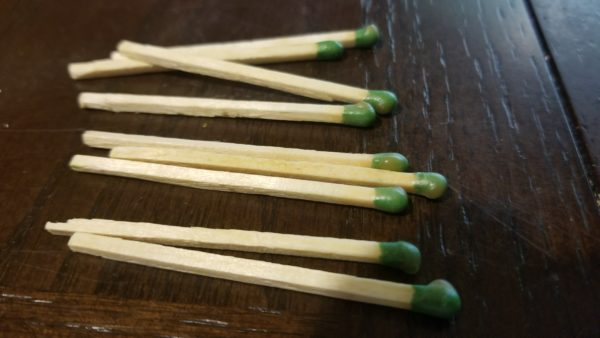
    While my “Go To” firestarter is a Bic lighter, matches are super cheap and widely available. One problem is they are very susceptible to moisture. Ever try lighting a soggy match? Yeah. Kinda like trying to write on wet paper. Try as you might the outcome is not very desirable.

    Waterproof matches are available however they run a steep premium over standard wooden matches. Solution? You can buy inexpensive wooden matches and waterproof them yourself.


    Making Waterproof Matches

    STEP #1: Dip the ends of the wooden matches into melted candle wax. Set the matches with the waxed tips hanging off the edge of a table.


    STEP #2: Once the matches have cooled inspect to ensure that each match head is completely covered in wax.

    Gee…..that was hard. 

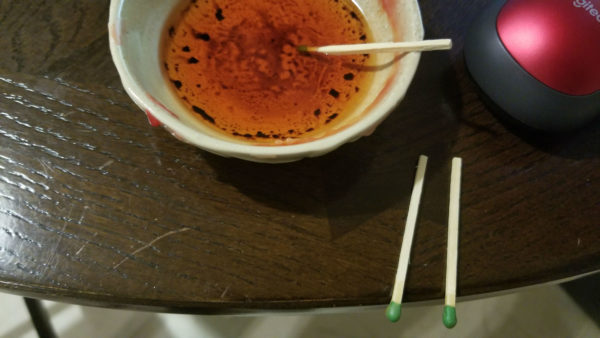
    To test the effectiveness of the waterproofing I dipped an assortment of matches made following the two steps above into a glass of water. I held them in the water for about 5 seconds.

     Below is a short video of one of the matches being lit. Interesting is the matches burn slightly hotter once it gets going due to the wax.


    All the matches in my initial batch successfully survived the dunk test.

    The Soak Test

    A final test was to actually soak the homemade waterproof matches directly in water for an extended period of time. I felt that what would happen is the stick section of the match would absorb water and carry it up underneath the wax thus ruining any chance of ignition. I dropped several matches into a glass of water and let sit for 30 minutes.

    Results

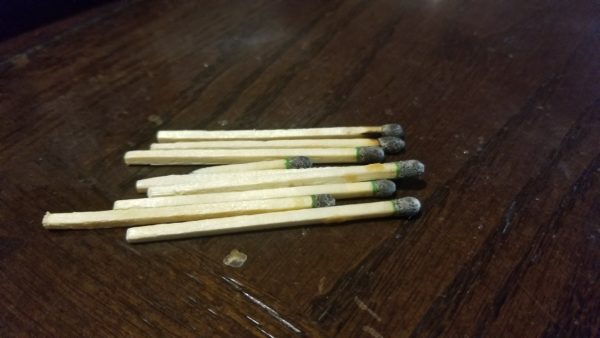
    75% lit and burned pretty much as normal AS LONG AS I dried the tip prior to trying to striking. If any water droplets were still on the match head although it would light the flame would fizzle out quickly.

    I have to admit I was pretty impressed. The main reason I have waterproof matches is not to survive a three-mile trip down the river but to protect them from moisture/humidity. So far these are working out well.

    There are other methods of “DIY” waterproofing matches such as coating with fingernail polish. Might try that at some point.

  • Strengths and Weaknesses


    I’ve had some older folks suggest that they are useless should the SHTF. They talk about their bad knees, inability to run, or other physical limitations. Others will say they are just not “tactical” enough and don’t have an aggressive mindset. It is disappointing to hear talk like this and the display of such defeatist perspectives.

    We all have value. We all can contribute.  The fact is we also all have limitations and some of those limitations can be determinantal. While certainly there are cases which weakness can be changed the reality is we are who we are. For preppers, those weaknesses must be identified and dealt with.

    Example:    Your group has 12 members. Two are over 70 years old. Three of the others are obese and have physical limitations when it comes to exerting themselves. One member is a Crossfit athlete. The rest are ordinary people in average shape.  The decision on sending a patrol out 3-5 miles from the property to watch for traffic on a popular rural road and report back their observations would have to take physical limitations – as well as mental ones – into consideration.

    Example: The group arrives at the retreat. The retreat arrival checklist is pulled out and responsibilities are divided. Responsibilities and tasks revolving around food prep, cooking, sanitation, logistics/inventory control, security, water/water filtration, etc. are all critical to the success of the group. The Crossfit athlete has a serious reading/writing problem, and one of the 70-year-olds worked for the Post Office in logistics. Strengths and weakness must be considered.

    Example: Over the last three days the perimeter of the property has been tested by someone on a motorcycle. It is apparent they are testing the waters to see how the group is reacting and to gather intelligence. Two of the group members are ex-military and suggest an attack is imminent. A defensive plan specifically geared towards this known threat must be implemented. One of the 70+-year-olds fought in Vietnam. The other member was in the first Gulf War. The tactical experience and knowledge level must be considered for all members as a plan is devised.

    It would be great if we could all be John J. Rambo with advanced medical degrees. That is just not realistic. Having the ability to not take offense is also important. There’s no room for ego’s when it comes to survival.

    Assessing skills and making decisions that are in the best interest of the group is critical. Everyone needs to be on the same page and the entire topic should be discussed well before the “bug out” takes place.

    Lastly  – if you realize you have weakness consider making changes to eliminate them. Certainly, some are unavoidable. Having limitations due to being overweight can be improved. If your cardio just plain sucks and you could not walk 6 miles if your life depended on it then get out there and start walking. Even small improvements over time will add up.

    p.s. A self-sufficient home base is one of the best force multipliers for any prepping group. Begin planning your homestead at Homestead Launch.

  • Rourke’s Recommendations

    Rourke’s Recommendations


    Every Thursday I recommend a few things such as movies, books, and an assortment of gear – all kinds of stuff. Some of these are related to survival & preparedness – while others are just stuff I like. Most are on Amazon but not all.

    So – for this week……here is my list:

    Books:

    Prepper’s Home Defense

    The Submachine Gun: Home Workshop Guns

    Home Workshop Silencers

    Full Auto, Volume 1: AR-15


    Movies/TV:

    Wicked Tuna: Season 1

    Mountain Men: Season 1

    Dual Survival: Season 1

    Seinfeld: The Complete Series


    Gear:

    SOG Responder Bag

    4″ Israeli Battle Dressing

    Tactical Medical Trauma Kit

    Tenergy CR123 Battery Pack/12 count

    *     *     *     *     *     *     *

  • Panhandle Rancher: Living with the Model 1911 Caliber .45ACP Pistol [Part 2]

    Panhandle Rancher: Living with the Model 1911 Caliber .45ACP Pistol [Part 2]

    Part 1 can be seen HERE.


    Range safety

    Extend your right hand ahead and out at shoulder level. Move the hand to the right noticing the effort required. With the hand again pointing forward, move the hand to the left, again noticing the effort required. For the same reason that it is easier (but not safer) to rack the pistol slide with thumbs pointing in the opposite direction, the large chest muscles make it easer to move the hand toward and past the centerline of the body. Therein lies a clue for the assistant and/or coach. Smart assistants will generally stand on the strong hand side of the shooter, which is to the right hand side of a right-handed shooter. Smart assistants will also stand slightly behind the shooter. The alert smart assistant is then in a position to control any unexpected pointing or extension of the pistol to the right of the shooter, potentially toward the assistant. This is much harder to do when standing on the weak hand side of the shooter and makes it impossible for the assistant to observe proper drawing and holstering of the pistol.


    Drawing and holstering a loaded and cocked handgun including the 1911 can be fraught with peril. As the pistol handle is gripped, the grip safety is automatically disengaged. A properly holstered pistol will have the slide safety engaged and the properly instructed shooter will have the trigger finger OUTSIDE of the trigger guard until ready to shoot. As the pistol comes on target, the strong hand thumb disengages the slide safety, trigger finger is moved inside the trigger guard, and target engaged. At the conclusion of a course of fire, the slide may be locked back on an empty magazine. The assistant/coach and shooter should both inspect the pistol to ensure the magazine is empty and that there is no round in the chamber at the conclusion of a practice set. At that point the shooter can eject the empty magazine and insert a loaded magazine or gently lower the slide on an empty chamber and holster. In either event, the shooter should automatically engage the slide safety when the slide is closed into battery before starting the holstering process.


    Holstering a loaded pistol has its own dangers. The slide safety should be engaged and trigger finger held outside of the trigger guard at all times during the holstering process. It is easy to fall into a habit of pointing the muzzle excessively toward the rear of the shooter when holstering. This is to be avoided as the muzzle can point toward another person to the rear of the shooter. Range safety officers are always alert for shooters with this bad habit and should position themselves accordingly while offering helpful suggestion to the shooter. Put that trigger finger inside of the trigger guard when drawing or holstering and a loud bang will be heard accompanied by the occasionally ventilated buttocks or side of the leg. The slide safety should always be on and the trigger finger should always remain outside the trigger guard until actually engaging the target!


    Speed in drawing and holstering comes with thousands of rounds of practice and is not a thing to be hastened. Speed and smoothness will happen with practice and patience. Speed should never be rushed.


    Before firing that first round at a target

    Always begin a range session by checking the pistol barrel for obstruction. Pointing the weapon in a safe direction at all times, the magazine is removed, slide safety disengaged, and round ejected. The slide is manually locked back and the shooter peers into the chamber, verifying that no round is present. The shooter also looks through the magazine well in the grip, verifying it is clear of obstruction and debris. At this point the shooter either inserts a cleaning rod from the muzzle and observes the end protruding from the chamber or actually peers down the muzzle. The latter practice is discouraged. Any foreign object or debris lodged in the barrel upon firing a round can cause rupture of the barrel and slide, possibly injuring or killing the shooter and/or bystander and certainly wrecking the pistol. Any foreign debris and or obstructions to the barrel bore must be removed before firing!


    Hang fire and squib powder charges

    In days gone past, bullet propellant (gunpowder) and primers were less reliable. Ball powders were actually remanufactured from decades old WWI naval rifle powder. Shooters would on occasion pull the trigger on a chambered round, the hammer would fall with a mechanical click, and the expected report and recoil not happen immediately. This condition was known as a hang fire or delayed ignition. Whenever the trigger is pulled and bang not heard immediately, always ALWAYS keep the weapon pointed in a safe direction, remove the trigger finger from the trigger and keep it outside of the trigger guard. Expect the weapon to discharge at any time without further action by the shooter.


    Count to sixty using the one thousand, two thousand, method of counting seconds during which time the pistol is always pointed in a safe direction. Remember, the weapon could unexpectedly discharge at any time. If a minute passes with without the round firing, eject the bad round and examine the primer for firing pin indent. If there is no indent, the weapon has probably malfunctioned and must be repaired before attempting to fire again. If the primer is indented, set the round aside until it can be safely discarded by burying or similar. Reload with another round and proceed with the practice session.


    Squib charges are cartridges holding a less than normal propellant charge and in the worst case, no propellant at all. In both cases the shooter will hear more of a pop than a bang upon squeezing the trigger. The firing report will certainly sound different than normal. If the cartridge case was lacking a propellant charge, recoil will be absent and the report quite mild. Either condition is highly dangerous should a subsequent round be fired without removing the bullet that is likely stuck in the barrel. This danger is enhanced in a single action self-loading semi-automatic pistol such as the 1911.


    What has happened is that the primer fired as expected resulting in enough energy to propel the bullet into the forcing cone of the barrel where it likely stuck resulting in an obstructed barrel. Hopefully the recoil was insufficient for proper function of the auto loading capability of the pistol and it failed to eject the fired cartridge case and load another round from the magazine. The absence of a normal report is a clue.


    Keeping the weapon continually pointed in a safe direction, count to 60 using the aforementioned method, remove the magazine and pull the slide fully back ejecting the offending round. Lock the slide open and visually check the chamber to ensure it is empty.


    You performed a barrel check for obstructions before starting to shoot, didn’t you? Take the cleaning rod you used to perform this check and try to insert it down the full length of the barrel. If the tip will not pass beyond the chamber, you have a bullet stuck in the barrel. Had you attempted to fire the weapon again, the barrel would likely have exploded perhaps causing serious injury or death to the shooter and/or bystander. Always wear shooting or ANSI rated protective glasses when shooting or observing shooting.


    A stuck bullet condition is not as melancholy as it seems. Disassemble the weapon for cleaning and with barrel removed from the slide, the stuck bullet should be visible from either end of the barrel. Place the end of the barrel with the shortest distance to the bullet on a soft piece of wood. Insert a length of 3/8” dowel rod into the upper end of the barrel and tap gently with a small hammer. This will eventually force the bullet from the barrel and if it was closest to the chamber end when jammed, upon reaching the chamber, the bullet will drop free. If the bullet was closer to the muzzle end, tap from the chamber end until the bullet nose is even with the muzzle and repeat the tapping process while holding the entire barrel freely in one hand. The bullet will emerge from the muzzle and drop free.


    Clean the barrel and inspect carefully for any bulging or cracking. If none are observed, reassemble the weapon. It is ready for use. If there is any question whatsoever as to the condition of the barrel, the weapon should be examined by a competent gunsmith before shooting again.


    Hang fires are very rare these days but there is always the potential for both newly manufactured ammunition and that a half century old or older. With either a hang fire or squib charge, always keep the muzzle pointed in a safe direction while counting to 60. The possibility of experiencing a squib load increases when shooting reloaded ammunition. Having shot nearly a million rounds, I have never experienced a hang fire and only one squib load that occurred early in my reloading practice at about age 12. Regardless of the weapon being fired, the competent shooter must remain aware of the possibility of both hang fire and squib load.


    Mastering recoil and report induced trigger yank or flinch

    Having learned the fundamentals of safe handling and mechanical operation of the 1911, you proceed to the target range and fire off a few boxes of ammunition. Of course you are wearing ear and eye protection. You shot better at the beginning of the session than at the end with final target hits stringed in vertical orientation. This is good news proving you are human, but bad news demonstrating almost total mastery of a bad and hard to break habit.


    Experienced shooters understand what has happened. Rather than gently squeezing the trigger, in anticipation of the report and recoil, you have begun to yank the trigger. This is an unconscious action and must be overcome before that pistol will be of much use other than as a noisemaker. Choosing to and acting toward, overcoming this bad habit defines a transition between hobby shooter interested in nice toys with an accompanying bang and a developing warrior capable of successfully wielding the 1911 pistol in a combat situation.
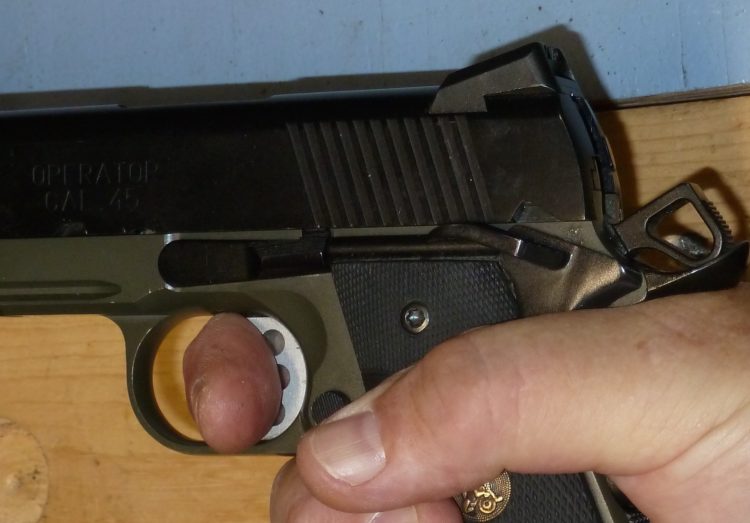
    [Improper finger trigger placement]

    What produces that vertical string begins with the unconsciously yanked trigger. Abrupt trigger movement starts the muzzle moving downward while the bullet is transiting the barrel. Depending upon how the pistol is held and amount of finger engaging the trigger [see photo above], the vertical stringing may be slanted to the right or left. Proper finger trigger placement allows the trigger to be squeezed straight back along the longitudinal axis of the pistol in a manner causing minimal lateral movement of the pistol [see photo below].
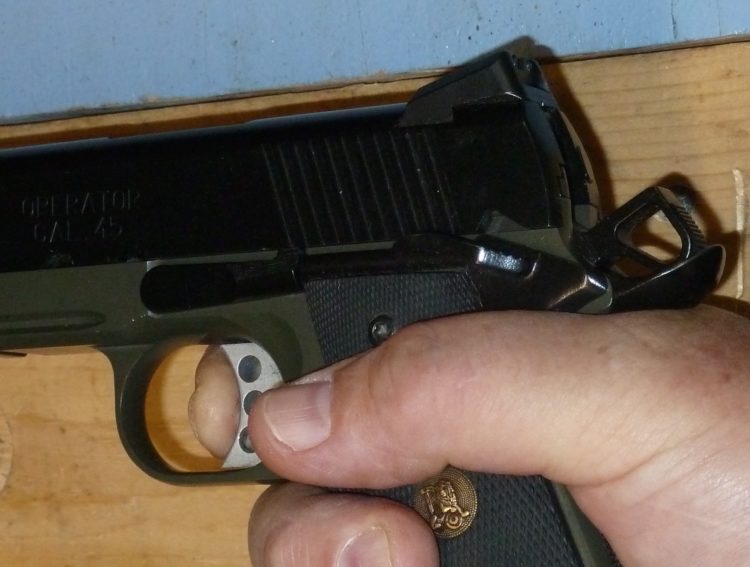
    [proper trigger finger placement]

    Trigger finger placement is an easy fix. That flinch induced trigger yank producing vertical stringing of rounds on target is not so easy and in my experience has only one cure requiring an assistant, optimally a knowledgeable pistol coach. Introducing a second person into the new shooter firearm mix can be fraught with danger for all involved.


    The best cure for that nasty bad habit of trigger yank is achieved by having your assistant or coach either loading or not, one round into a magazine, and releasing the slide chambering a round, or simply easing the slide closed on an empty chamber. If choosing not to chamber a round, the assistant must cleverly slow down the closing of the slide in order to prevent the type of damage described previously to the weapon. That clever assistant will also slow down the slide when chambering a round so that the shooter, even when wearing ear protection, cannot discern by slide sound alone whether a round actually chambered because without care, closing the slide on an empty chamber will sound different than when the weapon strips a round from the magazine and chambers. This difference is even more apparent when the shooter is wearing amplified hearing protection.


    The assistant/coach must wear both eye and ear protection. The use of amplified hearing protection makes communication between assistant and shooter much easier and safer while preserving hearing from loud noise-induced damage.


    This same clever assistant will randomly vary the time in which this closing of the action is accomplished, as the process is easier and faster when not loading a round into the chamber. In either case, the assistant must be certain that the slide is closed in battery and slide safety engaged before passing the pistol to the shooter. The assistant should produce a weapon that is either loaded or empty, in a totally transparent manner that leaves its status completely unknown to the shooter.


    At all times both shooter and assistant must practice safe weapon handling, keeping the trigger finger outside of the trigger guard and slide safety engaged until just before intentionally firing a round.


    The method I use when coaching the flinching shooter is to stand on the shooter’s strong hand side and slightly behind. Initially, I load a magazine to capacity, chamber a round, and engage the slide safety. Holding the pistol in my left hand [see photo below, safely passing a loaded pistol], with trigger guard covered by my hand on one side and my fingers on the other (always mindful to keep my fingers outside of the trigger guard) and pistol grip toward the shooter, I announce, “The weapon is cocked and loaded. The slide safety is engaged. At your timing, engage the target, until the weapon is empty.” The pistol is then passed to the shooter.
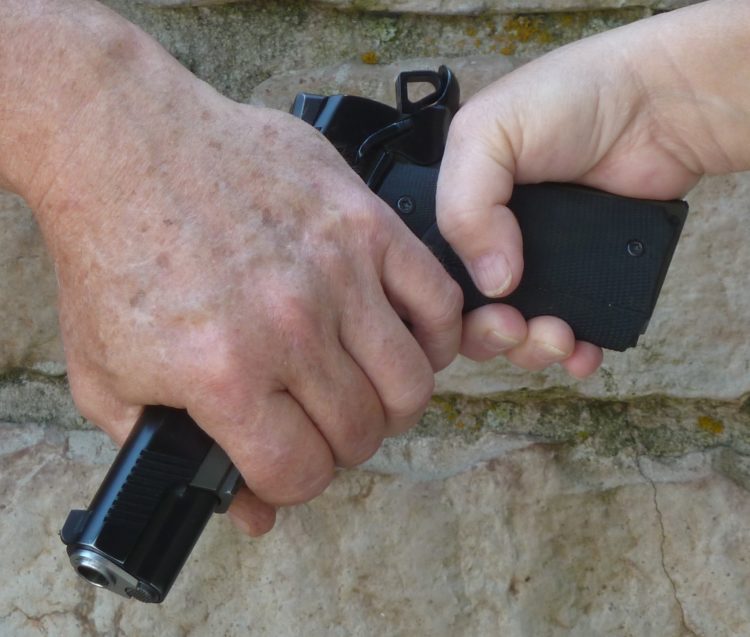
    [safely passing loaded pistol]

    Knowing the shooter has already mastered at least one bad habit; this exercise starts with a full magazine and is thereafter limited to presenting a weapon with either one chambered round or an empty chamber with emphasis on the latter presenting the shooter with an empty weapon more often than not. The initial full magazine shot at one time conditions the shooter to expect the weapon to fire each time the trigger is pulled. It also may produce vertical shot stringing on target indicative of a yanked trigger. If so, this is pointed out to the shooter before continuing.


    Thereafter the assistant will either chamber a round or not announcing, “The weapon is loaded and slide safety engaged. With one round, engage the target.” The weapon is then passed to the shooter.


    Upon receiving the weapon, the shooter points it toward the target, snicks off the slide safety and inserts the trigger finger into the trigger guard. These two actions should proceed in the same manner every time and only after the pistol is trained on the target.


    If the trigger is yanked on an empty chamber, the muzzle will drop in a manner most noticeable to shooter and assistant. The assistant should be in position to notice trigger finger placement on the trigger, control the weapon if necessary, and to observe the motion of the muzzle when the shooter squeezes the trigger. That yanked trigger with an unloaded weapon is most instructive. The upward recoil of the weapon when fired obscures the initial downward motion of the barrel resulting from a trigger yank making the yank invisible to both shooter and observer. Its best diagnostic is trying to fire an unexpectedly empty chamber, which is of course, the purpose of this exercise.


    When acting as the coach/assistant, I tend not to present a loaded weapon after that first magazine has been fired until the trigger yank is under control and the shooter reconditioned to expect an empty weapon. When a loaded weapon is eventually presented to the shooter, surprisingly the point of impact is almost always exactly where the shooter thought it would be based upon the sight picture at time of trigger release. I then transition back to presenting an empty weapon, occasionally introducing two successive loaded weapons in sequence with the goal being to always keep the shooter from knowing whether the weapon is loaded. At this point, the shooter should expect an empty weapon more often than one loaded.


    Two hours of serious practice in this manner may only burn through only a couple of magazines of ammunition so the exercise is much cheaper than banging away at a can while at the same time, the shooter actually improves in ability to hit a target. In my experience, no amount of shooting where the shooter self-loads the weapon or has knowledge of its loaded/unloaded status will ever overcome the yanked trigger habit. Some things just take two people.


    Having the shooter safely holster the weapon after ‘firing,’ and then un-holster an empty weapon and engage the target can provide variety to the yanked trigger exercise. This permits the shooter to practice safe holster technique.


    The Magazine

    Shooting the 1911 will provide plenty of practice loading magazines. Tactical pistol shooters should always practice loading magazines with heads up, eyes looking around, and not focused on the magazine. Focusing on the activity of loading a magazine ensures a degradation of situational awareness. If the head is consciously kept up with eyes scanning the surroundings, reloading will soon become an automatic activity.


    There are several large capacity magazine carriers for the 1911 that are easily attached to a plate carrier or belt [http://amzn.to/2yvjuTh] and other magazine carriers have a molded rail which is handy for keeping a laser and weapons light such as the Streamlight [http://amzn.to/2iSDHvs] ready for situationally dependant mounting on the pistol rails.


    Comments on cleaning the pistol

    A most useful aid for cleaning all firearms can be made from a quarter inch diameter brass rod about six to eight inches in length. Form a one-inch diameter finger loop on one end of the rod for ease of handling and file a straight slot screwdriver blade on the other end. This rod makes an excellent fowling scraper to remove burned powder residue from bolt faces, feed ramps, and from frame and slide grooves. Brass is much softer than the hardened metal of the slide and frame and should not damage the gunmetal or finish. An application of Hoppe’s or similar powder residue solvent before scraping is of benefit. As an aside, a hard to remove residue often builds up on the front face of revolver cylinders and in the worse case, impedes rotation of the cylinder. This scraper tool is perfect for removing this residue [see photo below].
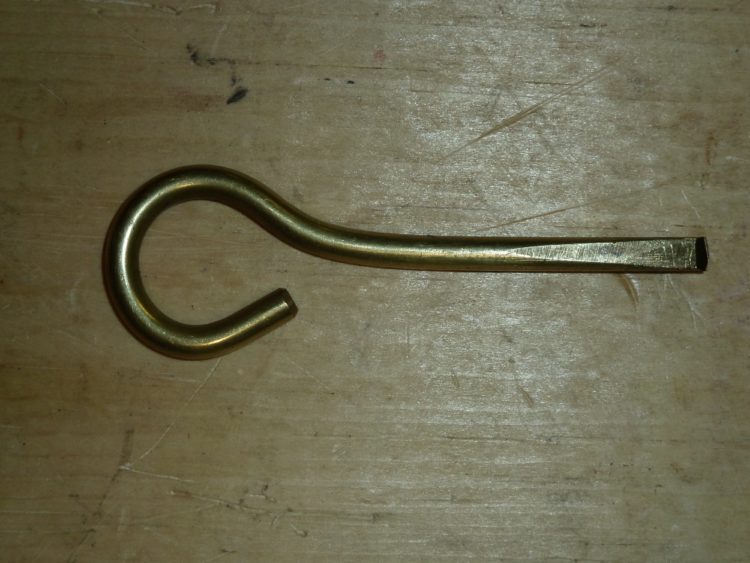
    Holsters for the workingman

    During much of my career as a suit and tie agent, I carried a .45 in a thumb break, leather holster, worn on a thick leather belt. The thumb break is essential in this type holster to secure the weapon against accidental loss and for retention should someone attempt a weapon grab. Opportunity for the latter is minimized by keeping the weapon hidden unless in use. A slightly forward-slanting holster draws easier than a vertical holster and provides increased difficulty for someone trying to take the weapon from behind. Cross draw holsters beg someone to take your pistol and shoot you with it. Shoulder holsters may have their place in the coat and tie crowd but it is hard to beat the quick drawing capability of a weapon carried in a proper holster worn on the belt.


    Some of the new Kydex and carbon fiber holsters are really excellent but criticized by the slight noise being made when drawing. Leather holsters are almost always quiet. Regardless of carry methodology, weapon retention practice should be a regular part of concealed carry training.


    Any belt worn holster should if its design permits, be worn with the belt passing through the front holster loop, then through the side of the pants belt loop and proceed through the rear holster loop. This anchors the holster to the shooter. The belt buckle always positioned nearest to the holster and by always threading the belt to the holster in this manner, it is more difficult for the holster to freely fall from an opened belt buckle.


    Upon retiring, I became the co-owner/manager of a ranch in West Texas. That experience taught new lessons in pistol packing. One of the first lessons was just how bad it hurt to be bucked from a two-year-old horse – and landing with the holstered pistol between body and earth. This is a special kind of hurt that endures.


    If that ranch produced one species of critter in excess of the most fecund jackrabbit it was the rattlesnake. The wife having been bitten by one of these vile creatures declared war and no one went outside without packing a pistol. I first tried carrying pistols in the same manner as in government service, in a form fitted snap break leather holster. Days outside in the rare rain but all too often wind-driven sand worked their way on the exposed pistol.


    Working outside on the ranch taught an old lesson and I learned anew why the US horse cavalry carried revolvers in a flapped holster. Slow to the draw but protecting the pistol from the weather it is and before long, I had a US Military style flapped holster. It helped somewhat with the wind-born sand and debris of life on a working ranch but I soon gravitated to a full flap holster that covered much of the pistol handgrip.


    Most full flap holsters are sized for a 1911 with uncocked hammer because the military method was to carry the .45 with hammer down on an empty chamber. The flap holster makes drawing slow and having to chamber a round upon drawing even slower. A saddle maker or other competent leather worker should be able to relocate the flap closure mechanism and/or manufacture a longer flap that will cover the cocked hammer. While the flap is being worked on, the belt loop should be relocated as far upward on the holster as practical. This will help the holster hold the weapon closer to the body. Holsters for full-size weapons that have the belt loop near the center of the holster will eventually let the handgrip cant outward from the body which ensures it will snag on almost anything while generating a most Barney Fife look.


    The Bathroom

    Many methods have been used in attempt to secure the belt worn pistol when in the toilet. For those with a holster on a belt loop, the weapon tends to end up on the floor where it might even be accessible to someone in an adjacent stall. Some have placed the pistol on the coat hook on the back of the door hanging by the trigger guard. This is very dangerous as the pistol can be easily jarred from off of the hook and fall on the floor potentially making the pistol accessible to another or in worse case actually discharging. Others have placed their handgun on the back of the toilet on top of the water tank. Both of these methods remove the pistol from the immediate person and the latter makes it easy to forget the handgun when exiting the stall.


    The best place for the holstered pistol when on the toilet is in your underwear between your feet. This keeps it immediately accessible and in a location impossible to forget.


    Final Comments

    Modern 1911 series .45 caliber pistols are sophisticated weapons for self-defense. The presence of multiple safeties, some automatically engaged, can make this pistol safe to carry with the hammer cocked on a loaded chamber but it is imperative the shooter receive hands-on training from a coach familiar with pistols of this design. Whenever possible choose a modern 1911 pistol incorporating the new safety features. The beginning shooter proceeding direct from the gun store with a loaded 1911 series weapon is exposed to a multitude of potential lethal dangers. Competent hands-on training should always be sought before chambering that first round.

    This article advocates keeping the weapon in a loaded, ready to fire condition. When not carried on the person, any weapon in this condition should be secured in a safe or protective container designed for weapons. Children are naturally curious about handguns and may go to unexpected lengths to retrieve a weapon from what was thought to be a perfect hiding place. All weapons when not being carried should be protected from accidental handling by children or curious adult.

  • CIMA Knife Table Top Review

    CIMA Knife Table Top Review

    This was originally published August 23rd, 2016. My CIMA knives continue to do extremely well today.

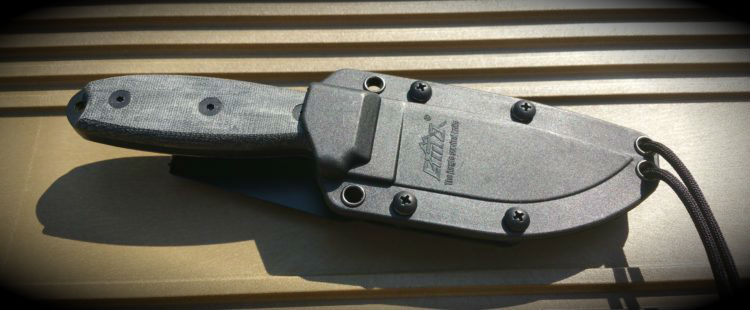
    I ordered this CIMA fixed blade knife a couple months ago when it was on sale for less than $20 and was shipped free. I really wasn’t expecting much. This is Chinese-made and at that price point how good could it be? As usual, when ordering from GearBest a package was waiting for me when I arrived home approx 3 weeks later.

    CIMA-3

    This review is going to be a short one and a true “table top” rather than “testing & evaluation”.  I love this knife. I have not taken it out in the woods and feathered sticks, stabbed it into dead carcasses, or zombie eye sockets. No – it has remained in the box in mint condition. I have since ordered two more which at least one will come under regular use.

    Here are a few specs:

    • Blade Material: 7Cr17MOV stainless steel
    • Hardness: 58 HRC
    • Blade Length: Almost 3.5″
    • Handle Length: 4.5″
    • Overall: 8.5″
    • Color: Black
    • Handle Material: Flax/Linen

    Quick Summary: This is a smaller knife that feels great in the hand. Balance is towards the handle which doesn’t lend well to batoning but let’s be realistic – the blade is less than 3.5″ long. Full tang thickness is 4.5mm which is acceptable for a knife this size. The sheath is great and the knife retainment is excellent via an audible “snap” when the knife is interested. No straps needed.

    Check out the pictures below that will scroll across the screen. They are a combination of photo’s I took and ones used for advertisements.

    Oh – did I mention that the CIMA fixed blade knife is a clone of the respected ESEE 3 which cost around $100? No? Well, it is and a very close clone at that.
    Recommended. For more information click HERE.

    Rourke

    [slideshow_deploy id=’2901′]

  • Paladin Press “Going Out of Business” HUGE Sale

    Paladin Press “Going Out of Business” HUGE Sale

    ****Note: This post originally appeared over at BestPreparednessDeals.com.


    Paladin Press has been a staple in the survival & preparedness book market for decades. Authors who simply could not get their information published by mainstream publishers had Paladin to go to. and we all benefited from that. Paladin Press has announced they are closing their doors and currently is running a HUGE sale on all their offerings.

    Folks – this may be the last opportunity to pick up many of these very unique titles.

    From knife fighting to self-reliance, they have it all. From preparedness to martial arts, there is a ton of information here.  I’m going to take advantage of this opportunity and order several books myself. They also have DVDs and videos.

    Some pretty unique information examples:

    PVC Projects

    4×4 Off Road

    Survival Retreat

    Building Log Cabins

    Homesteading

    Silencers

    Full Auto Conversions

    Caching

    Survival Medicine

    No coupons or promo codes required. Everything is marked down.

    Click HERE to head over to Paladin Press.

  • 5 Tips for Improving Your Shooting Accuracy

    5 Tips for Improving Your Shooting Accuracy


    It happens to every shooter, whether you are a novice or an experienced shooter. You get to a point where you miss targets that you know you should hit. Sometimes you may be new to shooting, but you seem to have plateaued in your shooting skills. Or maybe you are just trying to improve your skills to become a better shooter. Either way, it is important you develop discipline and use these tips to improve your accuracy


    Slow Down

    Everyone wants to shoot well and shoot fast. However, speed always comes at the expense of accurate shots. If you are unable to group your shots, the first step you need to take is to slow down. Once you manage to group the shots, you can then start picking up the pace. To learn how to slow down, here is an important tip, which can work great for you.

    Put an aiming point at close range; when using a handgun, this can be at five yards, for a rifle, start at 25 yards. Aim at the center of mass and fire around. Now take as much time as possible to empty the rest of the clip without enlarging the initial bullet hole. That is impossible for any shooter to achieve.

    However, that will help you to focus on the basic of shooting. These are breath control, trigger control, and sight picture. This slow-fire drill helps to reinforce muscle memory needed for accuracy. Now double the distance and repeat the drill. It is also a great way for you to get rid of a flinch.


    Squeeze Trigger Don’t Pull

    The trigger challenge can be divided into two. These are the mental and physical aspect of squeezing the trigger. The mental aspect is the hardwired response in our mind, which causes us to flinch when squeezing the trigger. This will cause the bullet to miss whatever you were targeting. To avoid this, ear protection and practice can really help.

    Since the trigger is below a short barrel in a handgun, unlike a rifle, it is quite easy to tip the barrel if the trigger is pulled too fast. Thus, instead of yanking at it in anticipation of the bang, try to slide it along the same axis as the barrel. This will only work if the index finger is in the right position.

    Avoid having the index finger pressing sideways on it. Press on it straight back like you would when you click on a pen. Besides that, you need to be holding the gun in the correct position. You also need to take your focus away from the loud bang and focus on the trigger. If you do not get used to focusing on the trigger, your mind will always try to pull you away each time. You will find that you flinch quite often when trying to make a shot.


    Alignment is Important

    At the most basic, you need to learn how to align the sights while you focus on the front sight. When you do that, the rear sights should be blurry as should be the target. The front sight should be clear.


    Practice Shooting Drills

    Another important aspect of being good at shooting is practice. After you learn all the skills, you will quickly forge unless you practice often. If you want to become a professional, that will mean hitting the shooting range as often as possible. If possible, look for good drill online, such as this resource that you can use. Try them often until you get that your skills are good.


    Muscle Memory

    The instantaneous and intuitive manipulation of a firearm is one of the most important skills you can learn at a shooting range. However, there is both bad and good muscle memory. For instance, you do not want to pick up bad habits that could affect your accuracy during a competition or when hunting.

    Such situations are stressful, and you want to make the most of them in the least amount of time possible. That will mean you practice as often as possible. Besides that, it will mean you have to use weapons and ammunition that are close to the real thing that you use in hunting or during a competition.

    Additionally, if you use any gear, ensure that it is similar to what you would use in a real-life situation. In short, muscle memory is about learning all the right skills and practicing them as often as possible.


    Alex Briggs is a contributing writer and media specialist for Galco Gunleather. He regularly produces content for a variety of gun and personal safety blogs.


  • SHTF: Fight Like a Man Audible Book Giveaway

    SHTF: Fight Like a Man Audible Book Giveaway


    We’re having a GIVEAWAY!!!

    Up for grabs is an audio version of Fight Like a Man: SHTF Series Book One. This first in a new series is taking the preparedness fiction genre by storm. The winner will be picked in 48 hours so jump on it and enter.


    How To Enter

    All members of The Patriot Brigade are eligible to win the audiobook. If you are already a Brigade member – you’re already entered!

    If you are not a member simply head over the Patriot Brigade page and sign up.

    I will use a random number generator(Random.org) to select a winner on Wednesday morning.
    [Note: The author would like to send the winner an email with a few questions about your experience with the book.]


    Good luck everyone!!

    SHTF, Fight Like a Man, giveaway, book, prepper fiction

  • From the Desk of John Rourke – October 27th, 2017

    From the Desk of John Rourke – October 27th, 2017


    Stay tuned…..Sunday night I’ll announce a little giveaway we’re having. An audio edition of Fight Like a Man: A Post Apocalyptic Thriller will be up for grabs.  Narrated by the excellent Kevin Peirce. If you’ve never tried audiblebooks this is a perfect opportunity. An audiobook regular like me? A good book to add to the library.

    fight like a man, SHTF, book, audible, prepper fiction

    ◊ ◊ ◊ ◊ ◊

    The repercussions of the NFL’s lack of holding players accountable continues to backfire on the league. Well – it’s not just the NFL leadership but many of the pathetic players.

    ◊ ◊ ◊ ◊ ◊

    Commander Zero has a bunch of Ruger 10/22 magazines for sale at fantastic prices.

    ◊ ◊ ◊ ◊ ◊

    New season of The Walking Dead started this past Sunday. Finally watched Episode 1. Awesome.

    ◊ ◊ ◊ ◊ ◊

    From the look of the recent news headlines regarding uranium, The Clinton Foundation, Hillary, and Bill – “truth” is sending a message…..

    Resistance is futile…….

    ◊ ◊ ◊ ◊ ◊

    During a recent discussion, the topic of fish antibiotics came up. While there are a lot of places fish antibiotics can be purchased online many are very expensive. Common antibiotics such as amoxicillin and ciprofloxacin should not cost an arm and a leg.  I had a couple of suppliers that were very easy on the budget and unfortunately, they got shut down. I’ll see if I can find another.

    Wouldn’t it suck to spend thousands of dollars and countless hours preparing for some type of collapse only to get sent to the grave because of a simple cut?

    ◊ ◊ ◊ ◊ ◊

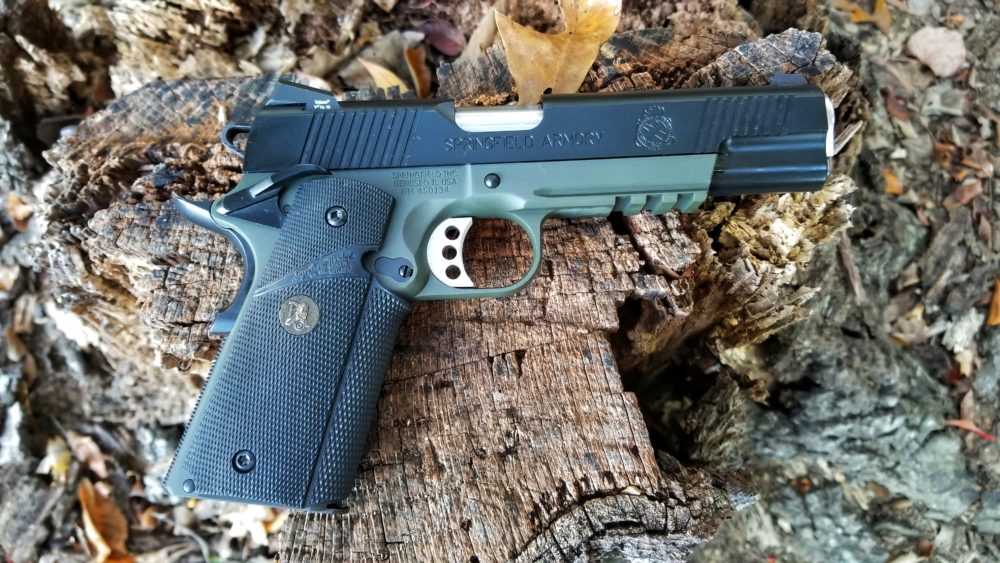
    I’ve got the 1911 fever!!!!!

    Springfield MC Operator 45ACP 1911, 1911, 45ACP, pistol, Operator

    ◊ ◊ ◊ ◊ ◊

    A few comments yesterday about the free ebooks being not so free. Yeah – it happens. Prices change all the time on Amazon and the free books are often free for 24-36 hours – and then go back to full price. It’s all in the timing. Just check and make sure of the price before pulling the lever.

    Have a Kindle or an Amazon Fire tablet? You could literally go years without ever buying a book to read as there are thousands of free eBooks available. Don’t have a Kindle or Fire? Not a problem. You can download apps for most any cell phone or computer completely FREE! No excuses!

    Today’s Freebies

    25 Must Have Prepping Supplies

    Jerky Cookbook

    HOST

    Carrion City

    Bug Out and Live

    NOTE: If you see a free preparedness eBook that you’re interested in get it now as prices can change quickly.  If it lists a price or says “read for free” or has a price for Prime members the book is not free anymore. Visit FreePrepperEbooks.com and sign up for more free survival & preparedness related ebooks.

  • Rourke’s Recommendations

    Rourke’s Recommendations


    Every Thursday I recommend a few things such as movies, books, and an assortment of gear – all kinds of stuff. Some of these are related to survival & preparedness – while others are just stuff I like. Most are on Amazon but not all.

    So – for this week……here is my list:

    Books:

    The Prepper’s Guide to Foraging

    Prepper’s Natural Medicine

    The Prepper’s Workbook

    The Prepper’s Guide to Food Storage

    Fight Like a Man: A Post Apocalyptic Thriller


    Movies/TV:

    James Bond – Never Say Never Again

    Jericho – The Complete Series

    Survivors – The Complete Series

    Revolution – The Complete Series

    Terra Nova: The Complete Series – one of my personal favorites


    Gear:

    EOTech 512 Holographic Optic – as of this writing only $365. Bargain!!

    AR Triple Mag Pouch

    DMT Double Sided Diafold Knife Sharpener – Fine/Coarse

    MTM AC4C Ammo Crate(4-can)
    Vac-Fresh Roll 11″ x 50′ Vacuum Foodsaver Bags


    *     *     *     *     *     *     *

  • Azithromycin as a Survival Antibiotic

    Azithromycin as a Survival Antibiotic

    NOTE: The following was previously published over at DoomandBloom.net.


    One of the most commonly prescribed antibiotics is Azithromycin, known in the U.S. as Z-Pak, is now in a new veterinary version known as Bird-Zithro. In survival situations where you’re off grid and there no modern medical care for the foreseeable future, the medic for the family must stockpile medical supplies, and this includes antibiotics.

    See how Azithromycin in the form of “Bird-Zithro” might fit into your survival plans to treat your, well, sick birds. Uses, dosages, precautions, and more are more are discussed in this video by medical preparedness writer Joe Alton, MD.

    To watch, click below:

    Wishing you the best of health in good times or bad,

    Joe Alton MD aka “Dr. Bones”

  • The Effective Survival Medic

    The Effective Survival Medic


    NOTE: This article first appeared in American Survival Guide, and also over at DoomandBloom.net.


    After water, food, and shelter, many consider personal defense to be the most important priority in a long-term disaster. They’ve got the beans and bullets, but what many of these rugged survivalists don’t realize, however, is this: You can have all the beans and bullets there are, but it won’t mean a hill of beans, and you’ll just shoot yourself in the foot, unless you have the bandages.

    Few in your group will be accustomed to performing activities of daily survival like, say, chopping wood for fuel. This fact will lead to injuries, burns, infections, and other medical issues that must be treated. Someone, therefore, has to assume the role of survival medic. This person might have to be you, an average citizen with little formal medical training. In a circumstance where the ambulance is no longer just around the corner, you may be the only medical asset left to your family or group.

    When you become the end of the line, medically, for your people, how can you be certain that you’ll be an effective caregiver? This is a question that I’m often asked as I travel the country speaking on disaster medical preparedness. The success of the survival medic depends on the accumulation of three things: knowledge, training, and supplies. These can be obtained, over time, with effort and dedication.

    One thing that isn’t easy for an inexperienced medic to obtain is the ability to avoid feeling squeamish at the sight of blood. A response similar to the “fight or flight” mechanism, it’s a natural fear reaction that causes blood vessels to dilate, blood pressure to drop, and slowing of the heartbeat, all leading to lightheadedness and nausea.

    Of course, repeated exposure to blood is one way to become accustomed to it. One medical center director says that his students learn to compartmentalize fear reactions by repeating words or numbers in their head, rocking side to side, tensing and relaxing leg muscles, or even drinking a sugary caffeinated beverage to raise blood pressure, stay hydrated, and avoid low glucose levels (called “hypoglycemia”) that make them feel faint.

    (As an aside, coffee is commonly thought to be dehydrating, but it doesn’t cause you to lose more fluids than you ingest in the drink.)

    The designated medic must assume a number of roles besides that of chief medical officer. These include sanitation supervisor, dental technician, medical quartermaster, counselor, and archivist.

    As sanitation supervisor, it is your duty to ensure that water is purified, food is prepared properly, and human waste is disposed of appropriately. Failure to, for example, construct an effective latrine could cause an infectious disease to run rampant among your people.

    If you are worried about a week without power due to a storm, you won’t have to deal with a lot of dental issues. In long-term survival, however, people start having dental issues like broken teeth, abscesses, and toothache that threaten their work efficiency, if not their life. Dental supplies become as important as medical supplies in this scenario.

    Let’s say you’ve prepared and have a lot of medical supplies. Who determines when these precious items, many of which will be scarce after a disaster, are dispensed? Who gets the last course of antibiotics? That decision must be clearly defined as yours to make.

    In the aftermath of a life-changing catastrophe, anxiety and depression will be more likely to be daily issues than gunfights at the OK corral (I hope). You must be a calm, understanding, confidential presence to keep your people focused on staying alive and productive.

    Finally, you must be the archivist for the group. It’s your job to know the history of those for whom you are medically responsible: their illnesses, medications taken, past hospitalizations, allergies, and more. If you anticipate the likely problems you will confront as medic, you can stockpile supplies accordingly.

    Speaking of supplies, you will need more than you have currently. How can I know this, not having seen your kit? Because you will responsible for more people that you think. You may be preparing to care for the number of people in your mutual assistance group, but be certain that they will bring relatives or that you will find additional survivors that have skills that would increase your chances for survival. These folks may be useful but will cause additional strain on your medical resources.

    Lack of enough supplies for the number of people in your group is the biggest mistake made by the survival medic. You can never have enough; any extras would be valuable barter items. Be wary of kits that claim to be sufficient for 25 or 50 people, as they are often advertised: Just one major hemorrhage can take up the entirety of the bandages in these products. If you doubt this, empty a liter or two of fluid onto the floor and see how many bandages are needed to absorb it.

    Although I suggest that medical supplies may be useful for barter purposes, I believe it is best to conserve them while freely offering to help all who are in need of medical help. Once it is known that you have skills, supplies, and a willingness to help, you’ll become so valuable to others in your community that they will expend resources to protect you.

    Another mistake made by the medic is preparing for traumatic injuries while ignoring the lesser issues that can affect work efficiency. Toothaches, foot fungus, and hemorrhoids are just some of the problems that can plague group members and make them less productive.

    Still another is the failure of the medic to know what plants and other natural substances in their area might have medicinal benefits. Aloe plants can be helpful for burn care. The green underbark of willow trees and others contain Salicin, the original ingredient in the first aspirins. Eventually, commercial products will be expended; it’s important to learn what’s in your own backyard that can help you keep your people healthy. Use all the tools in the medical woodshed.

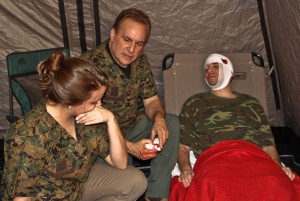
    It’s important to realize that, as the survival medic, you may not have the luxury of stabilization and evacuation to modern medical facilities. That means that you are responsible for wound care and infectious illness from beginning to end, something even experienced paramedics may not be ready to handle. You must enter the mindset that you are the highest medical resource left, and must deal with issues without the hope of transport for the foreseeable future. It’s important to set up a reasonable sick room or hospital tent to care for your patients.

    What medical conditions will the medic be most likely to confront in long-term survival? Here are some you can expect:

    Trauma

    • Minor Musculoskeletal injuries (sprains and strains)
    • Minor trauma (lacerations, abrasions, etc.)
    • Major traumatic injury (fractures, occasional knife and/or gunshot wounds)
    • Burn injuries

    Infections

    • Respiratory infections (pneumonia, bronchitis, influenza, common colds)
    • Diarrheal disease (sometimes a community-wide outbreak)
    • Infected wounds
    • Minor infections (for example, urinary infections, “pinkeye”)
    • Lice, Ticks, Mosquitoes, and the diseases they carry

    Allergic reactions

    • Minor (bees, bed bugs, or other insect bites and stings)
    • Major (anaphylactic shock)

    Dental

    • Toothaches
    • Broken or knocked-out teeth
    • Lost fillings
    • Loose crowns or other dental work

    Women’s issues

    • Pregnancy and delivery
    • Miscarriage
    • Birth control

    Your environment will also factor into your effectiveness as a medic. At various times of the year, issues such as heat stroke or exhaustion, hypothermia, and dehydration may be encountered. If you don’t take into account the environment, you have made it your enemy, and it’s a formidable one.

    All of the issues I mention here can quickly take up everything you have stored to help you function as the medic. Therefore, it just makes common sense to consider preventative measures to avoid headaches and, perhaps, heartaches. An ounce of prevention is worth a pound of cure, and that old saying is never more true than in survival.

    It’s important to enforce the use of protective gloves, boots, and eyewear in any situation where injuries might occur. Clothes should be appropriate for the climate at your location. You might not consider these items to be medical supplies, but they can prevent a lot of problems that will take up your time and resources.

    Personnel that carry firearms and knives must be trained in their safe use. Prevention extends not only to injuries, but also to infectious disease. When you suspect a group member of being ill, you must make sure that they are isolated from those that are healthy. These concepts may seem obvious to you, but you’ll be surprised (unpleasantly) at how many will forget to take precautions to avoid injuries and infection.

    There is one last essential characteristic of the successful survival medic: a strong instinct for self-preservation. Although you might want to rush to the aid of the sick and injured, even in the face of hostile fire, you must realize that you are an indispensable asset to your group. If you frequently place yourself in harm’s way, you will eventually find yourself as the patient more often than you or anyone else would like. Always determine first if you can care for a victim without placing yourself at undue risk. You must abolish all threats; if someone has a gunshot wound, it stands to reason that there’s a guy with a gun out there. Don’t become the next casualty.

    The Survival Library

    For more resources on becoming an effective caregiver, consider these books for your survival library:

    The Survival medicine handbook Third Edition 2016

    The Survival Medicine Handbook: The Essential Guide for When Medical Help is Not on the Way: Now in its 700 page third edition, our book covers 150 different medical issues that you might face after a disaster eliminates the option of modern medical care. Includes lists of recommended medical supplies and a guide to veterinary antibiotics in post-disaster settings.

    (As an aside, The Survival Medicine Handbook’s Third Edition won the medical category of the 2017 Book Excellence Awards)

    The Physician’s Desk Reference (Amazon Link): No longer available in print form, this guide to drugs, their uses, dosages, and side effects is still around on Ebay and elsewhere. Includes pictures of individual drugs to help identify unknown meds. Find an edition that’s a year or two old for your survival library.

    Where There Is No Doctor and Where There Is No Dentist (Amazon Links): Guides for medical and dental care in underdeveloped countries.

    Gray’s Anatomy (Amazon Link): The classic textbook of human anatomy

    The Merck Manual (Amazon Link): Classic handbook for diagnosis and treatment

    Davidson’s Principles and Practice of Medicine: Standard medical textbook

    This is, by no means, a complete list of every book that might be useful in survival situations, but it’s a good start.

    DISCLAIMER: Be aware that, where there is an existing modern medical system, the practice of medicine or dentistry without a license is illegal and punishable by law. If modern medical professionals and facilities exist, seek them out.

    Joe Alton MD

  • Tactics for the American Reformation Part 4: The Operational Cache

    Tactics for the American Reformation Part 4: The Operational Cache

    There are many that believe history will show we are in the early stages of a new civil war – or an American Reformation. How exactly this war will play out is certainly up for discussion and dispute. Many believe there will be areas of severe civil unrest, guerrilla warfare, and scattered battles of varying sizes. Who will be the insurgency? That depends on location and political makeup of area/region.

    So – why an Operational Cache?

    An Operational Cache is a resupply of critical items often accessed while on the go. These caches are often – but not always – buried to hide from others. Major components often placed in an Operational Cache are defensive supplies. The possibility of immediate and unplanned relocation out of an area make having supply caches invaluable.

    What to Put in the Operational Cache?

    Only you know what will work best in your cache. The cache may be very mission specific or very general. It may contain supplies to feed, clothe, and defend – or something else entirely.

    Here are a few general guidelines:

    Rifle/Pistol

    extra ammunition, magazines

    tactical gear – holsters, vest, plate carrier, mag pouches(Condor chest rig is budget friendly and works great)

    flashlight/spare batteries(lithium)

    first aid kit/trauma supplies/tourniquet – visit DoomandBloom.com medical preparedness store

    communications equipment – Baofeng UV-5R/disposable cell phone

    spare clothes – socks/boots/underwear/pants/shirt/hat

    gloves – Mechanix FastFit are a good choice

    food – MRE’s are excellent

    water filter – recommend Sawyer Mini Filter System and LifeStraw

    Nalgene water bottles

    spare contacts/glasses

    multitool/knife

    rope/paracord/various zip ties

    tarps/tent/hammock

    backpack – for carrying supplies away from the cache

    toilet paper/wet wipes/hand towels/toothbrush/toothpaste

    small notebook & pencil


    Where To Place The Cache

    An operational cache does NOT have to be buried but can be. It may be at a buddy’s house, in a storage unit, in the corner of your shed, or buried up in the mountains beside a large oak tree. The decision on where to store the cache is highly dependent on many factors including geographical location, contents, specific intended uses, and method and means of access.

    A stump located out in the middle of nowhere could provide a unique location for an above ground cache hid deep down inside of it. Covered with vegetation a bypassing hunter could glance and never see what awaits inside.


    Burying Firearms?

    As far as burying a cache out in the country or in the mountain it does not go without risk. First – I would not bury anything that can lead back to you should it be discovered. A firearm purchased through a dealer and coinciding with a Form 4473 filled out will link the purchaser to that firearm. Only bury firearms purchased via private sale.

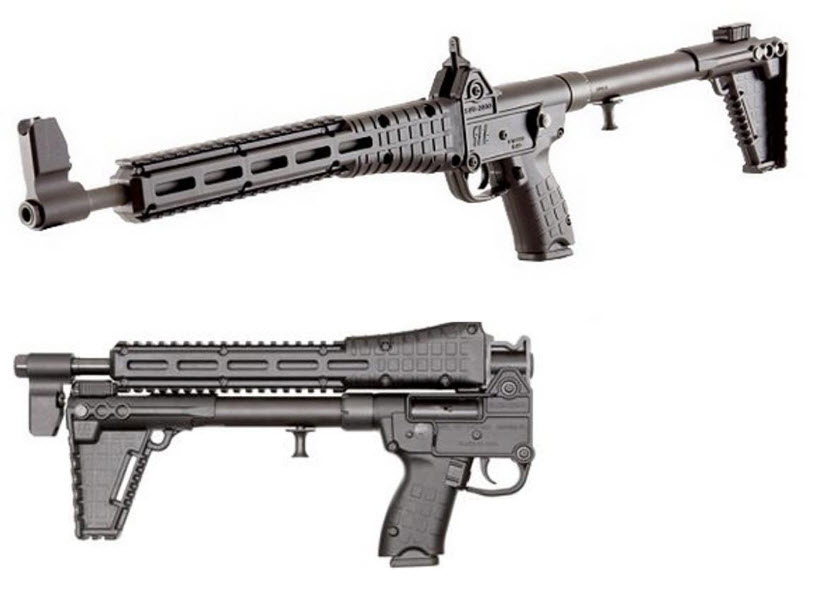
    Kel-Tec, Sub2000, 9mm, SHTF, cache, firearms, gun


    Quality of Contents

    The most popular theory on cached supplies is to place secondary – or “B” grade items in storage. You may have a really nice high-quality Smith & Wesson AR as part of your kit. For the operational cache, a $350 Hi-Point 9mm carbine is stashed along with extra magazines and ammunition. Another example would be having a Benchmade Nimravus Tanto as an SHTF-EDC knife while placing a Cold Steel GI Tanto in the cache for long-term storage.

    Another proposed theory is almost the opposite. If you are having to access your operational cache then things must be extremely dire. Now more than ever “A” grade equipment is needed.

    I understand both perspectives and agree the absolute best equipment should be cached. The deal here is the absolute best equipment THAT CAN BE AFFORDED. It is certainly better to have a Hi-Point cached than nothing at all. If a duplicate Smith & Wesson AR can be cached that is all the better.

    “One for me….one for the cache”

    Summary

    It is apparent the container type, contents, and the location is completely dependent on factors only known to those putting it together. It’s important to realize there is no limit to how many caches can be stashed. Having several over a wide area provides a security blanket no matter which direction one might have to travel.

  • Vehicle Prep: Vgate VS600 OBDII Car Diagnostic Tool

    Vehicle Prep: Vgate VS600 OBDII Car Diagnostic Tool

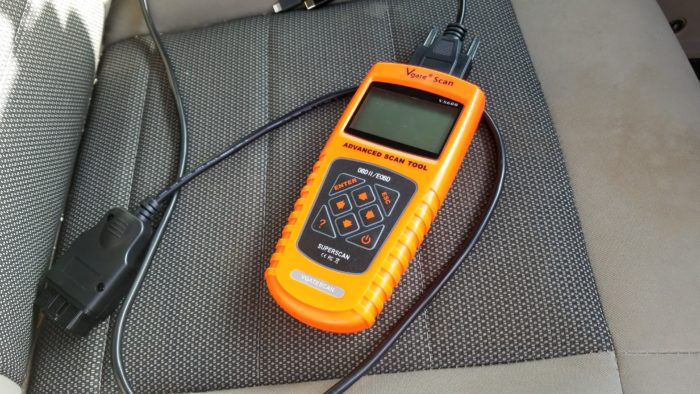
    How many freak out when that check engine light comes on? Thoughts of hundreds or thousands of dollars start going through your head or even being stranded. How much will it cost? How long will it take to fix? How will I get to work? Get the kids to school? No fun! While there are auto parts dealers that offer to read check engine codes for a nominal fee or for free – being dependant on their hours, and typically just given a “code” to decipher – well, I’m a control freak and want to check for myself.

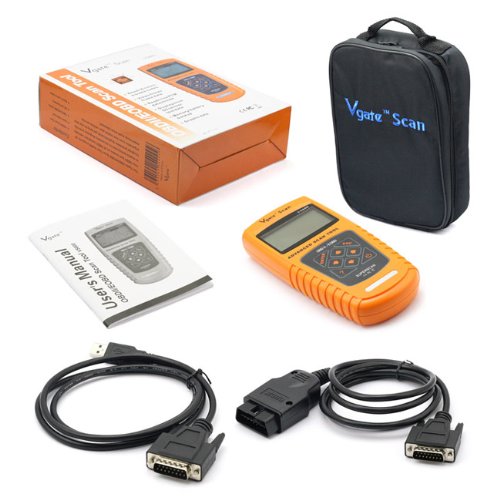
    Over a year ago I bought the Vgate VS600 code reader from GearBest.com. Historically, I’ve been charged upwards of $75 to $100 just for diagnostic service and have been at the mercy of the service department telling me the truth. This all changed after purchasing the Vgate VS600. A half dozen times via numerous vehicles I’ve been able to check codes and take appropriate action and SAVED MONEY every single time. BTW – The Vgate provides a statement as to what the problem is – not just a numeric code which has to be looked up.

    Just this past Friday my 2008 Jeep Wrangler had an episode of running rough – and the check engine light came on. It eventually smoothed out and ran normally. I grabbed my code reader and found that cylinder 6 had misfired. After getting home I pulled the spark plug and found it was not in good shape. I purchased 6 spark plugs and swapped them out. Total cost approx. $40. If I had taken the Jeep to a dealership? I don’t even want to think about it.

    line

    I have developed a relationship with GearBest.com over the past few years. I order a variety of products from them on a regular basis. I receive frequent emails from my contact there and she sets up special deals – often exclusive to 1776PatriotUSA.com readers. What has gotten me so excited about GearBest.com is the great pricing and often unique selection.

    Are there drawbacks buying from GearBest.com? The only one I know of are the extended shipping times. Many of these items(but not all) are shipping directly from the country of manufacture – China. Shipping is slower than ordering from a US source however the price is well worth it. While I completely support US made products the vast majority of those items I suggest have no US made alternative. Hopefully, that will change.

    line

    All specifications are listed on the Vgate VS600 product page. What is important to know is its compatibility with all vehicles manufactured from 1996 to current that are OBD2 compliant. This includes those made in America, Europe, and Asia. Basically, it covers and works with almost every single vehicle.

    This is a great tool and can help out with a mini “vehicle apocalypse”.

    Use coupon code CAR18OFF and price will be reduced to $45.47.

    For more information click HERE.

    Rourke

  • SHTF Communications: Homemade Simplex Repeater

    SHTF Communications: Homemade Simplex Repeater


    Handheld radios are great devices and perfect for short distance communications. Within the typical 1-2 miles clear and fairly reliable communications can be carried on. Raise the radio/antenna up higher and transmit(Tx) and receive(Rx) distances start to increase. While I am not going to get into tremendous detail what a repeater is here I’ll provide a brief explanation. Basically, a repeater is a radio/antenna mounted high in the air which will receive transmissions and transmit transmissions. Due to the antenna height, two radios that could not normally talk to each other directly can communicate via the repeater.

    The video below describes a very simple and inexpensive “simplex repeater” that most anyone can make. In this video, the Argent ADS-SR1 Simplex Repeater is used with a handheld ham radio. They make adapters for the Argent so that even inexpensive FRS/GMRS radios available at Wal-Mart can be used for creating a local area repeater and extend communication ranges.

    For SHTF communications having a simplex repeater can increase the range and effectiveness of what would typically be a short range set up.


  • Review: Streamlight Stylus Pro Flashlight

    Review: Streamlight Stylus Pro Flashlight


    Flashlights are a basic and very important prep item. Who can’t remember the excitement as a kid having a flashlight when the power went out? The experience would have been quite different without the flashlight.

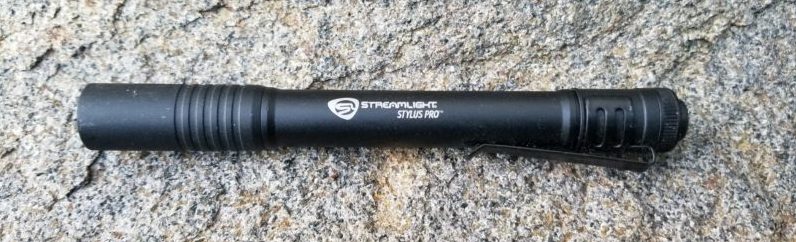
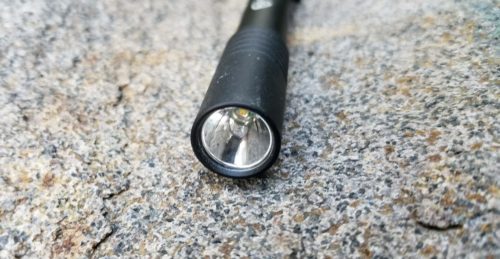
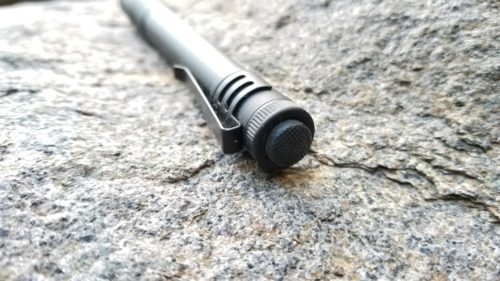
    Streamlight is a well-respected flashlight manufacturer with high marks for quality and value. Over the years I’ve owned several Streamlights and had zero issues with them. One model I’ve had for several years is the Stylus Pro. The Stylus Pro is of the “penlight” category and runs on 2 AAA alkaline batteries. Due to its slim construction, it can be easily carried like a pen in the pocket or tucked away almost anywhere.

    Specifications:

    • Weight: 1.64 oz.
    • Dimensions: L x D: 5.3″ x .6″ (134 x 15 mm)
    • Runtime: Up to 6.5 hours
    • Peak Beam Intensity: 860 candela
    • Light Output: 90 lumens
    • 50,000-hour lifetime thanks to C4 LED technology
    • Made with aluminum alloy
    • Shock-proof, drop-tested and O-Ring sealed
    • Scratch-resistant lens
    • Water-resistant per IPX4 in accordance with specification EN 60529:1992
    • Two operation settings: constant-on or momentary
    • Runs on two AAA alkaline batteries
    • Resilient pocket clip
    • Comes with a tear-resistant nylon holster

    Streamlight Stylus Pro, LED, flashlight, Streamlight, EDC, SHTF, prepper, preparedness

    The Streamlight Stylus Pro is NOT a flashlight meant for mounting on a firearm. No – this is a personal illumination device absolutely perfect for taking the trash out, looking under the couch for the remote – or navigating a trail while backpacking at night. It is NOT super bright. It is bright enough for the purposes listed and many more.

    Streamlight Stylus Pro, LED, flashlight

    The Stylus Pro is operated using an end-cap. A slight press allows momentary on and off. A full “push and click” turns the light on or off. There is only one brightness level which I very much like.

    Streamlight Stylus Pro, LED, flashlight

    I’ve had the Streamlight Stylus Pro for over two years and it has proven to be very reliable and rugged. The clip – which I have used when carrying in a pack – remains strong and tight. This flashlight is waterproof which is good to know when out in the rain. Like most modern flashlights illumination is provided via a LED diode. This means reliable, long-lasting light. No bulbs to burn out.

    If you are looking for a small, lightweight, and durable flashlight with this level of illumination at around $20 – the Streamlight Stylus Pro is worth a look.

    Recommended.


  • Tactics for The American Reformation Part 3: Basic AR-15 Duty Set Up

    Tactics for The American Reformation Part 3: Basic AR-15 Duty Set Up

    Let’s take a look at setting up a Duty AR-15. What is “Duty”? Anything from patrolling property, home defense, as well as battling brigands and other evildoers. Now – a good Duty rifle does not have to cost an arm, legs, and unmentionables. Especially with the current firearm market duty AR’s can be purchased with hundreds rather than thousands of dollars. Factory OEM AR’s from Ruger and Smith & Wesson can be found for under $500 and make good platforms which to have a Duty gun.

    So – what are the main components of a Duty gun?

    • AR-15
    • Sling
    • Optic
    • Flashlight

    With every aspect of all of the components listed above a great amount of personal preference is involved. What works for me may not work for you. What works for Operator A might be terrible for Operator B, etc. Consider a car lot. Every vehicle there will get you where you are going but there is a reason why so many models are manufactured. A general coverage of each component will be reviewed.

    NOTE: Putting together a Duty gun is NOT complicated. This is also not a MISSION SPECIFIC firearm to serve a very certain tole with required abilities.

    AR-15’s:

    Most any AR-15 of at least carbine(16″) length will fill the role. Popular models from Colt, Smith & Wesson, Ruger, Bushmaster, Windham, and others are available and each having models to fit any budget. M4 carbine variants work well and also 20″ full-sized rifles. There is no need for an AR that will shoot sub-MOA groups, or have a special lower with engraving. Reliabilitiy is of upmost concern and importance. The choice is up to the one with the money which to buy.

    Here are a couple examples:

    AR-15, M4, duty gun, prepper, American Reformation, civil war, SHTF, preparedness, tactical

    AR-15, M4, duty gun, prepper, American Reformation, civil war, SHTF, preparedness, tactical

    I’ll note that models in 5.56mm are recommended for a few reasons including ammunition compatibility, ammo cost/weight, and magazine compatibility.

    Sling:

    I run a single-point sling which I like very much. They are simple to use and fast. The main issue with the single point is transitioning from pistol to long gun. When the AR is dropped to switch to a pistol the gun seems to like heading directly to my – gerbils. Not the most comfortable feeling.

    For an overview of sling options –

    A few mentioned slings:

    Haley Strategic D3 Sling

    Magpul MS4 Sling

    BFG Vickers Sling

    Frank Proctor WOTG Sling

    Viking Tactics Sling

    Ferro Concepts Slingster

    QD Mounts


    Optic:

    Iron sights are a basic component as part of any Duty gun. A simple set of Magpul MBUS II folding sights will suffice.  Want something better and made of metal? Buy ’em.

    Most Duty AR’s today will run a red dot optic such as the Bushnell TRS-25, Vortex StrikeFire, etc. Money generally equals quality. EOTech’s and Aimpoints offer increased reliabilities and are worth the extra funds needed for purchase. Red dots provide much faster target acquisition than iron sights and also help those of us with aging eyes. Although there are many red dot optics available it’s important on a Duty gun to have something reliable with a very good track record. Although I am currently testing a Sightmark CSR I would never recommend a company such as Sightmark due to their very questionable reputation.

    weapons light, AR-15, EOTech, sights, Magpul, SHTF, prepper, preparedness

    Magnified optics can prove very beneficial when targeting longer distances. They also can serve to assist in gathering information. For a Duty rifle, the optic should be something in the 1×4 – 1×6 range. The reason for not going to a higher starting magnification is the need to be able to use the optic in CQC. Turning the optic down to 1X will allow near red dot performance.

    AR-15, Patriot rifle, Vortex, Vortex optics,

    Recommended Optics:

    Magpul MBUS Gen II Flip Up Sights

    Bushnell TRS-25

    Vortex StrikeFire II

    Vortex Sparc II

    HOLOSUN Micro Red Dot

    EOTech 552

    Aimpoint Pro

    Trijicon MRO Red Dot

    Vortex Crossfire II 1-4X Scope

    Primary Arms 1-8X Scope


    Flashlight:

    Illumination is an important component of a Duty rifle. The weapons platform may be used to illuminate a threat at night or possibly an intruder inside a building.  While there is a lot of controversy as to just how bright weapon mounted flashlights should be in the end that is up to the shooter – and your wallet. Understand that an 800 lumen light reflecting off white drywall can interrupt the ability for the holder of the gun to see – not just the “bad guy”. Companies such as SureFire and Streamlight have great reputations for making reliable weapon lights.

    weapons light, duty gun, Polytach, AR-15, light,

    Exactly how the light is mounted and run is up to the shooter.

    M-Loc, light mount, weapons light, SureFire, Streamlight, AR-15


    Recommended Flashlights:

    Streamlight Polytac

    Streamlight TLR-1

    SureFire Mini Scout

    Streamlight ProTac


    Summary:

    The Duty Rifle is an integral component to preparing for the American Reformation.  It is reliable, versatile, and accurate. Only with training can it be put to use to take advantage of its full capabilities.

  • Trajectory of the .223/5.56 Round in a Carbine

    Trajectory of the .223/5.56 Round in a Carbine


    With the popularity of the AR platform and the .223/5.56 round I thought it would be a good idea to review the trajectory of the round and common sighting ranges. Being a high velocity round the trajectory is relatively flat within a few hundred yards – past 400 the drop-off is significant.

    eotech

    There are several philosophies on sighting in the AR and what range in best. Here are a few examples:

    50 Yard Zero – Sighting in the AR to be on the money at 50 yards is extremely popular and typically what I do. Why? Because at 100 yards I will be hitting about 1.5″ inches high and at 200-225 I will be back on the money. This provides excellent accuracy from 0 out to past 250 yards with little if any compensation especially if we are talking about shooting man sized targets.

    This is by far the most popular method used for sighting in an AR.


    100 Yard Zero – Not a bad option at all. With a zero of 100 yards the .223/5.56 round will impact approx 3/4″ low at 50 yards and around 2.25″ low at 200 yards.


    25 Yard Zero – I don’t care at all for sighting in at 25 yards. When zeroed at 25 yards the round will also be zeroed at 300 yards. This strategy does not provide much of an advantage unless longer range shooting is planned. The problem is between 25 and 300 yards where either the rear sight has to be adjusted for elevation while shooting or english used.

    All these numbers are relative and depend on specific barrel lengths, loads, and barrel rifling.

    I recommend the 50 yard zero.

    JR


      *     *     *     *     *     *     *     *     *     *     *     *     *

    Supplies for the Zombie Apocalypse..... (4)

    Here are a few recommended preparedness supplies and items:

       *     *     *     *     *     *     *     *     *     *     *     *     *

    Check out the Emergency Essentials Monthly Sale!

    Emergency Essentials has been a leader in the preparedness industry for well over 20 years. Monthly featured sales offer huge discounts on many preparedness products including freeze dried foods.

    728x90feb20161

    Emergency Essentials carries Mountain House as well as their own house-brand of freeze dried foods. Great prices and inexpensive shipping provides a great way to increase food stores and save money in the process.

    Visit the Emergency Essentials website for more information.

     *     *     *     *     *     *     *     *     *     *     *     *     *

    Want to help support what we do here at 1776PatriotUSA.com? Follow any link from this website to Amazon, make a purchase, and we receive a small commision at no additional cost to you. Zero. Nada.

    Amazon-Logo-schwarz

    Amazon has a little known feature called “Best Selling” lists. Basically they rank the most popular products purchased within certain categories.  Here are a few Best Selling lists you might be interested in…..

    Best Selling Camping & Hiking Products

    Best Selling Hunting & Fishing

    Best Selling Flashlights & Lanterns

    Best Selling Tents & Shelters

    Best Selling Tactical & Personal Defense

    Thank you!!

  • Chris Costa on Why We Train

    Chris Costa on Why We Train


    Prior to founding Costa Ludus in 2011, Chris Costa spent 4 years as the President of Magpul Dynamics. Before founding Magpul Dynamics, Costa spent 7 years in the private sector at Applied Marine Technologies Inc. (AMTI) on assignment with the U.S. Department of Homeland Security’s Risk Management Division (RMD).

    Also known as “The Beard” – Costa tells it like it is and provides logic and common sense to his opinions.

    In the following video, he and those he trains provides thoughts on “Why We Train.”

    I train for multiple reasons and it isn’t always as noble as “To protect my family”.  I enjoy it. I love getting out from the narrow walls of a typical shooting lane and moving – running – from cover to cover engaging targets. Increasing a wide range of abilities and skills to a level superior to I had before. It’s rewarding. It’s fun.

    The end result of all that fun is the ability to protect me, my family – and my country.

    Rourke

  • Retreat Arrival Checklist

    Retreat Arrival Checklist

    I’ve been asked several times about when something happens and people first arrive at a retreat location. Questions usually come up regarding who does what and when. Granted situation details will dictate quite a bit but having some form of checklist will help remember things, decrease stress, and allow people to use their brains for thinking.

    Here is one example that is broken up into days for the first week or so.

    Day 1 Checklist – first 24 hours upon arrival:

    • Injuries? Check and treat.
    • Gather facts from all group members
      • What has been seen and where?
      • What has been heard? Source?
      • Make sure everyone is informed and educated on all information.
      • Notes should be taken to reference later rather than relying on memory.
    • Determine potential threats if any? If so set up security watch right away.
    • Get someone on commo to gain intelligence/information. This includes internet/radio/TV/social media/Ham/CB
    • Inventory all supplies brought to retreat by members to add to inventory lists
    • How much combined cash/silver/gold is on hand?
    • If safe – formulate a supply run(s) to purchase additional supplies while the ability still exists(see “Supply Run Checklist” – coming soon)
    • Get an inventory of all fuel.
      • How much is in each vehicle in gallons?
      • How much is currently stored?
      • Is it safe to go out for more? If so go get some. Get back quickly.
      • How much propane?
      • How much charcoal?
    • If electricity is still on get all rechargeable batteries into a charger.
    • Water running? If so fill all available containers.
    • Set up sleeping arrangements at a minimum on a temporary basis.
    • Cook a large, filling dinner – important for moral


    Day 2-3 Checklist:

    • House rules – all determined by property owner
    • Get pet’s situated that were brought to the retreat
    • Everyone has communication methods on their body if they venture away from retreat more than “normal voice distance”
    • Set up Security/Patrol schedules
    • Get solar systems set up and running
    • Set up potable water dispenser
    • Based on current condition install light and sound discipline
    • Set up water filtration methods
    • Set up alternative bathroom facilities
    • Set up bathroom/sanitation schedule
    • Camouflage driveway entrance  
    • Set up medical station for self-treatment of minor cuts, burns, and scrapes
    • Determine any specific projects that need attention and seek volunteers/assign duties
    • Reach out to family and friends  – OPSEC!!!!


    Day 3-7 Checklist:

    • Determine outward patrol location and schedule
    • Set up LPOP areas
    • Set up defensive position and assign members to areas
    • Review communication protocols between members in defensive situations
    • Determine procedure for dealing with strangers/approaching people
    • Gather and set up rain gear/clothing
    • Doublecheck food inventory to determine how many days available for group


    Any other suggestions? Thoughts?

    Rourke

  • The “Patriot” Rifle AR Build

    The “Patriot” Rifle AR Build


    My latest AR is the result of the “Katrina” rifle concept. Katrina rifle you ask? The term came about after Hurricane Katrina devasted the Gulf and left many residents in a state of WROL(Without Rule of Law). Widespread looting, lawlessness, and general civil unrest provide a very dangerous environment.  Add to this the absence of law enforcement the need for a Katrina rifle is evident. This single weapon – like in New Orleans – may be used at 25 yards or 250 yards. Yeah – there are a lot of AR’s and other firearms that will fit the bill. A firearm similar to this should be part of every preparedness system. This is merely one example.

    Components List:

    80% AR low from 80-Lower.com ($60)

    Anderson Lower Parts Kit – LINK ($50)

    Magpul AR grip ($20)

    Strike Industries Charging Handle w/Extended Latch ($40)

    PSA Full Auto Bolt Premium Carrier Group – LINK ($70 – SALE)

    Standard M4 Stock/Buffer Tube

    16″ Mid State Firearms Specter .223 Wylde AR Upper w/12″ Gen3 Slim Rail – LINK ($279)

    Vortex Crossfire II 1-4X24mm Rifle Scope w/Mount – LINK ($210)

    TruGlo Micro Laser – LINK ($70)

    2-Point Sling – still yet to purchase


    Lower: The 80% lower started this project. No particular reason I used an 80% other than it was sitting on my shelf. The fact that there is zero traceable paperwork connected to it is just the icing on the cake. While many may fear to attempt an 80% build jigs and instructions provide an avenue for the manufacture of the lower with minimal equipment.

    Mine came from 80-Lower.com and the finish is fantastic and I have zero fit/function issues.


    Upper: The 16″ Mid State Firearms Specter .223 Wylde upper is amazing. The slim configuration along with available picaninny attachment rails offer tremendous comfort as well as real estate for attachment of accessories. This is my second Mid State Firearms upper and couldn’t be happier. Free float barrel and a 1:8″ twist rate provide a high level of accuracy with a variety of bullet weights. I shoot 55-grain almost always with 62-grain making an appearance periodically. Accuracy? I readily admit that I am not the best shot and every gun I own will shoot better than me. So far 3 shot groups at 100 yards under 2″ is repeatable with XM193 ammunition. I plan to work with some premium rounds and reduce to 1″ or under.


    Charging Handle: Historically a standard AR charging handle has always worked fine for me. With this project, I decided to look and see what was available for a little more than the cost of a standard one. Once I saw the Strike Industries I bit. While a normal charging handle still works fine on some of my other guns the Strike Industries definitely provides a secure grip especially in lieu of the Vortex optic. A standard handle would be more difficult to reach. For an extra $10 or so it was so worth it.


    Magpul Grip: I have several AR’s with Magpul MOE grip or a slight variant of it. It simply works and provides not only comfort but a more secure grip than an A2 grip.


    Stock: I had a standard M4 stock with buffer tube sitting on the shelf so I used it. Nothing special and it works just fine. I have considered moving on to the Magpul but so far just cannot justify the cost.


    Flash Hider: The Mid State upper came with the Specter Flash Hider. I had wanted a flash hider that was more “tactical” than a standard A2 cage. Hopefully “poking” someone is not in the future for the Patriot but if the need arises I like the sharper edges of the Specter. Night time shooting? It’s on par with a standard A2 flash hider which by the way is way better than many aftermarket models costing a lot more.


    Optic: The Vortex Crossfire II 1-4X24mm Rifle Scope w/Mount is precisely the kind of optic I was looking for. When set at 1X it is very close to true 1X allowing operation with both eyes open similar to a red dot. For CQC this is great. For longer ranges the power can be twisted up to 4X bringing things closer for more precise shooting. The Vortex is very clear.


    Summary:

    I’m in the process of selecting a sling. I want something simple and a 2-point rather than my normal single point.  I mounted a TruGlo Micro Laser for use at night as being able to see black crosshairs would be problematic at best. Not a huge fan of throwing a bunch of attachments on a gun but the Micro Laser is tiny and super lightweight. I’ve run into a roadblock as about 10 minutes after mounting and during the sight-in process it stopped working. Strange. I am sending it back for replacement and am confident I’ll have a new one mounted soon.

    A flashlight has yet to be added though I am considering an Inforce 200-lumen model. We’ll see.

    I have the standard trigger in the lower that came with the lower parts kit. It feels very good however an upgrade is likely in the near future. I’ve been using D&H aluminum magazines as well as PMAG’s – no issues.

    Reliability has been 100%. At a little over $800 invested I am loving the “Patriot” AR and glad it is part of my battery.

    Oh – the small American flag perfectly located on the right side of the lower? Amazon.

    Rourke


  • Rourke’s Recommendations

    Rourke’s Recommendations

    Every Thursday I recommend a few things such as movies, books, and an assortment of gear – all kinds of stuff. Some of these are related to survival & preparedness – while others are just stuff I like. Most are on Amazon but not all.

    So – for this week……here is my list:


    Books:

    Prepper’s Survival Navigation

    The Prepper’s Canning Guide

    The Prepper’s Workbook

    Prepper’s Armed Defense

    Your Guide to the Apocalypse


    Movies/TV:

    Indiana Jones Raiders of the Lost Ark

    Crocodile Dundee

    Big

    The Sixth Sense

    City Slickers


    Gear:

    Amazon Fire HD10 Tablet – All New release date in October

    Uniden Bearcat 980SSB CB Radio with Single Side Band

    QYT 8900 Dual Band Mobile Ham Radio 20W/25W

    40-gram Silica Desiccant

    Eclypse II Rainfly

    *     *     *     *     *     *     *