Tag: body armor

  • Body Armor and Preparation

    Body Armor and Preparation

    Note: The following is a guest post from SafeGuardArmor.com

    Surviving is all about preparation. Adequate preparation covers self-defense, resource management, first aid, and a number of other skill sets. Keeping yourself safe is of the utmost importance when the situation changes and this starts with easily accessible products, such as body armor.

    Body armor comes in many shapes and types, but you should have a good understanding of what it can and cannot do for you in all situations. Essentially, no body armor is 100% bulletproof and different levels are only suited against the type of bullets they are tested against. This means that you should carefully examine the potential threats you are likely to face and choose your vest accordingly. For example, a bodyguard or security agent working in close proximity to multiple people will likely need a carrier with combined ballistic and stab/spike resistance.
    body armor,survival, prepper, preparedness

    When you think about survival, there are a number of situations that call for the use of protective equipment, such as:

    Dangerous urban areas high in crime

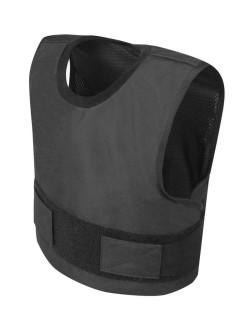
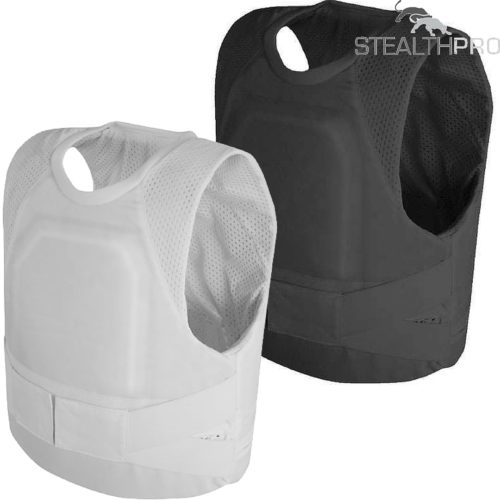
    Body armor is becoming a popular choice of civilians who live in crime-ridden neighborhoods. For the needs of untrained individuals, who don’t want to draw attention to themselves, a covert vest in level IIa is sufficient. It offers protection from 9mm FMJ RN 124gr/1090fps up to .40S&W FMJ 180gr/1025fps in addition to all Class I threats – 22LR, 40gr/1050fps up to .380 ACP FMJ RN 95gr/1025fps. It is worth mentioning that the 22LR is the most commonly used handgun in America. This is also a light vest and can be worn all day without causing discomfort of overheating.

    High levels of civil unrest, protests and attacks

    The economic, politic and social scenery of urban centers these days is rapidly changing. This requires civilians to exhibit a constant state of preparedness for the worst. Buying quality body armor is a safe(ty) investment that can be the difference between life and death. Although you should generally avoid any large gatherings of people due to the possibility for a terrorist attack and/or quickly escalating violent clashes with police forces – if necessary, it’s always better to be equipped with a protective vest in such situations. Level IIIa vests are lightweight enough to allow you to move quickly, but cover all weapons you are likely to encounter. In addition, they can be fitted with ceramic or metal plates to increase the level of protection if things get particularly bad.

    The bottom line is that no one can be sure whether or not they will find themselves in a potentially life-threatening situation at any given moment. Being prepared is part of the strategy to say alive and safe. Body armor can significantly increase your chances of survival both in your line of work and in an urban setting, but you need to learn to rely mostly on your skills, speed and ability to plan ahead. Use body armor as a supplement to your survival strategy and it will fulfill its intended use.

    That being said, if you are truly preparing for the worst, and you expect to face particularly extreme threats, you may want to consider a tactical vest. These vests, similar to overt vests, are worn over clothing and are more durable than covert body armor. They are extremely protective, offering upgrades to protect the upper arms, throat, neck, and groin area. Even though this type of armor is heavier and bulkier – it is unmatched in the level of protection if offers and will surely hold up in the direst of circumstances.
  • Guns VS Armor

    Guns VS Armor

    What Armor do you need to Protect Yourself from the World’s most popular guns and ammunitions?

    There are over a hundred different types of gun available on the weapons market today. But what type of armor do you need to protect from the most popular weapons? SafeGuard Clothing have put together a guide on seven of the most popular guns and types of ammunition available and the types of armor that will protect from their bullets.

    There is a surprising amount that people don’t know about body armor. Of course, there are many types and they are each engineered with a new level of intricacy. There’s always more to be understood, particularly when it comes to body armor. Nevertheless, many do not understand the protection available in bullet resistant (or bullet proof, as they’re frequently known)  vest, and see it as either complete protection against any weapon or an archaic throwback that today’s modern weapons simply decimate. So which one is correct? . . .

    To put it simply, both are correct. Or neither, depending on your viewpoint. Bullet proof vests are available at a variety of levels according to the protection they offer. And while most vests are incredibly strong, they will only protect you against certain kinds of ammunition. The highest levels of bullet proof vests are capable of protecting against some incredibly powerful rounds, but won’t stand up to everything. Conversely, lower levels cannot guarantee protection against the more powerful weapons, but will still provide you with a great deal of protection.

    Also, a stab and eged blade proof vest will not protect you from a hail of bullets. The same goes vice versa… A bullet proof vest is not engineered to tarb a blade and therefore probably will not protect you from a knife attack.

    The levels available in a bullet proof vest are governed by the US National Institute of Justice, which is widely recognized as being the world leader in ballistics testing. The testing standards outlined by the NIJ allows for these levels – NIJ Levels– to be assigned to bullet proof vests according to the size, strength, and speed of the ammunition it can protect you against. Below are some of the most common rounds, the most popular rounds, and the most famous rounds available, and what level of body armor you will need to protect against each.

    9mm Parabellum

    The 9×19 mm Parabellum, commonly known as simply the ‘9mm’, was developed at the beginning of the 20th century for German manufacturer DWM. The 9mm is credited as being the most widely used handgun ammunition in the world, and is commonly used by Law Enforcement Officers across the globe. The 9mm is often cited as the reason semiautomatic pistols became more popular than revolvers. At higher velocities a Level II vest is needed, but at lower velocities a 9mm will be stopped by a Level IIa vest.


    .45 ACP

    The .45 ACP, or .45 Auto, was created for the prototype Colt semi-automatic .45 pistol developed by John Browning. It was first released in 1904, but only gained popularity in 1911 when it was adopted by the US Army for use in its M1911 pistol. Following this it became far more popular, thanks in part to its moderate recoil and high velocity. The .45 ACP also benefits from a low muzzle flash, but is heavy and costly to produce. Protecting against this round requires a vest at Level IIa.


    10mm Auto

    The 10mm Auto, usually shortened to simply ‘10mm’, was a joint design between the United States and Sweden and first introduced in 1983. Despite boasting superior stopping power, the 10mm never gained the popularity of its shorter counterpart (the.40 S&W). It did, however, gain popularity among certain branches of Law Enforcement, most notably the rescue and SWAT teams of the FBI. The 10mm was designed to be used in semi-automatic pistols, but suffers from high recoil. To stop the 10mm Auto you will need a Level IIa vest.


    .40 S&W

    The .40 S&W is named for its manufacturer, Smith & Wesson, and was originally designed to be used by Law Enforcement Agencies. This rimless cartridge did gain popularity among Officers after its introduction in 1990, partly due to its performance against similar rounds, offering both superior power and improved recoil. The .40 S&W was created as a shorter alternative to the 10mm Auto. Protecting against the .40 S&W will require a Level IIa bullet resistant vest.


    .357 SIG

    Introduced in 1994, the .357 SIG was designed by its namesake, Swiss manufacturer Sig Sauer. Apart from its reduced recoil, the .357 SIG is practically identical to the .357 Magnum in terms of performance, yet is known for being more reliable. For example, one of the benefits of the .357 SIG is its compatibility with autoloader platforms. However, the .357 SIG never gained the popularity of other similar rounds, perhaps because of its lack of adoption by Law Enforcement organisations. A Level IIa bullet proof vest is needed against this calibre of ammunition.


    .357 Magnum

    The .357 Magnum, or simply .357, is credited with beginning the ‘Magnum era’ of handgun ammunition after its introduction in 1934, and has found popularity worldwide. This round was developed in the 1930s by Smith & Wesson in an effort to re-establish themselves as the leading law-enforcement armament provider. The .357 is well-known for its stopping power, and is largely fired from revolvers, although it can be fired from certain semi-automatics, notably the Desert Eagle. A vest at Level II will protect against this ammunition.


    .44 Magnum

    The .44 Magnum is one of the most famous rounds in the world, featured most famously in the film Dirty Harry. The film is often attributed with the rise in popularity of the bullet, as it had remained relatively unknown for the 16 years previous. The .44 Magnum is famous for its stopping power, which naturally causes muzzle flash and high recoil. The .44 Magnum will need a Level IIIa bullet proof vest.


    By Chris Taylor, Safeguard Clothing

  • Why You Need Body Armor

    Why You Need Body Armor

    By Chris Taylor, SafeGuardArmor.com


    The importance of security and self-defence is one of the main driving forces behind preparation. By preparing for difficult and unforeseen situations, an individual can stay safe and maintain her or his liberty and security. Building food stores, keeping well-stocked caches and maintaining one’s own skill set and knowledge all goes towards one’s security and self-defence. However, all too many see these factors- self-defence in particular- as a matter solved by guns. Stocking up on weapons appears to be the be-all and end-all of security and self-defence for many, and even the most knowledgeable prepper may forgo any other measures in favour of several assault rifles.

    However, as any reasonable person will tell you, it is very easy to be injured or even killed by a firearm. Moreover, even without considering the danger of facing someone else with a firearm, accidents will always happen no matter how careful one is. Therefore, you cannot simply fight fire with fire, and self-defence has to involve more than weapons. You need to ensure you are protected, particularly against firearms. You need a bullet proof vest.

    There is really no reason not to consider body armor, and anyone even remotely interested in their own safety should be open to all options. AS noted above, however, far too few are. If for no other reason therefore, wearing a bullet proof vest can give you the upper hand over other heavily armed individuals, and can mean the difference between life and death.

     coovert_1_2

    The first thing to know about bullet proof vests is that they are available in a variety of styles, models, and fits, not to mention different levels of protection. This variety means that it can be difficult to know which bullet proof vest is most appropriate for your situation. However, ensuring you have the right fit is a good start. This has been of particular interest to women, who have for too long not had sizes available for them. It is important that body armor fits your body properly, as an ill-fitting vest may have gaps in protection. Women have traditionally had to make do with vests designed for male figures, meaning their protection cannot be guaranteed. Thankfully, manufacturers are increasingly offering vests designed for women, as part of an effort to provide a better range of sizes for everyone.

    The most important aspect of body armor to be aware of however is the protection it can offer. As already mentioned, there are a variety of protection levels available according to the ammunition it can protect against. Ballistic protection is regulated by the US National Institute of Justice (NIJ), which is widely recognized as the world leader in ballistics testing. This testing is then applied to levels, which it ascribes to body armor. This allows anyone to know what their armor can protect against at a glance.

    While all bullet proof vests will most likely use soft fabrics like Kevlar, higher levels of protection require hard materials. Armor that only uses fabric is known as ‘Soft Armor’, and is available up to and including NIJ Level IIIa, providing protection against high velocity 9mm full metal jacketed round nose bullets, as well as .44 Magnum jacketed hollow points, in addition to all the ammunition provided by lower levels.

    Each level of protection can stop the ammunition listed at lower levels. Level IIa armor is considered the minimum recommend protection for all armor, and is capable of protecting against 9mm full metal jacketed round nose and .40 S&W full metal jacketed ammunition, which are commonly found in most handguns. Even this ‘basic level’ is capable of protecting against a wide variety of rounds, with 10mm Auto, .357 SIG, and even .45 ACP rounds all covered by this level of protection. The Level II armor, conversely, can protect against all this as .357 Magnum jacketed soft points and the 9mm Parabellum fired at higher speeds. As mentioned above, however, the 9mm fired from a semi-automatic will require Level IIIa armor.


    Higher levels of vests will require additional materials, as mentioned above. These vests are therefore known as ‘Hard Armors’, as they will usually use rigid plates of ceramics and/or polyethylene over the top of fabric like Kevlar. This naturally increases the weight and bulk of a vest, but provides much stronger protection and can even protect you against explosives and fragmentation. It may be tempting therefore to simply opt for the highest level of protection available, especially as even hard armor can be worn in a discreet covert vest. However, the extra weight and bulk can do more harm than good, and may fatigue you. Therefore, unless you expect to be facing these types of threats, it is better to opt for a lower level.

    Hard Armor is available at NIJ Level III and IV, which is the highest available level of ballistic protection. Level III hard armor protects against 7.62mmx51mm NATO full metal jacketed rifle rounds, as well as the 5.56x45mm NATO round. Most rifle and automatic rounds are covered by the Level III, including such staples as the .30-06 and the .308 Winchester. However, the highest level of protection, the Level IV, offers protection against all these bullets, as well as armor-piercing variants.

    As briefly mentioned above, even higher levels of protection are available in discreet vests. Body armor can be split roughly into two categories; covert and overt. This determines whether a vest is worn underneath or over clothing respectively, and each style has its own advantages and disadvantages. For example, covert vests offer you discreet protection, meaning you can wear a vest in almost any environment without displaying your protection. However, there are times when you will want to display your protection and therefore your preparedness. An overt vest is worn over clothing and can be augmented with pouches and pockets, making it a useful addition to a uniform for example. Of course, there is no way to hide this.


    There are many different options available in body armor, each with its own advantages and disadvantages. The decision as to which is most appropriate has to reflect your own preparation and awareness, and most be relevant to the situation you will find yourself in. There are additional options available, such as Tactical Armor and Ballistic Helmets. Whatever you decide on, it has to reflect your own preparation. Whatever the choice, it can spell the difference between life and death.